

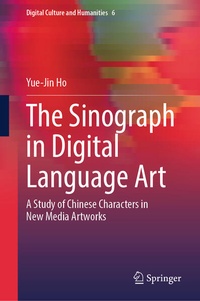
The Sinograph in Digital Language Art
Description

This book presents a study of digital works-primarily built using Chinese characters or Japanese kanji-to identify the affordances of sinographs. This book considers the digital specificities of the sinograph and unpacks how they influence both artists and readers in creating and receiving works. It also explores how artists utilize the unique affordances of this non-alphabetical writing system in their creations and seeks to answer questions that contribute to the growing body of work on sinographs in digital language art to facilitate further understanding and application. Based on the premise that sinographs provide affordances for creating digital works that differ from other writing systems, this book investigates how these unique affordances contribute to the meaning-making process of sinographic digital language art. This, in turn, helps expand the scope of interpretation by taking into account both formal factors and cultural contents. By showing how developments in technology have generated opportunities for manipulating language in the digital environment, the author expands upon the possibilities afforded by these technologies and their application in commercial products, as well as their mode of exploration by artists, writers, and coders. While theories have emerged for analyzing digital literature, most are not specific to any written language, and were originally developed for works that use letter-based scripts, such as English. This book confronts this deficit within the body of work on digital literary analysis. It is a relevant text for scholars and students working in the digital humanities and all areas of digital media and culture.
More details
Other editions
Additional editions
Person
Yue-Jin Ho is an Assistant Professor in the Department of Cultural and Creative Arts at the Education University of Hong Kong. He holds a Ph.D. in Creative Media from City University of Hong Kong and has served as a Visiting Research Fellow in Literary Arts at Brown University. His research focuses on the intersection of text, space, and digital art. In addition to his academic role, Ho is a media artist, translator, and writer. His creative works explore the relationships between materiality, writing, and history. His projects have been showcased at international festivals, including IFVA Hong Kong, Cinetribe Osaka, ZEBRA Berlin, and the Shanghai Biennale.
Content
Chapter 1: Introduction.- Chapter 2: Affordances, the Sinograph and Digital Materiality.- Chapter 3: Reading the Digital Forms.- Chapter 4: A Critical Review of Existing Theories and Studies.- Chapter 5: Case Studies: Character-level works.- Chapter 6: Case Studies:Subcharacter-level Works and Calligraphy.- Chapter 7: Four Dimensions and a Conclusion.
