

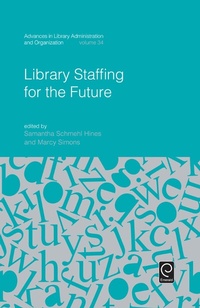
Library Staffing for the Future
Published on 9. December 2015
384 pages
978-1-78560-498-0 (ISBN)
Description

The latest volume of Advances in Library Administration and Organization, contains approaches from researchers around the world. Sourced in management theory and hands-on practice, the chapters explore such issues as skills-building and other professional development activities, changing demographic profiles of staff, changing modes of resource provision, succession planning, remote work, and planning for Linked Data. New approaches to student staffing are examined, along with the relationship of library work to topics such as emotional intelligence and positive organizational behavior. Several chapters put forth research and case study information regarding methods for dealing with large-scale changes in library staffing with regard to budget, space, and mode of information delivery.The work as a whole addresses sustainability issues in library staffing both regarding the day-to day work of libraries and in planning for the future. Library Staffing for the Future provides the reader with a thorough look at relevant staffing issues for libraries today and going forward, and provides advice and information grounded in the theoretical as well as the practical.
Reviews / Votes
Over the last several decades libraries have dealt with, and continue to deal with, unprecedented changes: budget cuts, technological disruptions, changes in higher education, and the need for librarians to prove their worth to a demanding population. Citing librarians as nothing if not resilient, Hines and Simons focus on the future of library staffing and consider approaches to sustainability and succession planning grounded in both theory and practice. -- Annotation (c)2016 * (protoview.com) *More details
Series
Language
English
Place of publication
Bingley
United Kingdom
Publishing group
Emerald Publishing Limited
Target group
Professional and scholarly
College/higher education
File size
1,76 MB
ISBN-13
978-1-78560-498-0 (9781785604980)
Copyright in bibliographic data and cover images is held by Nielsen Book Services Limited or by the publishers or by their respective licensors: all rights reserved.
Schweitzer Classification
Other editions
Additional editions
Samantha Schmehl Hines | Marcy Simons
Library Staffing for the Future
Book
12/2015
Emerald Group Publishing Limited
€213.70
Shipment within 10-20 days
Content
- Cover
- Title
- Copyright
- Contents
- List of Contributors
- Editorial Advisory Board
- Future of Library Staffing
- The Potential Impact of Positive Organizational Behavior on the Library Working Environment: An Introduction for Library Administrators
- Abstract
- Introduction
- Positive Organizational Behavior
- Implications for Leadership Development
- Role of the Leader
- Authentic Leadership
- Applications in the Workplace
- Psychological Capital
- Importance of Human Resource Development
- Library Staff Training and Professional Development
- Competitive Advantage of POB
- Role of the Library Administrator in Promoting POB
- Future Utilization for POB in the Library Profession
- Future Issues
- Summary
- References
- The Emotionally Intelligent Mentor
- Abstract
- Introduction
- What is Emotional Intelligence?
- Emotional Competences and Traits
- Managing Yourself
- What is Mentoring?
- Learning to Be a Mentor
- Mentoring in Academic Libraries
- Building Strategic Relations
- Leadership Development
- Other Considerations, Costs of Programs, and Virtual Mentoring
- What Can Go Wrong?
- Trends and Future Implications
- References
- The Future of Library Staffing: Relationships Are Essential
- Abstract
- Introduction and Background
- Interviews/Surveys, Results, and Discussion
- What Are You Doing in Your Library to Hire High-Quality Staff with Exceptional Interpersonal and Intrapersonal Skills? How Do You Know That Your New Hires Have These Skills?
- How Do You Develop These Skills among Current Library Staff in General?
- How Do You Make Sure That Library Staff Are Growing Interpersonal and Intrapersonal Skills Such That They Are Enhancing Their Interactions with Faculty, Students, and Are Seeing Positive Changes in Their Overall Perceived Quality of Work and Life?
- What Programs or Initiatives Have You Considered Along Each of These Lines for the Future?
- What Programs Has Your Institution Run or Considered in This Regard?
- What Other Thoughts Do You Have about the Need for Future Librarians to Understand Themselves (Be Mindful) as Well as be Able to Interact with Others Effectively?
- Would Your Library or Institution Ever Consider an MBSR (Mindfulness Based Stress Reduction) or Meditation Program for Staff?
- Conclusion
- References
- Staffing for the Future . with the Staff You Have Right Now
- Abstract
- Method
- Limitations
- Conceptual Framework
- How Adults Learn
- Followership Style
- Implications for Library Leaders
- The Change Process
- Theory: Leading through Adaptive Change
- Create a Holding Environment
- Command and Direct Attention
- Use Access to Information
- Control the Flow of Information
- Frame the Issues
- Orchestrate Conflict
- Choose the Decision-Making Process
- Theory: Leading in Transition
- Saying Goodbye
- The Neutral Zone
- Moving Forward
- Conclusion
- References
- "No One Gets Left Behind": Managing Library Human Resources during Dramatic Shifts in Academic Libraries
- Abstract
- Library Staffing and Change - Literature Review
- Ross Project and Impact at Kresge Business Administration Library (Michigan)
- Assessing and Evolving: The Work of the Library during Transition and Beyond
- Existing Stage (Pre-Construction or Current)
- Moving Stage (Prep Construction)
- Temporary Stage (during Construction)
- New Stage (Post-Construction)
- Staffing the New Work of the Library
- Budgetary and Staffing Implications of Moving to an Electronic Only Library
- Staff Savings as a Result of Moving Away from Print
- New Services and Functions for the Library
- Providing Value with New Constraints
- Final Thoughts (2015)
- Notes
- References
- Small Branch Management in Academic Libraries
- Abstract
- Introduction
- Continued Existence of Small Branch Libraries
- Provision and Role of Staff in Small Branch Libraries in the Organization
- Support, Mentoring and Networking of Staff
- Monitoring the Work of Small Branch Libraries
- Conclusion
- References
- Appendix
- Unlocking Capacity as Academic Libraries Transition from Print to Digital
- Abstract
- Introduction
- Literature Review: Broad Trends and Strategies
- Literature Review: Specific Practices
- Strategic Collection Development
- Creative Reorganization
- Rightscaling
- Moving ERM to the Network Level
- Conclusion
- References
- Theoretical and Applied Approaches to Remote Work for Academic Reference and Instruction Librarians
- Abstract
- Introduction: Now is the Time for Remote Librarians
- A Review of the Literature
- Remote Work in the Academic Library Context and Theoretical Framework
- SWOT Analysis
- Strengths (Internal Reasons Why Remote Work Makes Sense)
- Weaknesses (Why Remote Work May not be a Solution for Some Libraries)
- Opportunities (on a Global Level)
- Threats (on a Global Level)
- Challenges and a Call for Flexibility
- Librarianship, Demographics, Careers, and Flexibility
- Case Study: The Remote Liaison Librarian at Cornell
- Context
- Policy and Process
- Technology
- Culture
- Contributing Factors to Success
- Perpetual Beta
- Addressing the Practical: Coaching for Employees and Supervisors
- Employee
- Supervisor
- Implications and Future Research
- References
- The Shifting Roles of Student Workers
- Abstract
- Introduction
- The Earl K. Long Library
- Literature Review
- History at Earl K. Long Library
- Training Development and Content
- Training Activities
- Assessment
- Challenges and Involvement
- Future of Staffing at Earl K. Long Library
- Survey of Louisiana Academic Libraries
- Applications
- The Future
- Conclusion
- References
- Empowering Students and Expanding Services: Sustainable Staffing at the Sonoma State University Library
- Abstract
- Introduction
- Background
- Pilot Studies
- Tiered Service Model
- Ensuring Program Success
- Student Assistant Focus Groups
- Surveying Graduated Student Assistants
- Next Steps
- References
- Planning for Linked Data: Recruitment, Training, and Workflow Design for Resource Description and Metadata Management
- Abstract
- Introduction
- Background and Definitions
- Literature Review: Resource Description and Metadata Management in Libraries
- Skills
- Staffing
- Workflows
- Discussion: Recruitment, Training, and Workflow Design for Linked Data
- Recruitment
- Training
- Workflow Design
- Conclusion
- References
- A Changing Profile of Librarians in the Canadian Association of Research Libraries (CARL)
- Abstract
- Introduction
- Methods
- Changing Demographics
- Diversity
- Age
- Educational Attainment
- Professional Population Change
- Conclusions
- Notes
- References
- Sustaining Library Staff of the Future: Emerging Requirements
- Abstract
- Introduction
- Literature Review
- Learning in the Workplace
- Training for Library Staff
- Staffing Considerations in University Libraries in Nigeria
- Objectives of the Study
- Methodology: Targets and Assumptions
- Data Collection Procedure
- Research Questions
- Findings
- Background Information of Respondents
- Basic and Professional Qualification of Respondents
- Respondents by Library Departments Served
- Respondents by Membership in Professional Associations
- Approved Budget for Staff Development
- Support for Staff Development
- Libraries' Priority for Competence/Knowledge/Skills Acquisition for Personal Development
- Importance of Personal and Generic Capabilities
- Participation in the Various Learning Activities
- Reaction to Training
- Discussion
- Conclusion and Recommendations
- References
- Appendix
- Succession Planning in Academic Libraries: A Reconsideration
- Abstract
- Defining Succession Planning
- A Multiplicity of Terminology
- The Anticipated Wave of Retirements
- Demographics
- Where Do the Numbers Come from?
- Shifting Timelines
- Research Findings
- Lack of Suitably Prepared Candidates
- Succession Planning - A Promising Solution
- Succession Planning - The Wrong Approach for Academic Libraries
- Criticism of Succession Planning in the Library Literature
- Where is the Evidence that Succession Planning Works?
- What's Wrong with Succession Planning?
- When is Succession Planning the Right Thing to Do?
- The Proliferation of New Positions in Academic Libraries
- The Changing Nature of Library Work
- Changes in Technology, Changes in Services, Changes in the Profession
- Staffing for the Future
- Provide Mentoring and Professional Development Opportunities
- Assess Current and Future Needs
- Create New Positions that Best Meet the Needs of the Library
- Fill New Positions with External Hires
- Conclusion
- A Lack of Succession Planning is not Oversight
- Focus on the Future
- References
- About the Authors
