

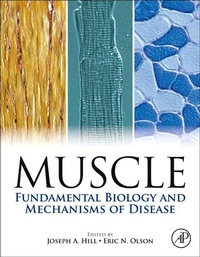
Muscle
Fundamental Biology and Mechanisms of Disease
Published on 14. May 2014
1468 pages
978-0-12-381511-8 (ISBN)
Description

A valuable study of the science behind the medicine, Muscle: Fundamental Biology and Mechanisms of Disease brings together key leaders in muscle biology. These experts provide state-of-the-art insights into the three forms of muscle--cardiac, skeletal, and smooth--from molecular anatomy, basic physiology, disease mechanisms, and targets of therapy. Commonalities and contrasts among these three tissue types are highlighted. This book focuses primarily on the biology of the myocyte.
Individuals active in muscle investigation--as well as those new to the field--will find this work useful, as will students of muscle biology. In the case of hte former, many wish to grasp issues at the margins of their own expertise (e.g. clinical matters at one end; molecular matters at the other), adn this book is designed to assist them. Students, postdoctoral fellows, course directors and other faculty will find this book of interest. Beyond this, many clinicians in training (e.g. cardiology fellows) will benefit.
- The only resource to focus on science before the clinical work and therapeutics
- Tiered approach to subject: discussion first of normal muscle function through pathological/disease state changes, and ending each section with therapeutic interventions
- Coverage of topics ranging from basic physiology to newly discovered molecular mechanisms of muscle diseases for all three muscle types: cardiac, skeletal, and smooth
More details
Other editions
Additional editions
Book
approx. 08/2012
Academic Press
€186.50
Not yet published
Content
Part 1: Introduction
1. An Introduction to Muscle
2. A History of Muscle
Part II: Cardiac Muscle
Section A: Basic Physiology
3. Cardiac Myocyte Specification and Differentiation
4. Transcriptional Control of Cardiogenesis
5. Cardiomyocyte Ultrastructure
6. Overview of CArdiac Muscle Physiology
7. Ionic Fluxes and Genesis of the Cardiac Action Potential
8. G-Protein-Coupled Receptors in the Heart
9. Receptor Tyrosine Kinases in Cardiac Muscle
10. Communication in the Heart: Cardiokines as Mediators of a Molecular Social Network
11. Calcium Fluxes and Homeostasis
12. Excitation-Contraction Coupling in the Heart
13. Role of Sarcomeres in Cellular Tension, Shortening, and Signaling in Cardiac Muscle
14. Cardiovascular Mechanotransduction
15. Cardiomyocyte Metabolism: All Is in Flux
16. Transcriptional Control of Striated Muscle Mitochondrial Biogenesis and Function
17. Mitochondrial Morphology and Function
18. Genetics and Genomics in Cardiovascular Gene Discovery
19. Cardiovascular Proteomics: Assessment of Protein Post-Translational Modifications
Section B: Adaptations and Response
20. Adaption and Responses: Myocardial Innervations adn Neural Control
21. Regulation of Cardiac Systolic Function and Contractility
22. Intracellular Signaling Pathways in Cardiac Remodeling
23. Oxidative Stress and Cardiac Muscle
24. Physiologic and Molecular Responses of the Heart to Chronic Exercise
25. Epigenetics in Cardiovascular Biology
26. Cardiac MicroRNAs
27. Protein Quality Control in Cardiomyocytes
28. Cardioprotection
29. Cardiac Fibrosis: Cellular and Molecular Determinants
30. Autophagy in Cardiac Physiology and Disease
31. Programmed Cardiomyocyte Death in Heart Disease
32. Wnt and Notch: Potent Regulators of Cardiomyocyte Specification, Proliferation, and Differentiation
Section C: Myocardial Disease
33. Congenital Cardiomyopathies
34. Genetics of Congenital Heart Disease
35. Mechanisms of Stress-Induced Cardiac Hypertrophy
36. Ischemic Heart Disease
37. The Pathophysiology of Heart Failure
38. The Right Ventricle: Reemergence of the Forgotten Ventricle
39. Mammalian Myocardial Regeneration
40. The Structural Basis of Arrhythmia
41. Molecular and Cellular Mechanisms of Cardiac Arrhythmias
42. Genetic Mechanisms of Arrhythmia
43. Infiltrative adn Protein Misfolding Myocardial Diseases
44. Cardiac Aging: From Humans to Molecules
45. Adrenergic Receptor Polymorphisms in Heart Failure
46. Cardiac Gene Therapy
47. Protein Kinases in the Heart: Lessons Learned from Targeted Cancer Therapeutics
48. Cell Therapy for Cardiac Disease
49. Chemical Genetics of Cardiac Regeneration
50. Device Therapy for Systolic Ventricular Failure
51. Novel Therapeutic Targets and Strategies against Myocardial Diseases
Part III: Skeletal Muscle
Section A: Basic Physiology
52. Skeletal Muscle Development
53. Skeletal Muscle: Architecture of Membrane Systems
54. The Vertebrate Neuromuscular Junction
55. Neuromuscular Interactions that Control Muscle Function and Adaptation
56. Control of Resting CA2+ Concentration in Skeletal Muscle
57. Skeletal Muscle Excitation-Contraction Coupling
58. The Contractile Machinery of Skeletal Muscle
59. Skeletal Muscle Metabolism
60. Skeletal Muscle Fiber Types
Section B: Adaptations and Response
61. Regulation of Skeletal Muscle Development and Function by microRNAs
62. Musculoskeletal Tissue Injury and Repair: Role of Stem Cells, Their Differentiation, and Paracrine Effects
63. Immunological Responses to Muscle Injury
64. Skeletal Muscle Adaptation to Exercise
65. Skeletal Muscle Regeneration
66. Skeletal Muscle Dystrophin-Glycoprotein Complex and Muscular Dystrophy
Section C: Skeletal Muscle Disease
67. Statin-Induced Muscle Toxicity: Clinical and Genetic Determinants of Risk
68. Myotonic Dystrophy
69. Facioscapulohumeral Muscular Dystrophy: Unraveling the Mysteries of a Complex Epigenetic Disease
70. ECM-Related Myopathies and Muscular Dystrophies
71.
