

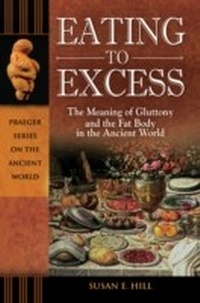
Eating to Excess
The Meaning of Gluttony and the Fat Body in the Ancient World
1st Edition
Published on 12. September 2011
196 pages
978-0-313-38507-0 (ISBN)
Description

This provocative book explores how ancient notions about the fat body and the glutton in western culture both challenge and confirm ideas about what it means to be overweight and gluttonous today.
People in the ancient western world made a distinction between being fat and being a glutton, even when they valued self-control and criticized excessive behavior. Examining many works of early western cultures, this book shows how ancient views both confirm and challenge our contemporary assumptions about fat bodies and gluttons.
Eating to Excess: The Meaning of Gluttony and the Fat Body in the Ancient World explores the historical roots of the symbolic relationship between fatness, gluttony, and immorality in western culture. It includes chapters on Greek philosophy, medicine, and physiognomy; Greek and Roman popular culture; early Christianity; and the development of gluttony as one of the seven deadly sins. By examining ancient ideas about gluttony and fat bodies, the author offers new insight into what it means to be human in the western world.
People in the ancient western world made a distinction between being fat and being a glutton, even when they valued self-control and criticized excessive behavior. Examining many works of early western cultures, this book shows how ancient views both confirm and challenge our contemporary assumptions about fat bodies and gluttons.
Eating to Excess: The Meaning of Gluttony and the Fat Body in the Ancient World explores the historical roots of the symbolic relationship between fatness, gluttony, and immorality in western culture. It includes chapters on Greek philosophy, medicine, and physiognomy; Greek and Roman popular culture; early Christianity; and the development of gluttony as one of the seven deadly sins. By examining ancient ideas about gluttony and fat bodies, the author offers new insight into what it means to be human in the western world.
More details
Series
Edition
1. Auflage
Language
English
Place of publication
New York
United States
Publishing group
Bloomsbury Publishing Plc
Target group
Interest Age: From 7 to 17 years
Illustrations
7 bw illus
ISBN-13
978-0-313-38507-0 (9780313385070)
Copyright in bibliographic data and cover images is held by Nielsen Book Services Limited or by the publishers or by their respective licensors: all rights reserved.
Schweitzer Classification
Other editions
Additional editions
Book
09/2011
Praeger Publishers Inc
€60.90
Shipment within 15-20 days
Person
Susan E. Hill, PhD, is associate professor of religion at the University of Northern Iowa, Cedar Falls, IA.
Content
Illustrations
Series Foreword by Bella Vivante
Acknowledgments
Chronology of Important Dates
Introduction: The Glutton and the Fat Body in the Ancient World
1. "All Fat Is the Lord's"
2. Philosophizing Excess in Plato And Aristotle
3. Inside and Out: Medicine, Health, and Physiognomy in the Ancient World
4. Popular Gluttons and Fat Bodies: The Trickster Herakles, Petronius's Satyricon, and Athenaeus's The Learned Banqueters
5. Ingest the Word, Not the World: Early Christian Ideas of Excess and Self-Restraint
6. Gluttony Becomes a Deadly Sin
Epilogue
Notes
Further Reading
Index
Series Foreword by Bella Vivante
Acknowledgments
Chronology of Important Dates
Introduction: The Glutton and the Fat Body in the Ancient World
1. "All Fat Is the Lord's"
2. Philosophizing Excess in Plato And Aristotle
3. Inside and Out: Medicine, Health, and Physiognomy in the Ancient World
4. Popular Gluttons and Fat Bodies: The Trickster Herakles, Petronius's Satyricon, and Athenaeus's The Learned Banqueters
5. Ingest the Word, Not the World: Early Christian Ideas of Excess and Self-Restraint
6. Gluttony Becomes a Deadly Sin
Epilogue
Notes
Further Reading
Index
