

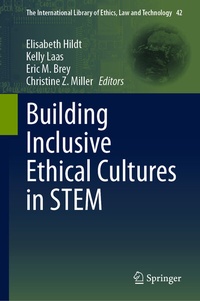
Building Inclusive Ethical Cultures in STEM
Description

This book shares innovative approaches to effectively engage students and faculty working in research labs, lab-based classrooms and courses to build inclusive ethical cultures. The frameworks and approaches presented move beyond traditional research ethics training to strengthen the ethical culture in research labs. The chapters in the book showcase best practices and approaches to embedding educational interventions in courses, research labs and departments. The book is based on the two-day workshop "Building Inclusive Ethical Cultures in STEM" (April 23-24, 2021). Moving beyond the two-day conference that inspired this collected volume, the various chapters address questions like: What are approaches and tools to integrate ethics education in STEM effectively? How can STEM ethics education be improved? What can researchers do to build more inclusive research environments? How can meaningful discussions about ethics be effectively integrated into STEM courses, research labs, and workplace environments? While each chapter takes a different perspective and is located in its respective context, the contributions are united by the goal of effectively including ethical reflection in STEM education. Instructors from both four-year and two-year colleges who teach STEM and lab-based STEM courses; young principal investigators/junior faculty who are in the process of building their research groups; departmental chairs interested in programmatic approaches for improving mentoring, research ethics education, and the research culture of their department, will find this work to be a very valuable resource in their daily practice.
More details
Other editions
Additional editions
Persons
Elisabeth Hildt is a Professor of Philosophy and the director of the Center for the Study of Ethics in the Professions at the Illinois Institute of Technology.
Kelly Laas is a librarian, researcher, and ethics instructor at the Center for the Study of Ethics in the Professions at the Illinois Institute of Technology.
Eric Brey is the David and Jennifer Spencer Distinguished Chair, Edward E. Whitacre, Jr. Endowed Chair of Biomedical Engineering and the Interim Dean of the College of Engineering and Integrated Design at the University of Texas at San Antonio.
Christine Z. Miller is a Design Management Professor at the Savanna College of Art and Design.
Content
