

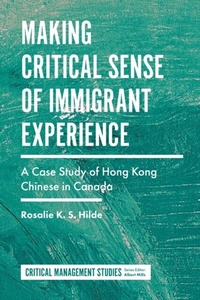
Making Critical Sense of Immigrant Experience
A Case Study of Hong Kong Chinese in Canada
1st Edition
Published on 21. November 2017
184 pages
978-1-78743-662-6 (ISBN)
Description

This book showcases a critical sensemaking (CSM) study of how professional immigrants from Hong Kong to Canada make sense of their workplace experiences, and what this can tell us about why a substantial number leave in their first year in Canada. An analysis of the interviews demonstrates that immigrants' identities are grounded by contextual sensemaking elements. Data show that informants have accepted unchallenged assumptions: (1) that the government is providing help for them to "get in" the workplace; and (2) that the ethnic service organizations are offering positive guidance to their workplace opportunities. At the organizational level, a master discourse emphasizing integration has mediated immigrants' struggles. Within these frustrations, many have internalized a hidden discourse of inadequate or deficient selves and adopted a sacrificial position to maintain a positive sense of identity.
The study concludes that a critical sensemaking approach allows greater insights into immigration processes than realist surveys, which tend to impose a pre-packaged sense of the immigrant experience. Through critical sensemaking, readers are encouraged to rethink the current role of ethnic service organizations in the immigration system.
The study concludes that a critical sensemaking approach allows greater insights into immigration processes than realist surveys, which tend to impose a pre-packaged sense of the immigrant experience. Through critical sensemaking, readers are encouraged to rethink the current role of ethnic service organizations in the immigration system.
Reviews / Votes
This case study analyzes the workplace experiences of skilled worker immigrants from Hong Kong who came to Canada with the purpose of entering the workforce, and what this reveals about why a large number leave in their first year. It focuses on their reflections on the structures and processes they face and the sense they have made of their situations, looking at sensemaking processes in relation to workplace opportunities, the social context, and power relations and inequality in organizations. It draws on documents and interviews with Hong Kong Chinese immigrants to understand how these immigrants make sense of immigration in Canada and their assumptions about having a better quality of life and their ideas about racist and cultural shocks; where and how they search for cues and institutional rules about employment; and how they develop strategies of resistance and identity work. It shows that they have assumptions that the government is providing help for them to get in to the workplace and that ethnic service organizations offer positive guidance to their workplace opportunities, and considers the role of racism and resistance. -- Annotation (c)2017 * (protoview.com) *More details
Series
Language
English
Place of publication
Bingley
United Kingdom
Target group
Professional and scholarly
File size
2,37 MB
ISBN-13
978-1-78743-662-6 (9781787436626)
Copyright in bibliographic data and cover images is held by Nielsen Book Services Limited or by the publishers or by their respective licensors: all rights reserved.
Schweitzer Classification
Other editions
Additional editions
Rosalie K.S. Hilde
Making Critical Sense of Immigrant Experience
A Case Study of Hong Kong Chinese in Canada
Book
11/2017
Emerald Publishing Limited
€134.10
Article exhausted; check different version
Person
Content
Chapter 1: Introduction and Outline
1.1 An Overview of Contemporary Immigrant Issues
1.2 Introduction to the Study
1.3 The Contribution of This Study
1.4 An Insider's Voice
1.5 Some Definitions
1.6 Outline of the Chapters
Chapter 2: Deconstructing Immigrant Identity Work
2.1 Overview of This Chapter
2.2 Theme One: Structural Approaches to Visible Minority Immigrants
2.3 Theme Two: Identity Construction through Social Constructionism
2.4 Theme Three: Poststructuralist Literature on Identity Work
Chapter 3: Methodological Approach
3.1 Overview of This Chapter
3.2 The Poststructuralist Perspective
3.3 Critical Sensemaking as a Conceptual Framework
Chapter 4: Research Design
4.1 My Access and the Informants
4.2 Translation and Transcription
4.3 Other Texts
4.4 Ethical Considerations and Reflexivity
4.5 Data Analysis
Chapter 5: Capturing the Discursive Elements of the Formative Context Retrospectively
5.1 Formative Context
5.2 The History of Chinese Immigrants in Canada and Canadian Immigration Policy
5.3 Immigrant Interview Accounts
5.4 The Political Sense of the Chinese Administration
5.5 The Lifestyle Discourse
5.6 In the Shadow of Whiteness: The Colonial Influence
5.7 Hong Kong's Workplace Culture and Work Identity
Chapter 6: Searching for Plausible Cues and Institutional Rules: The Politics of Normality
6.1 The Institutional Field and the Notion of a Deficient Self
6.2 Organizational Rules and Funding Requirements
6.3 The Dominant Discourse of Integration
6.4 A Silent Discourse of Exploitation
Chapter 7: Agency and Identity Labels: The Micro-Processes of Resistance
7.1 Identity Labels
7.2 The In-Between Self
7.3 The Cost of Immigration
7.4 Ignorance Is Strength: Inside the Boundaries of Acceptance
Chapter 8: Unpacking Workplace Inequality
8.1 Making Critical Sense of Workplace Inequality
8.2 Critical Implications
8.3 Contributions
Epilogue
References
Appendix A: Unstructured Interview Questions
Appendix B: Summary of Informants
1.1 An Overview of Contemporary Immigrant Issues
1.2 Introduction to the Study
1.3 The Contribution of This Study
1.4 An Insider's Voice
1.5 Some Definitions
1.6 Outline of the Chapters
Chapter 2: Deconstructing Immigrant Identity Work
2.1 Overview of This Chapter
2.2 Theme One: Structural Approaches to Visible Minority Immigrants
2.3 Theme Two: Identity Construction through Social Constructionism
2.4 Theme Three: Poststructuralist Literature on Identity Work
Chapter 3: Methodological Approach
3.1 Overview of This Chapter
3.2 The Poststructuralist Perspective
3.3 Critical Sensemaking as a Conceptual Framework
Chapter 4: Research Design
4.1 My Access and the Informants
4.2 Translation and Transcription
4.3 Other Texts
4.4 Ethical Considerations and Reflexivity
4.5 Data Analysis
Chapter 5: Capturing the Discursive Elements of the Formative Context Retrospectively
5.1 Formative Context
5.2 The History of Chinese Immigrants in Canada and Canadian Immigration Policy
5.3 Immigrant Interview Accounts
5.4 The Political Sense of the Chinese Administration
5.5 The Lifestyle Discourse
5.6 In the Shadow of Whiteness: The Colonial Influence
5.7 Hong Kong's Workplace Culture and Work Identity
Chapter 6: Searching for Plausible Cues and Institutional Rules: The Politics of Normality
6.1 The Institutional Field and the Notion of a Deficient Self
6.2 Organizational Rules and Funding Requirements
6.3 The Dominant Discourse of Integration
6.4 A Silent Discourse of Exploitation
Chapter 7: Agency and Identity Labels: The Micro-Processes of Resistance
7.1 Identity Labels
7.2 The In-Between Self
7.3 The Cost of Immigration
7.4 Ignorance Is Strength: Inside the Boundaries of Acceptance
Chapter 8: Unpacking Workplace Inequality
8.1 Making Critical Sense of Workplace Inequality
8.2 Critical Implications
8.3 Contributions
Epilogue
References
Appendix A: Unstructured Interview Questions
Appendix B: Summary of Informants
