

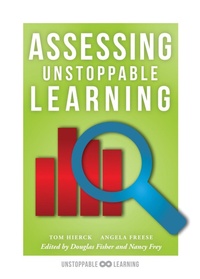
Assessing Unstoppable Learning
Description

Assessing Unstoppable Learning explains how K-12 teachers and administrators can work in collaborative teams to form effective and efficient assessment systems in their schools that help all students maximize their learning. Based on the key principles of systems thinking, this book will help educators define student learning goals and plan, launch, and lead learning as a team to meet them.
This user-friendly resource focuses on the assessing element of the the Unstoppable Learning model, which consists of seven elements: (1) planning, (2) launching, (3) consolidating, (4) assessing, (5) adapting, (6) managing, and (7) leading. This guide provides readers with crucial protocols and activities for collectively reworking their assessment systems. By implementing the step-by-step actions shared by the authors, educators can prepare themselves and their students to thrive in 21st century classrooms and beyond.
Unlock the full assessment power of Unstoppable Learning by:
- Reflecting on the collaborative culture of your learning organization and what elements of it are within your control.
- Considering questions designed to focus your work on generating high levels of student achievement.
- Completing activities with collaborative teams to discuss how to better promote productive systems thinking using the book's strategies.
- Learning about balanced assessment systems and how to include formative assessments in addition to summative assessments.
- Embedding evidence-based practices throughout the organization and using protocols for effective team discussions.
Contents:
Introduction
Chapter 1: Building Trust and Healthy Relationships to Leverage Assessment
Chapter 2: Seeking Evidence to Launch Assessments With the End in Mind
Chapter 3: Gathering Evidence to Use Assessment as Instruction
Chapter 4: Discussing Evidence to Leverage Assessment as Learning
Chapter 5: Responding to Evidence to Adapt Assessment as Instruction
Chapter 6: Embedding Evidence-Based Practices in Learning Organizations
Epilogue
More details
Other editions
Additional editions
Content
- Intro
- Acknowledgments
- Table of Contents
- About the Editors
- About the Authors
- Foreword
- Introduction
- Chapter 1
- Chapter 2
- Chapter 3
- Chapter 4
- Chapter 5
- Chapter 6
- Epilogue
- References and Resources
- Index
