


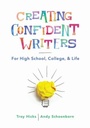
Creating Confident Writers
Description

Writing should be for an audience other than a teacher, and for a purpose beyond getting a grade.
Connecting their classroom experience to research about writing, as well as to framing documents in the field, two seasoned writing teachers distill the lessons they've learned about creating confident adolescent and young adult writers. Troy Hicks and Andy Schoenborn outline a fundamental stance to their approach—to invite, encourage, and celebrate students' writing—that is then echoed in the book's three-part structure. There are numerous classroom activities and assignments on topics from creating writing goals to supporting revision, examples of student work, and questions to guide teachers' reflections.
In this book for any teacher of writing, from middle school through college, readers are invited to try strategies and allow students' voices to emerge, while discussing with colleagues how these approaches might work for them, too.
More details
Other editions
Additional editions
Persons
Content
- Intro
- Title
- Contents
- Foreword
- Preface
- Introduction
- Section 1: Invite
- Chapter 1: Offering Invitations
- Activity 1.1: Creating Space for Creative Writing
- Activity 1.2: Trending Topics
- Activity 1.3: Digital Identity Narratives
- Chapter 2: Setting Goals
- Activity 2.1: Living Your Literacy Journey
- Activity 2.2: A Letter to Future Me
- Activity 2.3: Intentional Planning with Project Proposals
- Section 2: Encourage
- Chapter 3: Exploring Mentor Texts
- Activity 3.1: Answering the Call: Writing Guest Blog Posts for the Nerdy Book Club
- Activity 3.2: Pecha Kuchaâ?"Style Talks
- Activity 3.3: Digital Mentors and Multimedia Texts
- 3.3.1: Multimedia Journalism as a Mentor Text
- 3.3.2: Vlogs and Maps as Mentor Texts
- Chapter 4: Responding to Reading
- Activity 4.1: #BookSnaps
- Activity 4.2: They Say / I Say Quick Writes
- Activity 4.3: Responding with Literary Lenses
- Activity 4.4: Joining the Contemporary Conversation
- Chapter 5: Feedback and Revision
- Activity 5.1: Empowering Students to Provide Substantive Feedback
- Activity 5.2: Enhancing Revision with Digital Feedback
- Activity 5.3: Revise and Resubmit
- Activity 5.4: Revising from Peer Response
- Section 3: Celebrate
- Chapter 6: Reflection and Celebrating Growth
- Activity 6.1: Reading Analysis Blog Post
- Activity 6.2: Growth Territories Blog Post
- Activity 6.3: Final Exam via Reflective Essay
- Conclusion: Professional Learning for the Teacher of Writing
- References
- Index
- Advance Praise
- About the Authors
- Copyright
