

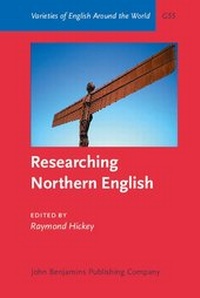
Researching Northern English
1st Edition
Published on 16. December 2015
X, 483 pages
978-90-272-6767-2 (ISBN)
Description

Northern English has become the focus of intensive research in the past decade or so, following on a series of dedicated conferences. The present book brings together leading-edge contributions on various aspects of language use, variation and change in the North of England. The volume covers the history of English in this area as well as providing incisive studies of both the varieties of English spoken in cities and in larger parts of the area. In addition, the collection contains a number of interface studies, e.g. concerned with the borders of the North of England, both to Scotland and the South of England or dealing with second-language varieties of Northern English or with additional issues, such as enregisterment. All these contributions help to draw a comprehensive picture of this key area of the English-speaking world and point the way forward for future research.
More details
Other editions
Additional editions
Raymond Hickey
Researching Northern English
Book
12/2015
John Benjamins Publishing Co
€104.94
Shipment within 10-15 days
Person
Content
- Researching Northern English
- Editorial page
- Title page
- LCC data
- Table of contents
- Preface
- The North of England and Northern English
- 1. Introduction
- 2. The geography of the North
- 3. The urban North
- 4. The linguistic North
- 5. Awareness of the North
- 6. Topics and themes in Northern English
- 6.1 Language and culture
- 6.1.1 Enregisterment of Northern features
- 6.1.2 The historical phonology of Northern English
- 6.1.3 The grammar of Northern English
- 6.1.4 Northern English vocabulary
- 6.2 Variation and change within the North
- 6.2.1 Newcastle
- 6.2.2 Sunderland
- 6.2.3 Carlisle and Cumbria
- 6.2.4 Sheffield
- 6.2.5 Middlesbrough
- 6.2.6 Lancashire
- 6.2.7 Manchester
- 6.2.8 Merseyside
- 6.3 Transitions and borders
- 6.3.1 Where to draw the line: Perceptions of the North
- 6.3.2 Between the South and the North: The Midlands and the Fens
- 6.3.3 Further than the North: Scotland
- 6.3.4 Non-native Northern English
- 7. Conclusion
- References
- PART I. The North of England. Language and Culture
- The enregisterment of Northern English
- 1. Indexicality and enregisterment
- 2. Enregisterment and the history of Northern English
- 2.1 The beginning
- 2.2 Early Modern English (1500-1700)
- 2.3 Late Modern English 1700-1900
- 3. Case study: Nineteenth-century Yorkshire
- 3.1 Introduction
- 3.2 Geographical and social mobility
- 3.3 Awareness of Yorkshire dialect
- 3.4 The "Yorkshire character" versus "barbarous jargon"
- 4. Conclusion
- References
- The Great Vowel Shift in the North of England
- 1. Introduction
- 2. Background
- 2.1 Old English
- 2.2 Middle English
- 3. The Great Vowel Shift
- 3.1 Data and methods
- 3.2 Results
- 4. Conclusion
- References
- Morphosyntactic features of Northern English
- 1. Introduction
- 1.1 The North - South divide in grammatical terms
- 2. Northern grammars
- 2.1 The verb phrase
- 2.1.1 The Northern Subject Rule (NSR)
- 2.1.2 Negation
- 2.1.3 Modal auxiliaries
- 2.2 The noun phrase
- 2.2.1 The definite article
- 2.2.2 Personal pronouns
- 2.2.2.1 First person pronouns
- 2.2.2.2 Second person pronouns
- 2.2.2.3 Third person pronouns
- 2.2.2.4 Reflexive pronouns
- 2.2.3 Relative markers
- 2.2.3.1 WH-strategies
- 2.2.3.2 What
- 2.2.3.3 As/at
- 2.2.3.4 Zero
- 3. Discussion
- References
- The history of present indicative morphosyntax from a northern perspective
- 1. Introduction
- 2. The competition of verbal -s/ -th in third person singular contexts
- 3. The competition of the -th, -s and zero suffix in plural present indicative contexts. The origin and diffusion of the Northern Subject Rule
- 4. The extension of -s to the first person singular and the NSR in this environment
- 5. Discussion: What is the Northern Subject Rule?
- 6. Conclusion
- References
- Northern English
- 1. Introduction
- 2. Northern English in The Salamanca Corpus
- 3. Data selected for analysis
- 4. Northern English historical lexis and spelling
- 4.1 Sources for the study of Northern English lexis and spelling: From EModE to LModE
- 4.2 Analysis of the lexical data
- 4.3 Analysis of the spelling data
- 5. Concluding remarks
- References
- Corpus works (LModE)
- Primary sources
- Secondary sources
- PART II. Locations within the North. Variation and Change
- Tyneside
- 1. Introduction
- 2. The region
- 2.1 Geography and demographics
- 2.2 History
- 3. Surveys and corpora of Tyneside English
- 4. Phonetics and phonology
- 4.1 Overview
- 4.2 Recent studies
- 5. Morphology and syntax
- 6. Discourse features and lexis
- 7. Conclusion
- References
- Sunderland
- 1. Introduction
- 2. Research on Sunderland English
- 3. Folk-linguistic perceptions of Sunderland English
- 4. The Sunderland study: Aims and methods
- 4.1 Population sample
- 4.2 Data-collection method
- 4.3 Data analysis
- 5. Language variation in Sunderland
- 5.1 GOOSE
- 5.2 (h)
- 5.3 /p/, /t/ and /k/
- 5.4 FACE and GOAT
- 6. Discussion
- References
- Carlisle and Cumbria
- 1. Introduction
- 2. Cumbria
- 2.1 Geography and demography
- 2.2 Historical background
- 3. Studies on Cumbrian English
- 4. Carlisle English
- 4.1 Variation and change with (h) in Carlisle English
- 4.1.1 Background
- 4.1.2 Data
- 4.1.3 Discussion
- 5. Conclusion
- References
- Sheffield
- 1. Introduction
- 2. Background
- 2.1 Local background: Sheffield
- 2.2 Face and goat in previous accounts of Sheffield English
- 2.2.1 GOAT fronting
- 3. Methods
- 3.1 Speaker sample
- 3.2 Method of data elicitation
- 3.3 Linguistic variants
- 4. Results
- 4.1 Face
- 4.2 goat
- 5. Discussion
- 5.1 Preference for the closing diphthongs [??] and [o?]
- 5.2 GOAT fronting
- 6. Conclusion
- Reference
- Middlesbrough
- 1. Introduction
- 2. The development of Middlesbrough English: Migration patterns and the Irish influence
- 2.1 Lenition of voiceless stops
- 3. More recent changes in Middlesbrough English: Shifting orientations and the Newcastle influence
- 3.1 Glottalisation of voiceless stops
- 4. Conclusions
- References
- Lancashire
- 1. Cultural and historical context
- 2. Phonological variables
- 2.1 Vowel contrasts
- 2.2 Velar nasal plus
- 2.3 Rhoticity
- 3. Morphosyntactic variables
- 3.1 Definite Article Reduction
- 3.2 Ditransitive constructions
- 4. Future developments in Lancashire English
- 5. Gathering data
- 5.1 Historical sources
- 5.2 Finding participants
- 6. Concluding remarks
- References
- Manchester English
- 1. Introduction
- 1.1 Geographical Area
- 1.2 Overview of the accent
- 2. Methodology
- 3. Consonantal analysis
- 3.1 H-dropping
- 3.2 TH-fronting
- 3.3 T-glottalling
- 4. Concluding remarks
- References
- Language attitudes and divergence on the Merseyside/Lancashire border
- 1. Introduction
- 2. Mergers, demergers and the role of social factors
- 3. Methods
- 3.1 Speaker Sample
- 3.2 The interview
- 3.3 Data Analysis
- 4. Results
- 4.1 Merger, near merger or distinction?
- 4.2 Contact and attitude
- 5. Discussion and conclusions
- References
- Borders and boundaries in the North of England
- 1. Introduction
- 1.1 'The North' versus 'The South'
- 1.2 Defining 'the North'
- 1.2.1 The southern boundary
- 1.2.2 The northern boundary
- 1.2.3 The role of the Midlands
- 1.3 The data and study
- 1.4 Geographical perceptions of the North-South divide
- 1.5 Motivations for the placement of the North-South divide line
- 2. Summary and conclusions
- References
- The East Midlands
- 1. Introduction
- 2. The East Midlands: Geographically and linguistically
- 3. Nottingham: Geographically and linguistically
- 3.1 Identity and language perception in Nottingham
- 4. Phonological variation and change
- 4.1 Happy
- 4.2 Letter
- 4.3 Mouth
- 4.4 Price
- 4.5 Start
- 4.6 Goose
- 4.7 Strut
- 4.8 Near and square
- 4.9 T-glottalling
- 4.10 TH-fronting
- 4.11 L-vocalisation
- 4.12 Yod-dropping
- 5. Conclusion
- References
- The West Midlands
- 1. Introduction - Birmingham and the Black Country
- 2. The linguistic structure of Birmingham and Black Country English
- 2.1 Variation across class, time and ethnic group in the region
- 2.2 Vocalic differences and commonalities in Birmingham and the Black Country
- 2.2.1 The TRAP/BATH split
- 2.2.2 The FOOT/ STRUT split
- 2.2.3 The NURSE set
- 2.2.4 The NURSE-SQUARE merger
- 2.2.5 The THOUGHT, NORTH and FORCE sets
- 2.3 Competing mergers in the diphthongal systems: FACE/PRICE/CHOICE
- 2.4 The SQUARE/NEAR merger
- 2.5 Velar nasal plus
- 2.6 The T-to-R Rule
- 3. Possessive pronouns
- 3.1 Third person feminine subject pronoun
- 3.2 Support verb morphology
- 4. Conclusion
- References
- Between the North and South
- 1. Introduction
- 2. The Fenland
- 3. Linguistic description
- 4. Phonology
- 4.1 Vowels
- 4.1.1 BATH
- 4.1.2 STRUT
- 4.1.3 KIT, DRESS
- 4.1.4 TRAP
- 4.1.5 FOOT
- 4.1.6 LOT
- 4.1.7 CLOTH
- 4.1.8 NURSE
- 4.1.9 FLEECE
- 4.1.10 FACE
- 4.1.11 PRICE
- 4.1.12 CHOICE
- 4.1.13 GOOSE
- 4.1.14 GOAT
- 4.1.15 MOUTH
- 4.1.16 NEAR/SQUARE
- 4.1.17 HappY
- 4.1.18 HorsES
- 4.2 Consonants
- 5. Grammar
- 5.1 Present tense verbs
- 5.2 Past tense verbs
- 5.2.1 Negation
- 5.3 Pronouns
- 5.4 Conjunctions
- 6. Discussion
- References
- The north above the North
- 1. Northern English in its geolinguistic context
- 2. History of language in the North
- 3. The relationship between Scots and English dialects
- 3.1 The Border and traditional dialects
- 4. The relationship between Scottish and English accents
- 4.1 The Border and modern accents
- 5. Conclusions
- References
- Non-native northern English
- 1. Introduction
- 2. The Manchester/Polish study
- 2.1 The linguistic features
- 2.2 Participants
- 2.3 Data collection
- 2.4 Coding the variables
- 2.4.1 STRUT
- 2.4.2 Glottal variation in /t/
- 2.4.3 ING variation
- 3. Social factors
- 3.1 Acquisition of local accent features.
- 3.1.1 STRUT
- 3.1.2 Length of residence (LoR)
- 3.1.3 Native speaker partner
- 3.1.4 Attitude
- 4. T-glottalling
- 4.1 Length of residence
- 4.2 Level of English
- 4.3 Gender
- 5. ING
- 5.1 Gender
- 5.2 Future plans
- 6. Summary
- References
- Index
