

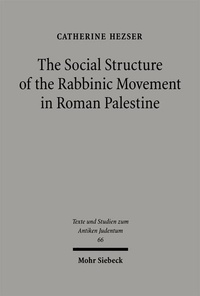
The Social Structure of the Rabbinic Movement in Roman Palestine
1st Edition
Published on 31. August 2020
557 pages
978-3-16-158728-3 (ISBN)
Description

1986 Promotion in Ev. Theologie in Heidelberg mit Schwerpunkt Neues Testament; 1992 Promotion in Jewish Studies am Jewish Theological Seminary in New York; 1997 Habilitation an der FU Berlin; seit 2005 Professorin für Jewish Studies an der School of Oriental and African Studies (SOAS) der University of London.
More details
Other editions
Additional editions
Catherine Hezser
The Social Structure of the Rabbinic Movement in Roman Palestine
Book
10/1997
1st Edition
Mohr Siebeck
€159.00
Article exhausted; check different version
Person
Author
1986 Promotion in Ev. Theologie in Heidelberg mit Schwerpunkt Neues Testament; 1992 Promotion in Jewish Studies am Jewish Theological Seminary in New York; 1997 Habilitation an der FU Berlin; seit 2005 Professorin für Jewish Studies an der School of Oriental and African Studies (SOAS) der University of London.
Content
- Cover
- Titel
- Preface
- Table of Contents
- Abbreviations
- Introduction
- 1. Previous Scholarship
- 2. Methodology
- 3. Outline of This Study
- Part I: Who Was a Rabbi? - Defining the Boundaries of the Rabbinic Movement
- 1. Origins of the Rabbinic Movement
- A. The Pre-70 Usage of the Address "Rabbi"
- B. The Lack of Rabbinic Evidence for a Pre-70 Usage of the Title "Rabbi"
- C. Priestly and Sectarian Origins of the Rabbinic Movement
- 2. Recruitment to Rabbinic Circles
- A. Ordination and Appointment
- B. Rabbinic Succession
- 3. Recognition As a Rabbi
- A. Ambiguity Over the Title
- B. The Lack of the Title for Some Post-70 Sages
- C. Epigraphical Rabbis
- D. Outward Signs of Being a Rabbi?
- E. Awareness of Being a Sage
- F. Outside Perspective
- 4. Expulsion From Rabbinic Circles
- 5. The Boundaries of the Rabbinic Movement
- Part II: Relationships Amongst Rabbis - The Rabbinic Movement As a Personal Alliance System
- 1. Geographical Distribution of the Rabbinic Movement
- A. City Versus Countryside
- B. Mobility
- C. Decentralization
- D. Local Rabbis
- 2. Was the Rabbinic Movement Institutionalized?
- A. The Sanhedrin or Central Rabbinic Court
- B. The Academy
- C. The Synagogue
- D. The Geonic Yeshiva
- 3. An Informal Network of Relationships
- A. Informal Meetings
- B. Indirect Contacts
- C. Network Theory
- D. The Rabbinic Movement As a Network
- 4. Conflicts and Agreements
- A. Conflicts
- B. Agreements
- C. Social Basis
- 5. Status Differences Amongst Rabbis
- A. Status Differences Based On Torah Learning
- B. Status Differences Based On Social Status
- C. Status Differences Based On Priestly Status
- D. Status Differences Based On Public Offices
- E. Status Differences Based On Patriarchal Affiliation
- F. Status Differences Based On "Charismatic" Authority
- G. Status Differences Based On Geographical Aspects
- H. The Usage of the Adjectives ????/??? Versus ???/?????
- 6. Alliances and Subgroups
- A. Houses
- B. Associations
- C. Types of Alliances
- 7. The Rabbinic Network As a Personal Alliance System
- Part III: Rabbis and Other Jews - Patronage and Personal Following
- 1. Rabbis and Students
- A. Students' Functions vis-à-vis Their Teachers
- B. Teachers' Functions vis-à-vis Their Students
- C. The Relationship Between Teachers and Students
- D. Students' Relationship Toward Each Other
- 2. Rabbis and Community
- A. Allegiance
- B. Disregard
- C. Hostility
- D. Rabbinic Attitudes Towards Communal Work
- 3. Rabbis and the Patriarch
- A. The Status of the Patriarch
- B. The Patriarch As Patron of Some Rabbis
- C. Rabbis' Disregard of and Hostility Against the Patriarch
- D. (Rabbis and) the Patriarch As Client(s) of Rome
- 4. The Basis and Means of Rabbis' Authority
- A. Personal and Role-Related Authority
- B. Protests, Curses, Threats of Excommunication and Divine Punishment
- 5. Rabbis' Competitors
- A. Scribes
- B. Judges
- C. Priests
- Summary
- 1. The Boundaries of the Rabbinic Movement
- 2. The Rabbinic Movement As a Personal Alliance System
- 3. Patronage and Personal Following
- Bibliography
- 1. Text Editions, Manuscripts, and Inscriptions
- 2. Concordances and Dictionaries
- 3. Modern Authors
- Index of References
- 1. Bible
- 2. Pseudepigrapha and Apocrypha
- 3. Qumran Literature
- 4. Josephus
- 5. New Testament
- 6. Rabbinic Literature
- 7. Graeco-Roman and Christian Literature
