

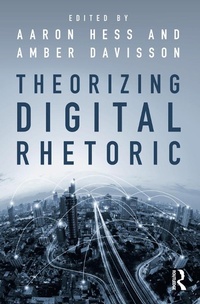
Theorizing Digital Rhetoric
Published on 20. July 2017
264 pages
978-1-351-78864-9 (ISBN)
Description

Theorizing Digital Rhetoric takes up the intersection of rhetorical theory and digital technology to explore the ways in which rhetoric is challenged by new technologies and how rhetorical theory can illuminate discursive expression in digital contexts. The volume combines complex rhetorical theory with personal anecdotes about the use of technologies to create a larger philosophical and rhetorical account of how theorists approach the examinations of new and future digital technologies. This collection of essays emphasizes the ways that digital technology intrudes upon rhetorical theory and how readers can be everyday rhetorical critics within an era of ever-increasing use of digital technology.
Each chapter effectively blends theorizing between rhetoric and digital technology, informing readers of the potentiality between the two ideas. The theoretical perspectives informed by digital media studies, rhetorical theory, and personal/professional use provide a robust accounting of digital rhetoric that is timely, personable, and useful.
Each chapter effectively blends theorizing between rhetoric and digital technology, informing readers of the potentiality between the two ideas. The theoretical perspectives informed by digital media studies, rhetorical theory, and personal/professional use provide a robust accounting of digital rhetoric that is timely, personable, and useful.
More details
Language
English
Place of publication
London
United Kingdom
Publishing group
Taylor & Francis Ltd
Target group
College/higher education
Illustrations
6 s/w Photographien bzw. Rasterbilder
6 Halftones, black and white
File size
1,99 MB
ISBN-13
978-1-351-78864-9 (9781351788649)
Copyright in bibliographic data and cover images is held by Nielsen Book Services Limited or by the publishers or by their respective licensors: all rights reserved.
Schweitzer Classification
Other editions
Additional editions
Aaron Hess | Amber Davisson
Theorizing Digital Rhetoric
Book
07/2017
1st Edition
Routledge
€193.50
Shipment within 10-20 days
Aaron Hess | Amber Davisson
Theorizing Digital Rhetoric
Book
07/2017
1st Edition
Routledge
€65.00
Shipment within 10-20 days
Persons
Aaron Hess is an Assistant Professor of Rhetoric and Communication at Arizona State University. He is the co-author of Participatory Critical Rhetoric: Theoretical and Methodological Foundations for Studying Rhetoric In Situ (Lexington, 2015). His research follows two primary avenues: the participatory elements of rhetorical advocacy and digital rhetorical expression. His work can be found in a variety of scholarly journals, including the International Journal of Communication, Critical Studies in Media Communication, New Media and Society, and Media, Culture and Society.
Amber Davisson is an Assistant Professor of Communication at Keene State College. She is the author of Lady Gaga and the Remaking of Celebrity Culture (McFarland, 2013) and the co-editor of Controversies in Digital Ethics (Bloomsbury, 2016). Her interdisciplinary scholarship on identity, politics, and digital technology has appeared in journals such as Rhetoric and Public Affairs, Transformative Works and Culture, Journal of Media and Digital Literacy, Journal of Visual Literacy, and American Communication Journal.
Amber Davisson is an Assistant Professor of Communication at Keene State College. She is the author of Lady Gaga and the Remaking of Celebrity Culture (McFarland, 2013) and the co-editor of Controversies in Digital Ethics (Bloomsbury, 2016). Her interdisciplinary scholarship on identity, politics, and digital technology has appeared in journals such as Rhetoric and Public Affairs, Transformative Works and Culture, Journal of Media and Digital Literacy, Journal of Visual Literacy, and American Communication Journal.
Content
Preface
Introduction: Theorizing Digital Rhetoric, Aaron Hess
SECTION I:
PHILOSOPHICAL AND RHETORICAL CONCEPTUALIZATIONS OF DIGITAL TECHNOLOGY
Critique of Digital Reason, David Gunkel
The Terms of Technoliberalism, Damien Pfister
Rhetorical Affects in Digital Media, Jay Brower
Digital Rhetoric and the Internet of Things, James P. Zappen
Towards a Minor Assemblage: An Introduction to the Clickable World, J. Macgregor Wise
SECTION II:
DIGITAL INTRUSIONS IN RHETORICAL THEORY
From coercion to community building: Technological affordances as rhetorical forms, Amber Davisson and Angela Leone
Fluidity in a Digital World: Choice, Communities, and Public Values, Ashley Hinck
The Rhetorical Agency of Algorithms, Jessica Reyman
The New Data: Argumentation amidst, on, with, and in Data, Candice Lanius and Gaines S. Hubbell
Where is the Body in Digital Rhetoric? Brett Lunceford
Reviving identity politics: Strategic essentialism, identity politics, and the potential for cross-racial vernacular discourse in the digital age, Vincent Pham
SECTION III:
BEING RHETORICAL CRITICS IN OUR DIGITAL LIVES
Toward a Digital Methodology for Ideographic Criticism: A Case Study of 'Equality', Michelle Gibbons and David Seitz
Hashtags and Attention through the Tetrad: The Rhetorical Circulation of #ALSIceBucketChallenge, Jennifer Reinwald
Ethics, Agency, and Power: Toward an Algorithmic Rhetoric, Jeremy David Johnson
Pinning, Gazing, and Swiping Together: Identification in Visually Driven Social Media, Hillary A. Jones
I am what I play and I play what I am: Constitutive Rhetoric and the Casual Games Market, Shira Chess
Afterword: Digital Rhetoric at a Later Time, Brian L. Ott
Introduction: Theorizing Digital Rhetoric, Aaron Hess
SECTION I:
PHILOSOPHICAL AND RHETORICAL CONCEPTUALIZATIONS OF DIGITAL TECHNOLOGY
Critique of Digital Reason, David Gunkel
The Terms of Technoliberalism, Damien Pfister
Rhetorical Affects in Digital Media, Jay Brower
Digital Rhetoric and the Internet of Things, James P. Zappen
Towards a Minor Assemblage: An Introduction to the Clickable World, J. Macgregor Wise
SECTION II:
DIGITAL INTRUSIONS IN RHETORICAL THEORY
From coercion to community building: Technological affordances as rhetorical forms, Amber Davisson and Angela Leone
Fluidity in a Digital World: Choice, Communities, and Public Values, Ashley Hinck
The Rhetorical Agency of Algorithms, Jessica Reyman
The New Data: Argumentation amidst, on, with, and in Data, Candice Lanius and Gaines S. Hubbell
Where is the Body in Digital Rhetoric? Brett Lunceford
Reviving identity politics: Strategic essentialism, identity politics, and the potential for cross-racial vernacular discourse in the digital age, Vincent Pham
SECTION III:
BEING RHETORICAL CRITICS IN OUR DIGITAL LIVES
Toward a Digital Methodology for Ideographic Criticism: A Case Study of 'Equality', Michelle Gibbons and David Seitz
Hashtags and Attention through the Tetrad: The Rhetorical Circulation of #ALSIceBucketChallenge, Jennifer Reinwald
Ethics, Agency, and Power: Toward an Algorithmic Rhetoric, Jeremy David Johnson
Pinning, Gazing, and Swiping Together: Identification in Visually Driven Social Media, Hillary A. Jones
I am what I play and I play what I am: Constitutive Rhetoric and the Casual Games Market, Shira Chess
Afterword: Digital Rhetoric at a Later Time, Brian L. Ott
