

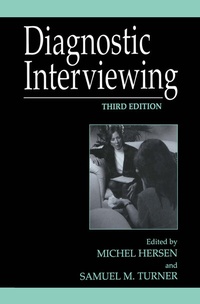
Diagnostic Interviewing
Description

Almost two decades have passed since the publication of the first edition of this acclaimed text. The new third edition carries on the tradition of the previous two in offering a practical, state of the art presentation of the interview process. The critical first step to diagnosis and treatment, the interview is as much art as science, and this text provides a wealth of material to enhance clinical skill as well as empirically-derived foundations.
The structure of the text has been retained, with chapters by noted experts detailing current innovations in theory and practice, including recent changes to the DSM-IV. Completely revised and updated, accessible, and illustrated with relevant case material, the third edition of Diagnostic Interviewing will be a welcome text for instructors and students, as well as a valuable resource for clinicians.
Reviews / Votes
about the first edition:"Provides the clinician with a clear jargon-free overview of diagnostic categories, with helpful hints regarding a psychiatric interview."
(Contemporary Psychology)
More details
Other editions
New editions
Additional editions
Previous edition
Persons
Michel Hersen, Ph.D., ABPP , is Professor and Dean of the School of Professional Psychology at Pacific University He is a Fellow of the American Psychological Association, was awarded a lifetime achievement award from the American Board of Medical Psychotherapists and Psychodiagnosticians, and holds a Diplomate from the American Board of Behavioral Psychology. He is past president of the Association for Advancement of Behavior Therapy. He has written many books and papers, and is the editor of Clinical Case Studies, Clinical Psychology Review, Behavior Modification, Journal of Anxiety Disorders, Aggression and Violent Behavior: A Review Journal, Journal of Family Violence, and The Journal of Developmental and Physical Disabilities. Hersen's research interests include the assessment and treatment of older adults, single case research, and administration.
Dr. Samuel M. Turner received his Ph.D. in Clinical Psychology in1975 from the University of Georgia. Following faculty tenures at the University of Pittsburgh and the Medical University of South Carolina, he joined the University of Maryland in 1998. He is Professor of Psychology and Co-Director of the Maryland Center for Anxiety Disorders (MCAD), a clinical research center for the study of anxiety in adults and children. The Center is located within the Clinical Program of the Department of Psychology. Dr. is a Diplomate of the American Board of Professional Psychology (ABPP) in Clinical Psychology and in Behavioral Psychology; and a Fellow of the American Psychological Association and the American Psychological Society. In 1997, he was the recipient of the American Psychological Association Award for Distinguished Contributions to Professional Knowledge and the 1998 recipient of the Distinguished Scientist Award from the Association of Medical School Psychologists. He currently serves as an Associate Editor of The American Psychologist and on theeditorial board of numerous scientific journals.
