


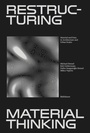
Restructuring Material Thinking
Description

Digitale Daten sind in Bezug auf Baustoffe und Materialien in der Architektur und dem Städtebau von zunehmender Bedeutung. Die vier Expert:innen Michael Hensel, Bob Geldermans, Defne Sunguroglu Hensel und Milica Vujovic spannen in sechs Kapiteln mit wissenschaftlich fundierten Beiträgen den Bogen von den Daten, über die Materialien bis zur Frage von Verfügbarkeit und industrieller Herstellung, künstlicher Intelligenz und dem Internet der Dinge. Sie zeigen, wie es möglich ist, mit fortschreitender Digitalisierung maßgeschneiderte Lösungen auf dringende Fragen wie z. B. baustoffliche Wechselwirkungen, Alterungsprozesse, Zirkularität, Urban Mining und globale Bedarfe zu finden.
- Digitale Werkzeuge zur Optimierung von verbautem Material
- Alterung, Kombination, Zirkularität und Urban Mining
- Wissenschaftlich fundiertes Überblickswerk
More details
Other editions
Additional editions
Persons
Michael U. Hensel , Leiter des Research Dpt. Digital Architecture and Planning, TU Wien
Content
- Intro
- RESTRUCTURING MATERIAL THINKING
- TABLE OF CONTENTS
- INTRODUCTION
- CHAPTER 1 DATA
- 1.1 INTRODUCTION
- 1.2 DATA RESOURCES
- 1.3 METADATA
- 1.4 MATERIALS INFORMATICS AND MATERIAL ONTOLOGIES
- 1.5 SENSOR-BASED DATA ACQUISITION
- 1.6 MATERIALS FOR SMART BUILDINGS AND CITIES
- 1.7 MATERIALS IN BUILDING INFORMATION SYSTEMS
- 1.8 MATERIALS AND THE INTERNET OF THINGS (IOT)
- 1.9 OUTLOOK
- CHAPTER 2 AGENCY
- 2.1 INTRODUCTION
- 2.2 PROPERTIES
- 2.3 BEHAVIOR
- 2.4 THERMODYNAMICS
- 2.5 PERFORMANCE
- 2.6 MATERIAL SYSTEMS
- 2.7 SYSTEMS THINKING
- 2.8 OUTLOOK
- CHAPTER 3 TIME
- 3.1 INTRODUCTION
- 3.2 SPATIO-TEMPORALITY
- 3.3 MULTI-SCALARITY
- 3.4 DATA FOR NEW PARADIGMS
- 3.5 DESIGN FOR CHANGE
- 3.6 REGENERATION
- 3.7 OUTLOOK
- CHAPTER 4 FLOWS
- 4.1 INTRODUCTION
- 4.2 GEOGRAPHICAL DISTRIBUTION OF RESOURCES
- 4.3 SLOW FLOWS AND FAST FLOWS
- 4.4 MATERIALS, FLOWS, AND DATA
- 4.5 URBAN METABOLISM
- 4.6 MATERIAL FLOWS AND THE HUMAN SCALE
- 4.7 CIRCULARITY
- 4.8 CIRCULAR FLOWS AND SPATIAL IMPACT
- 4.9 MATERIAL VALUE AND DECISION NETWORKS
- 4.10 MATERIAL TRACKING
- 4.11 OUTLOOK
- CHAPTER 5 UBIQUITY
- 5.1 INTRODUCTION
- 5.2 URBAN MINING
- 5.3 CRITICAL ZONE
- 5.4 WATER
- 5.5 SOIL
- 5.6 BIOMASS
- 5.7 OUTLOOK
- CHAPTER 6 INDUSTRY 4.0, 5.0
- 6.1 INTRODUCTION
- 6.2 EXTENDED REALITY
- 6.3 HAPTIC FEEDBACK
- 6.4 GAMIFICATION
- 6.5 ARTIFICIAL INTELLIGENCE
- 6.6 ADVANCED MANUFACTURING
- 6.7 THE INTERNET OF THINGS
- 6.8 OUTLOOK
- CONCLUSION
- REFERENCES
- INTRODUCTION
- CHAPTER 1
- CHAPTER 2
- CHAPTER 3
- CHAPTER 4
- CHAPTER 5
- CHAPTER 6
- INDEX
- IMAGE CREDITS
- AUTHORS' BIOGRAPHIES
- ACKNOWLEDGEMENTS
- IMPRINT
