


Transparency and Apperception
Exploring the Kantian Roots of a Contemporary Debate
1st Edition
Published on 10. September 2020
184 pages
978-1-000-08090-2 (ISBN)
Description

Transparency and Apperception: Exploring the Kantian Roots of a Contemporary Debate explores the links between the idea that belief is transparent and Kant's claims about apperception.
Transparency is the idea that a person can answer questions about whether she, for instance, believes something by considering, not her own psychological states, but the objects and properties the belief is about. This marks a sharp contrast between a first-person and third-person perspective on one's current mental states. This idea has deep roots in Kant's doctrine of apperception, the claim that the human mind is essentially self-conscious, and Kant held that it underlies the responsibility that a person has for certain of their own mental states. Nevertheless, the idea of transparency and its roots in apperception remain obscure and give rise to difficult methodological and exegetical questions. The contributions in this work address these questions and will be required reading for anyone working on this intersection of the philosophy of mind and language, and epistemology.
The chapters in this book were originally published in a special issue of the Canadian Journal of Philosophy.
Transparency is the idea that a person can answer questions about whether she, for instance, believes something by considering, not her own psychological states, but the objects and properties the belief is about. This marks a sharp contrast between a first-person and third-person perspective on one's current mental states. This idea has deep roots in Kant's doctrine of apperception, the claim that the human mind is essentially self-conscious, and Kant held that it underlies the responsibility that a person has for certain of their own mental states. Nevertheless, the idea of transparency and its roots in apperception remain obscure and give rise to difficult methodological and exegetical questions. The contributions in this work address these questions and will be required reading for anyone working on this intersection of the philosophy of mind and language, and epistemology.
The chapters in this book were originally published in a special issue of the Canadian Journal of Philosophy.
More details
Edition
1. Auflage
Language
English
Place of publication
London
United Kingdom
Publishing group
Taylor & Francis Ltd
Target group
College/higher education
ISBN-13
978-1-000-08090-2 (9781000080902)
Copyright in bibliographic data and cover images is held by Nielsen Book Services Limited or by the publishers or by their respective licensors: all rights reserved.
Schweitzer Classification
Other editions
Additional editions
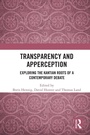
Boris Hennig | David Hunter | Thomas Land
Transparency and Apperception
Exploring the Kantian Roots of a Contemporary Debate
Book
01/2024
1st Edition
Routledge
€62.60
Shipment within 15-20 days
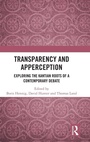
Boris Hennig | David Hunter | Thomas Land
Transparency and Apperception
Exploring the Kantian Roots of a Contemporary Debate
Book
07/2020
1st Edition
Routledge
€132.00
Shipment within 15-20 days
Persons
Boris Hennig, David Hunter and Thomas Land are faculty members in the Philosophy Department at Ryerson University in Toronto, Canada.
Content
1. Assertion and transparent self-knowledge
2. Kant and the transparency of the mind
3. The puzzle of transparency and how to solve it
4. Spontaneity and Self-Consciousness in the Groundwork and the B-Critique
5. 'I do not cognize myself through being conscious of myself as thinking': Self-knowledge and the irreducibility of self-objectification in Kant
6. Kant's "I think" and the agential approach to self-knowledge
7. Transparency and reflection
2. Kant and the transparency of the mind
3. The puzzle of transparency and how to solve it
4. Spontaneity and Self-Consciousness in the Groundwork and the B-Critique
5. 'I do not cognize myself through being conscious of myself as thinking': Self-knowledge and the irreducibility of self-objectification in Kant
6. Kant's "I think" and the agential approach to self-knowledge
7. Transparency and reflection
