

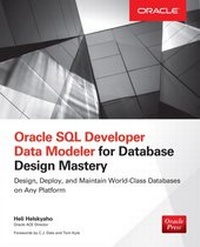
Oracle SQL Developer Data Modeler for Database Design Mastery
1st Edition
Published on 22. May 2015
338 pages
978-0-07-185010-0 (ISBN)
Available for download
Description

Design Databases with Oracle SQL Developer Data Modeler In this practical guide, Oracle ACE Director Heli Helskyaho explains the process of database design using Oracle SQL Developer Data Modeler the powerful, free tool that flawlessly supports Oracle and other database environments, including Microsoft SQL Server and IBM DB2. Oracle SQL Developer Data Modeler for Database Design Mastery covers requirement analysis, conceptual, logical, and physical design, data warehousing, reporting, and more. Create and deploy high-performance enterprise databases on any platform using the expert tips and best practices in this Oracle Press book. Configure Oracle SQL Developer Data Modeler Perform requirement analysis Translate requirements into a formal conceptual data model and process models Transform the conceptual (logical) model into a relational model Manage physical database design Generate data definition language (DDL) scripts to create database objects Design a data warehouse database Use subversion for version control and to enable a multiuser environment Document an existing database Use the reporting tools in Oracle SQL Developer Data Modeler Compare designs and the database
More details
Other editions
Additional editions
Book
06/2015
McGraw-Hill Inc.,US
€66.70
Shipment within 15-20 days
Content
- Cover
- Title Page
- Copyright Page
- Dedication Page
- About the Author
- Contents at a Glance
- Contents
- Forewords
- Acknowledgments
- Introduction
- 1 Introducing Database Design and Oracle SQL Developer Data Modeler
- What Is Oracle SQL Developer Data Modeler?
- Designing Databases with Oracle SQL Developer Data Modeler
- Summary
- 2 Getting Started with Oracle SQL Developer Data Modeler
- Downloading and Exploring the Tool
- What Is a Design?
- Exploring the Interface
- Customizing the Interface
- Tuning Oracle SQL Developer Data Modeler
- Setting Preferences
- Introducing Design Properties
- Introducing Glossaries
- Introducing Domains
- Introducing Design Rules
- Performance Tuning
- Summary
- 3 Introducing Requirements Analysis
- Gathering Requirements for the Logical Model
- Gathering Requirements for the Process Model
- Introducing Data Flow Diagrams
- Introducing Transformation Packages
- Adding Business Information
- Summary
- 4 Introducing Conceptual Database Design (Logical Model)
- Setting Preferences and Properties
- Introducing the Logical Model
- An Entity and Its Attributes
- A Relationship
- Constraints
- Entity Views
- Inheritance
- Subviews
- Displays
- Summary
- 5 Introducing Logical Database Design (Relational Model)
- Setting Preferences and Properties
- Transforming from a Logical Model to a Relational Model
- Setting Transformation Rules
- Engineer to Relational Model
- Introducing the Relational Model
- Tables
- Views
- Name Abbreviations and Prefix Management
- Name Abbreviation
- Prefix Management
- Tuning and Refactoring Your Model
- Summary
- 6 Introducing Physical Database Design
- Setting Preferences and Properties
- Creating a Physical Model
- Administering RDBMS Sites
- A New Physical Model
- Defining Physical Model Properties
- Defining Users and Roles
- Storage Templates and LOB Storages
- Tablespaces
- Synonyms
- Tables
- Sequences
- Views
- Materialized Views
- Stored Procedures, Functions, and Packages
- Triggers
- User-Defined Data Types
- Other Elements
- Propagating Properties
- Indexing
- Partitioning
- Summary
- 7 Generating DDL Scripts for Creating Database Objects
- Setting Preferences and Properties
- Exporting a DDL File
- Exploring DDL Generation Options
- Summary
- 8 Designing a Data Warehouse Database
- Introducing Dimensional Modeling Techniques
- Exploring Dimensional Design
- Star Schema or Snowflake
- Data Vault
- Physical Database Design and DDLs
- Introducing Multidimensional Design
- Creating a Multidimensional Model
- Creating the Physical Model and Exports
- Reporting
- Using Dynamic Properties and User-Defined Properties
- Summary
- 9 Using Version Control and Working in a Multiuser Environment (Subversion)
- Setting Preferences and Properties
- Introducing Subversion
- Connecting to Subversion
- Using Subversion in Oracle SQL Developer Data Modeler
- Exploring the Oracle SQL Developer Data Modeler Tools for Subversion
- Adding a Design to Subversion
- Making Changes to a Design You Have Worked with Before
- Checking Out a Design from Subversion
- Solving Conflicts
- Making Changes Based on an Older Revision
- Understanding Branches, Changes, and Synchronizing
- Sharing Files
- Working in a Multiuser Environment with Microsoft Excel
- Summary
- 10 Documenting an Existing Database
- Setting Preferences and Properties
- Reverse Engineering an Existing Database
- Reverse Engineering from a Data Dictionary
- Importing a DDL File
- Discovering Foreign Keys
- Engineering to the Logical Model
- Importing Documentation from a Third-Party Modeling Tool
- Importing from Oracle Designer
- Summary
- 11 Generating Reports and Using Search
- Setting Preferences and Properties
- Generating Reports Based on Open Designs
- Introducing the Reporting Repository
- Creating a Reporting Repository
- Exporting a Design to the Reporting Repository
- Running Reports from the Reporting Repository
- Using Search
- Reporting with Search
- Simple Mode
- Advanced Mode
- Setting Common Properties
- Summary
- 12 Comparing Designs and the Database
- Setting Preferences and Properties
- Comparing Two Designs
- Importing a Data Modeler Design
- Comparing/Merging Models
- Comparing a Design to the Database
- Summary
- Index

