


Borders of Desire
Gender and Sexuality at the Eastern Borders of Europe
1st Edition
Published on 20. June 2023
200 pages
978-1-5261-6520-6 (ISBN)
Description

Borders of desire takes a novel approach to the study of borders: rather than seeing them only as obstacles to the fulfillment of human desires, this collection focuses on how borders can also be productive of desire. Based on long-term ethnographic engagement with sites along the eastern borders of Europe, particularly in the Baltics and the Balkans, the studies in this volume illuminate how gendered and sexualized desires are generated by the existence of borders and how they are imagined. As the chapters show, borders can create new desires expressed as aspirations, resentments, and actions including physical movements across borders for pleasure or work, or collective enactments of political ideals or resistance. The collection also shows how the persistent east/west symbolic border continues to act as a source of these desires in European political and social life. -- .
Reviews / Votes
"Within a literature and dominant political discourse that overwhelmingly continue to view borders as obstacles, this book regards borders as performative: it asks what borders 'do', rather than what they 'are'. By asking how borders produce-rather than only thwart-desires, the authors look afresh at the many ways gender and sexuality are at issue in border crossing. Considering desire, they return attention to the agency, humanity and imagination of border crossers and offer a glimpse into the complexity of their dreams, their decision-making and their experiences."Jane Cowan, Emeritus Professor of Anthropology, University of Sussex
"Empirically grounded and conceptually consistent, this collection is a fascinating sociological and anthropological read. It challenges the view of Europe as a homogeneous project and offers a nuanced vision of this area through its multiple borders and the diverse mutual desires of citizens of adjacent European countries with different historical, political and economic backgrounds. I would highly recommend this book to a multidisciplinary readership, including scholars of migration, gender and sexuality studies, postcolonial and postsocialist studies, European studies and political science, as well as media and memory studies, in addition to border researchers."
Olga Tkach, Journal of Borderlands Studies
"This volume provides pivotal insights into important immediate antecedents to current anxieties, imaginaries, and controversies playing out on Europe's eastern borders."
Katharina Wegmann, Comparative Southeast European Studies
'Unarguably, one of its most important contributions is the conceptualization of borders as porous and contingent. Under the current geopolitical tensions and the hardening of state borders between the EU states with Russia and Belarus as well as the symbolically hardening of borders between Israel and the Middle East, reflecting the 'othering' processes, the book reveals how border territories that Anzaldua (1987) and Vila (2003) describe as being infiltrated with hatred, anger, and exploitations, may at the same time create and be filled with various forms of desires. These desires inevitably make the borders porous, revealing their artificiality, yet importance in forming identities and communities and imagining other ways.'
Pauliina Lukinmaa, Nordic Journal of Migration Research -- .
All prices
More details
Series
Language
English
Place of publication
United Kingdom
Target group
College/higher education
Professional and scholarly
Product notice
Reflowable
Illustrations
2 b&w figures
ISBN-13
978-1-5261-6520-6 (9781526165206)
Copyright in bibliographic data and cover images is held by Nielsen Book Services Limited or by the publishers or by their respective licensors: all rights reserved.
Schweitzer Classification
Other editions
Additional editions
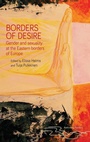
Elissa Helms | Tuija Pulkkinen
Borders of Desire
Gender and Sexuality at the Eastern Borders of Europe
Book
06/2023
Manchester University Press
€125.00
Shipment within 15-20 days
Persons
Elissa Helms is Associate Professor in the Department of Gender Studies at Central European University, Vienna
Tuija Pulkkinen is Professor of Gender Studies at the University of Helsinki -- .
Tuija Pulkkinen is Professor of Gender Studies at the University of Helsinki -- .
Content
Introduction: Gender, sexuality, and desire at the eastern borders of Europe - Elissa Helms and Tuija Pulkkinen
1 Crossing the lines on Lesvos: Navigating overlapping borders in the Aegean - Sarah Green
2 Transgressing realities: Desire and the border in the southern Balkans - Rozita Dimova
3 How do borders produce ethno-sexualisation and lived senses of sexuality? Insights from lives of Latvian women in Guernsey - Aija Lulle
4 Moving desire: Multiple lives and desires in border-crossing prostitution - May-Len Skilbrei
5 Sex, love, and a better future: Gendered desire in the narratives of women from post-socialist countries in Italy and Finland - Anastasia Diatlova and Lena Naere
6 The hero and the 'whore': Croatia's sexualized and gendered (self-)ascriptions and its desire for European belonging - Michaela Schaeuble
7 Desires for past and future in border crossings on the Finnish-Russian border - Olga Davidova-Minguet and Pirjo Poellaenen
8 Desire to resist: EU border-making and anti-LGBT mobilization in Serbia - Katja Kahlina and Dusica Ristivojevic? -- .
1 Crossing the lines on Lesvos: Navigating overlapping borders in the Aegean - Sarah Green
2 Transgressing realities: Desire and the border in the southern Balkans - Rozita Dimova
3 How do borders produce ethno-sexualisation and lived senses of sexuality? Insights from lives of Latvian women in Guernsey - Aija Lulle
4 Moving desire: Multiple lives and desires in border-crossing prostitution - May-Len Skilbrei
5 Sex, love, and a better future: Gendered desire in the narratives of women from post-socialist countries in Italy and Finland - Anastasia Diatlova and Lena Naere
6 The hero and the 'whore': Croatia's sexualized and gendered (self-)ascriptions and its desire for European belonging - Michaela Schaeuble
7 Desires for past and future in border crossings on the Finnish-Russian border - Olga Davidova-Minguet and Pirjo Poellaenen
8 Desire to resist: EU border-making and anti-LGBT mobilization in Serbia - Katja Kahlina and Dusica Ristivojevic? -- .
