

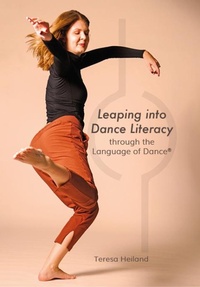
Leaping into Dance Literacy through the Language of Dance (R)
Published on 25. January 2023
447 pages
978-1-78938-612-7 (ISBN)
Description

The main aim of this book is to present the theory and purpose underpinning the approaches to dance literacy as explored by the Language of Dance (R) community in the USA and UK. Through their teacher training programs, they are changing the face of dance-based dance literacy using motif notation.
Through their teacher training programs, they are changing the face of dance-based dance literacy using motif notation. This book reveals how dance notation literacy has changed due to practices being focused on constructivist and constructionist pedagogy. Based on work by dance educator Ann Hutchinson Guest and expanded upon by her proteges, this is the first book of its kind to bring together theory, praxis, original research outcomes, taxonomies, model lesson plans, learning domain taxonomies of dance, and voices of dance teachers who have explored using dance notation literacy. We are in a new era for educating with dance notation, focusing on learners' engagement by making connections between the learning domains using constructivist and constructionist learning approaches.
Arts-literate dancers can deepen their dance craft and transfer their arts knowledge, capacities, and skills to lifelong learning. Dance-based dance literacy practices using notation enhance learners' flexibility, adaptability, self-direction, initiative, productivity, responsibility, leadership, and cross-cultural skills.
The book will appeal to dance educators focusing on cognitive and metacognitive learning in dance using communication, problem-solving, and critical thinking.
Useful for preschool and primary teachers aiming to integrate dance into classroom experiences and for secondary teachers teaching dance and looking to upgrade their approach to dance literacy so students are able to achieve higher level cognitive learning, problem solving, and social skills in dance classrooms.
Choreographers and dance teachers will find new approaches to dance making and to expressing their craft using a system that is well codified and now augmented with examples to guide them with making their own projects and processes.
Anyone with an interest in the idea of dance literacy will find concrete examples of how to put their knowledge into practice to advance their teaching and dance making.
Through their teacher training programs, they are changing the face of dance-based dance literacy using motif notation. This book reveals how dance notation literacy has changed due to practices being focused on constructivist and constructionist pedagogy. Based on work by dance educator Ann Hutchinson Guest and expanded upon by her proteges, this is the first book of its kind to bring together theory, praxis, original research outcomes, taxonomies, model lesson plans, learning domain taxonomies of dance, and voices of dance teachers who have explored using dance notation literacy. We are in a new era for educating with dance notation, focusing on learners' engagement by making connections between the learning domains using constructivist and constructionist learning approaches.
Arts-literate dancers can deepen their dance craft and transfer their arts knowledge, capacities, and skills to lifelong learning. Dance-based dance literacy practices using notation enhance learners' flexibility, adaptability, self-direction, initiative, productivity, responsibility, leadership, and cross-cultural skills.
The book will appeal to dance educators focusing on cognitive and metacognitive learning in dance using communication, problem-solving, and critical thinking.
Useful for preschool and primary teachers aiming to integrate dance into classroom experiences and for secondary teachers teaching dance and looking to upgrade their approach to dance literacy so students are able to achieve higher level cognitive learning, problem solving, and social skills in dance classrooms.
Choreographers and dance teachers will find new approaches to dance making and to expressing their craft using a system that is well codified and now augmented with examples to guide them with making their own projects and processes.
Anyone with an interest in the idea of dance literacy will find concrete examples of how to put their knowledge into practice to advance their teaching and dance making.
More details
Edition
New edition
Language
English
Place of publication
Bristol
United Kingdom
Publishing group
Intellect
Target group
Professional and scholarly
Edition type
New edition
Illustrations
110 Line drawings, black and white
ISBN-13
978-1-78938-612-7 (9781789386127)
Copyright in bibliographic data and cover images is held by Nielsen Book Services Limited or by the publishers or by their respective licensors: all rights reserved.
Schweitzer Classification
Other editions
Additional editions
Book
01/2023
Intellect Books
€146.00
Shipment within 3-4 weeks
Person
Teresa Heiland Ph.D, CLMA, Language of Dance (R) Certification Specialist, and associate professor of dance works at the intersection of the performing arts, education, dance-literacy, dance wellness, and somatics. She seeks to produce pedagogical and research activities that inform disciplinary practices, provoke personal development, and deepen dancers' understanding of themselves as artists, researchers, and educators. She teaches Laban Bartenieff Movement Analysis, dance pedagogy, dance composition, somatics and dance wellness, research methods, and approaches to writing. She has served, since 2006, on the Board of the Language of Dance Center.
Content
Acknowledgments
Foreword
Introduction
PART 1: BACKGROUND AND DEVELOPMENT OF LANGUAGE OF DANCE (R) PEDAGOGY
1. The Development of the Movement Alphabet (R) and Language of Dance (R)
2. Changes in Literacy, Dance Literacy, and Dance-Based Dance Literacy
3. Development of the LOD Approach, Theory, and Pedagogy: Inquiry Spiral of Sequential Growth, Basic Language Skills, Literacy Processes, and Language Domain
PART 2: METHODS FOR RESEARCHING AND BUILDING PERSONAL TEACHING APPROACHES
4. Analysis of an LOD Lesson Plan Using Two Methods: Language Skills and Literacy Processes Analysis Method and Dance Notation Learning Outcomes Matrix Analysis Method - Teresa Heiland and Kaitlyn Whitaker
5. Teaching and Learning Activities Used in the LOD Approach
6. Creating Lesson Plans Using the LOD Approach to Motif Notation
7. The LOD Tool Kit
PART 3: COLLECTION OF LESSON PLANS FROM LOD PRACTITIONERS
8. Lesson Plans for Grades K to 5
9. Lesson Plans for Grades 6 to 8
10. Lesson Plans for Grades 9 to 12
11. Lesson Plans for College-Level Dancers
12. Lesson Plans for Community
Appendix A:
- I. Reading and Interpreting Scores,
- II. Notating Dance, and
- III. Documenting your Choreography
Appendix B:
- Motif Notation Practice for Writing Using
- LOD and LBMA
References
Index
Foreword
Introduction
PART 1: BACKGROUND AND DEVELOPMENT OF LANGUAGE OF DANCE (R) PEDAGOGY
1. The Development of the Movement Alphabet (R) and Language of Dance (R)
2. Changes in Literacy, Dance Literacy, and Dance-Based Dance Literacy
3. Development of the LOD Approach, Theory, and Pedagogy: Inquiry Spiral of Sequential Growth, Basic Language Skills, Literacy Processes, and Language Domain
PART 2: METHODS FOR RESEARCHING AND BUILDING PERSONAL TEACHING APPROACHES
4. Analysis of an LOD Lesson Plan Using Two Methods: Language Skills and Literacy Processes Analysis Method and Dance Notation Learning Outcomes Matrix Analysis Method - Teresa Heiland and Kaitlyn Whitaker
5. Teaching and Learning Activities Used in the LOD Approach
6. Creating Lesson Plans Using the LOD Approach to Motif Notation
7. The LOD Tool Kit
PART 3: COLLECTION OF LESSON PLANS FROM LOD PRACTITIONERS
8. Lesson Plans for Grades K to 5
9. Lesson Plans for Grades 6 to 8
10. Lesson Plans for Grades 9 to 12
11. Lesson Plans for College-Level Dancers
12. Lesson Plans for Community
Appendix A:
- I. Reading and Interpreting Scores,
- II. Notating Dance, and
- III. Documenting your Choreography
Appendix B:
- Motif Notation Practice for Writing Using
- LOD and LBMA
References
Index
