

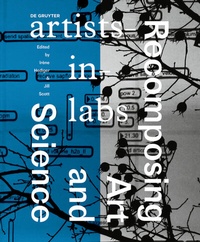
Recomposing Art and Science
Description

The interfaces between art and the scientific disciplines of biology, environmental science, neuroscience, and physics pose interdisciplinary questions that are an inspiration to researchers. The authors compare artists' experimentation set-ups and thereby reveal new levels of knowledge. The examples in the Artists-in-Labs program illustrate how artists approach problems and, in this way, create new tools for science.
The authors of this illustrated volume of essays include Harriet Hawkins, Irene Hediger, Jill Scott, Arnd Schneider , Susanne Witzgall, Lisa Blackman, Jens Hauser and Dieter Mersch.
More details
Other editions
Additional editions
Persons
Prof. Dr. Jillian Scott, Irène Hediger, Zurich University of the Arts.
Content
- Intro
- Foreword
- Introduction
- Exploring the Unknown
- Composing
- Art-Science and (Re)Making Worlds: Shaping Knowledge, Transforming Subjects, Challenging Institutions
- Embodying
- Creative Incubators for a Common Culture
- Explaining the Edge
- Art and Anthropology
- Neglecting
- Overlapping Waves and New Knowledge Difference, Diffraction, and the Dialog between Art and Science
- Dreaming
- Inventive Experimentation: Weird Science, Affectivity and Archives of the Future
- Rhythm Making. Heart Culture. Our Everyday World Received an Additional, Literally Unheard Dimension of Sound
- Biomediality and Art
- Hovering
- Aesthetic Difference: On the "Wisdom" of the Arts
- Modeling
