

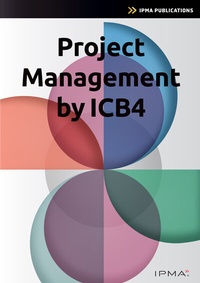
Project Management by ICB4 - IPMA
1st Edition
Published on 21. September 2023
809 pages
978-94-018-1094-4 (ISBN)
Description

IPMA observes an increasing number and importance of projects in business, public and people's lives, also known as 'projectification'.
In the world of globalisation, an increasing number of organisations are working project-based to cope with the challenges of modern times. Especially now, society is on the brink of such significant changes as global warming and artificial intelligence. Projects drive the development of new products and services, expansions, new capabilities, implementation of new strategies and new generations of infrastructure, and major maintenance and upgrade of existing facilities and infrastructure.
This book provides a knowledge base for developing individual competencies for managing projects as described in the IPMA Individual Competence Baseline version 4, which encompasses:
- Perspective competencies
- People competencies
- Practice competencies
As projects become increasingly important, we must continue to realise that projects begin and end with people and that their competent performance within the broader context of the environment is at the heart of any successful project.
In this book, theories and practices for all ICB4 competencies are described. They are logically sequenced, explained and enriched with practical approaches, which can be learned and applied in the daily project management practice. As such, it aligns entirely with IPMA's vision: to strengthen competence across society to enable a world in which all projects succeed. This book also supports obtaining an IPMA certificate as proof of your competence in projects.
More details
Other editions
Additional editions
Bert Hedeman | Roel Riepma
Project Management by Icb4
Book
10/2023
Van Haren Publishing
€153.10
Shipment within 10-15 days
Bert Hedeman | Roel Riepma
Project Management by ICB4 - IPMA
E-Book
09/2023
1st Edition
Van Haren Publishing
€78.99
Available for download
Content
- Intro
- Title
- Copyright
- General Introduction
- Purpose
- Audiences and uses
- Certification scheme
- 1. Structure of the Book
- Order of subjects
- Vision and roadmap
- Structure of the chapters
- 2. Competence Development
- Purpose of competence development
- Practice Competences
- 3. Project Orientation
- What is a project?
- What is project management?
- Reasons to initiate a project
- Position projects
- Necessary conditions for a project to exist
- Work forms
- Staging, controlling, decision making
- Projects within the product lifecycle
- Projects at different levels
- Project output, outcome, benefits and goals
- People and perspective context of projects
- Agile versus Waterfall
- Sustainability
- Tailoring
- Responsibilities
- Advanced
- Project Excellence Baseline (advanced)
- 4. Project Preparation
- 4.01 Project Preparation Stage
- Project preparation stage
- Project mandate and project outline
- Plan for the project definition stage
- Project decision
- Sustainability
- Tailoring
- Responsibilities
- 4.02 Stakeholders
- Stakeholder analysis
- Engage stakeholders
- Managing expectations
- Stakeholder management strategy and Plan
- Sustainability
- Tailoring
- Responsibilities
- 4.03 Project Organisation
- Project governance
- Customer-supplier relationship
- Separation of technique and management
- Project management structure
- Project organisation
- Roles and responsibilities
- Meeting structure and linking-pin principle
- Responsibilities matrix (RASCI model)
- Sustainability
- Tailoring
- Responsibilities
- 4.04 Requirements and Objectives
- Project, output, outcome, benefits, and goal
- Quality expectations and acceptance criteria
- Requirements and requirement specification
- Sustainability
- Tailoring
- Responsibilities
- Advanced
- Value management (advanced)
- Total cost of ownership (advanced)
- Product cost management (advanced)
- 4.05 Risk and Opportunity
- Risks and opportunities
- Risk management
- Risk management strategy and response plan
- Risk definitions
- Probability, impact and proximity
- Risk owner and risk action-holder
- Different types of risks
- Risk categories
- Risk responses
- Inherent, residual and secondary risk
- Risk techniques
- Time and cost contingency reserves
- Sustainability
- Tailoring
- Responsibilities
- Advanced
- Opportunity responses (advanced)
- ISO 31000 Risk management (advanced)
- Risk identification techniques (advanced)
- Risk assessment techniques (advanced)
- 5. Project Definition
- 5.01 Project Definition Stage
- Activities project definition stage
- Project management plan
- Project start-up workshop
- Kick-off
- Project decision/decision to fund
- Sustainability
- Tailoring
- Responsibilities
- Advanced
- Setting up a project support (advanced)
- 5.02 Project Design
- Project (management) approach and design
- Project success
- Project success criteria
- Project success factors
- Project management success
- Project performance management
- lessons learned
- Sustainability
- Tailoring
- Responsibilities
- Advanced
- Diamond model (advanced)
- 5.03 Scope
- Scope
- Scope creep
- Project breakdown structures
- Work Breakdown Structure (WBS)
- Product Breakdown Structure (PBS)
- Scope (configuration) management
- Sustainability
- Tailoring
- Responsibilities
- Advanced
- Position sub-projects in a WBS (advanced)
- 5.04 Quality
- Process and product quality
- Standard operating procedures
- Verification and validation
- Quality management
- Quality management strategy and plan
- Deming cycle
- Standards, norms and regulations
- Quality review, audit and evaluation
- Quality register/test register
- Quality tools
- Sustainability
- Tailoring
- Responsibilities
- Advanced
- Additional quality tools (advanced)
- Inspection methods and techniques (advanced)
- Testing and test concepts (advanced)
- Quality costs (advanced)
- 5.05 Time
- Planning types
- Baselines
- Project stages and phases
- Phasing models
- Scheduling methods
- Precedence chart
- Gantt chart
- Shorten the time schedule
- Sustainability
- Tailoring
- Responsibilities
- Advanced
- Other scheduling restrictions (advanced)
- Three-point estimates (advanced)
- 5.06 Resources
- Resource management
- Resource utilisation
- Resource allocation
- Estimating techniques
- Sustainability
- Tailoring
- Responsibilities
- Advanced
- Critical Chain Method (advanced)
- 5.07 Finance
- Estimating, budgeting and cost control
- Cost breakdown structure
- Reserves and margins
- Cost and budget control
- Project and business accounting
- Power of attorney
- Sustainability
- Tailoring
- Responsibilities
- Advanced
- Linking WBS and CBS with the OBS (advanced)
- Financial control & cash flow planning (advanced)
- Project financing (advanced)
- 5.08 Business Justification
- Characteristics business case
- Business case document
- Baseline measurement, baseline scenario and delta measurement
- The business case in the product lifecycle
- Customer and supplier business cases
- Sustainability
- Tailoring
- Responsibilities
- 6. Project Delivery and Close-out
- 6.01 Procurement
- Make or buy
- Procurement process
- Selection and award criteria
- Best-effort and performance agreements
- Contractual terms and conditions
- General terms and conditions
- Sustainability
- Tailoring
- Responsibilities
- Advanced
- Sourcing strategies (advanced)
- Supplier development methodologies (advanced)
- Procurement strategy and plan (advanced)
- Type of contracts (advanced)
- RFI, RFS, RFP, RFQ (advanced)
- Supply and demand concept (advanced)
- Tender procedures and practices (advanced)
- Letter of intent and pre-contractual arrangements (advanced)
- Securities (advanced)
- Contract management (advanced)
- Claim management (advanced)
- Various partnerships (advanced)
- Supply chain management (advanced)
- 6.02 Change Control
- Change control and change management
- Three types of issues and other issues
- Change control strategy and change register
- Off-specifications and off-specification register
- Other issues and issue register
- Change authority and change budget
- Priority and urgency
- Sustainability
- Tailoring
- Responsibilities
- Advanced
- Configuration management (advanced)
- 6.03 Information and Documentation
- Information versus data
- Information versus document management
- Information management infrastructure
- Information management strategy
- Information management plan
- Quality and security criteria
- Project filing structure
- Document tracking matrix
- Sustainability
- Tailoring
- Responsibilities
- 6.04 Control and Reporting
- Control cycle
- Management and reporting levels
- Management by objectives
- Management by Exception
- Daily management
- Managing stage transition
- Escalating exceptions
- Project controls
- Project management products
- Trend analysis
- Milestone trend analysis
- Sustainability
- Tailoring
- Responsibilities
- Advanced
- Earned Value Analysis (advanced)
- 6.05 Organisational Change and Transformation
- Change management
- Change management approach
- Leading change - Kotter
- Sustainability
- Tailoring
- Responsibilities
- Advanced
- Kübler-Ross' Change Curve (advanced)
- Diffusion of Innovation - Rogers (advanced)
- Learning organisations - Senge (advanced)
- Transformational learning - Schein (advanced)
- 6.06 Project Closure
- Handing over the project output
- Decommission the project
- Project evaluation
- Closure and discharge
- Sustainability
- Tailoring
- Responsibilities
- People Competences
- 7 Managing Yourself
- 7.01 Self-reflection and Self-management
- Self-reflection and self-analysis
- Emotional intelligence
- Johari diagram
- Big Five
- Core quadrants
- Effectiveness theories
- Self-motivation
- The seven habits of highly effective people
- Personal time management
- Stress management
- Eustress and distress
- Triggers and symptoms of distress
- Reducing distress
- Advanced
- Techniques personal time management (advanced)
- Rational Emotive Behaviour Therapy (advanced)
- Steps in goal setting (advanced)
- techniques for reducing distress (advanced)
- 7.02 Personal Integrity and Reliability
- Aspects of reliability
- Ethics
- Social equity and sustainability principles
- Professional ethics and IPMA Code of Ethics
- Advanced
- Ethics test (advanced)
- Personal ethics versus business ethics (advanced)
- UN Universal Declaration of Human Rights (advanced)
- 7.03 Personal Communication
- Communication
- Levels of communication
- Active listening
- Asking the right questions
- Giving and receiving feedback
- Meetings
- Facilitated workshops
- Written communicating
- Presentations
- Advanced
- Elevator pitch (advanced)
- Bad news conversation (advanced)
- 8 Connecting with Others
- 8.01 Relationships and Engagement
- Aspects, characteristics and policies on openness
- Building arguments
- Building networks
- Motivation theories
- Maslow hierarchy of needs
- Motivation and hygiene factors
- Theory X and Y manager
- Advanced
- Self-Determination Theory (advanced)
- Behavioural patterns/Rose of Leary (advanced)
- Spiral Dynamics (advanced)
- The role of the project manager as a consultant (advanced)
- Creating an open business culture (advanced)
- 8.02 Leadership
- Differences between leadership and management
- Styles of Leadership
- Contingency theory
- Situational leadership
- Circle of influence and circle of concern
- Assertiveness
- Advanced
- Role content, interpretation and expectation (advanced)
- Coaching (advanced)
- Servant leadership (advanced)
- Sense-making and sense-giving (advanced)
- three levels of leadership (advanced)
- Vroom and Yetton decision model (advanced)
- 8.03 Teamwork
- Team development phases
- Situational leadership and team development phases
- Team interventions at phase transitions
- Teambuilding
- Dealing with resistance
- Advanced
- Team composition (advanced)
- Developing an Effective project culture (advanced)
- Team roles (advanced)
- Group thinking (advanced)
- Dealing with resistance (advanced)
- Managing virtual teams (advanced)
- 8.04 Resourcefulness
- Thinking methods
- Analytic problem-solving
- Creative problem-solving
- Methods of decision-making
- Cause identification and analysis techniques
- Solution identification techniques
- Divergent creativity techniques
- Solution assessment techniques
- Solution evaluation techniques
- Advanced
- problem-solving in standardised processes (advanced)
- Additional Divergent creativity techniques (advanced)
- Convergent creativity techniques (advanced)
- Decision-making procedure (advanced)
- Innovation processes and techniques (advanced)
- organisational innovation (advanced)
- 8.05 Result Orientation
- Efficiency, effectiveness and productivity
- Continuous improvement (Kaizen)
- Advanced
- Entrepreneurship (advanced)
- Efficiency improvement techniques (advanced)
- Results-orientated project management (advanced)
- Political and social sensitivity (advanced)
- 8.06 Negotiation
- Negotiation strategies
- Positional negotiation
- Best Alternative to a Negotiated Agreement
- Principled negotiations
- Advanced
- Phases in a negotiation process (advanced)
- Influential Aspects of negotiation (advanced)
- Negotiation tactics (advanced)
- 8.07 Conflicts and Crises
- Functional and dysfunctional conflicts
- Types of conflict
- Conflict management styles
- Phases in a conflict
- De-escalation in the different conflict phases
- Advanced
- various roles in conflicts (advanced)
- Crisis and desired style of leadership (advanced)
- Crisis plan (advanced)
- Perspective Competences
- 9. Implementing Changes
- 9.01 Strategy
- Align with organisational mission, vision and strategic objectives
- Organisational mission, vision, and core values
- Strategy and strategic objectives
- Benchmarking
- SWOT analysis
- Responsibilities
- Advanced
- Ten Schools of Thought (advanced)
- Business Model Canvas (advanced)
- 7S-model van McKinsey (advanced)
- Strategic performance management (advanced)
- EFQM model (advanced)
- Investment calculations (advanced)
- Net present value analysis (advanced)
- Payback period (advanced)
- Break-even point (advanced)
- 9.02 Programme Management
- Programme and programme management
- Differences between projects and programmes
- Responsibilities
- Advanced
- Programme organisation (advanced)
- Multi-organisation programmes (advanced)
- Benefits management (advanced)
- Programme lifecycle (advanced)
- Core documents (advanced)
- 9.03 Portfolio Management
- Portfolio management
- Management by projects
- Programme, portfolio management and management by projects
- Responsibilities
- Advanced
- Prioritise projects and programmes (advanced)
- Portfolio organisation (advanced)
- Portfolio lifecycle (advanced)
- 9.04 Supporting Functions and implementing PPP management
- Purpose and characteristics of a permanent PMO
- Added value of a permanent PMO
- Responsibilities
- Advanced
- Implementing a PPP organisation (advanced)
- ISO 21502: 2020, Guidance on Project Management (advanced)
- IPMA Organisational Competence Baseline (advanced)
- Identifying the maturity level (advanced)
- 9.05 Development Frameworks
- Agile
- Scrum
- Responsibilities
- Advanced
- Lean Six Sigma (advanced)
- Kanban (advanced)
- 10. Internal Context
- 10.01 Organisation Theories
- Permanent organisation
- Interfaces between project and permanent organisation
- Organisational models
- Responsibilities
- Advanced
- Systems approach (advanced)
- Organisational configurations framework (advanced)
- Total Quality Management (advanced)
- Theory of Constraint (advanced)
- 10.02 Personnel Management
- Personnel policy and personnel management
- Personnel management in projects
- Responsibilities
- Advanced
- Knowledge management (advanced)
- Competence management (advanced)
- Single-, double-, and triple-loop learning (advanced)
- 10.03 Financial Administration
- Cost classification
- Responsibilities
- Advanced
- Principles of financial accounting (advanced)
- Accounting (advanced)
- Annual accounts (advanced)
- Calculation of net cash flow (advanced)
- Valuation of projects (advanced)
- Allocation of indirect costs (advanced)
- 11. External Context
- 11.01 Health, Safety, Security and Environment
- Health and safety legislation
- Security
- General Data Protection Regulation
- Environmental legislation
- Responsibilities
- 11.02 Sustainability
- Sustainable development
- People, Planet, Profit (3Ps model)
- Sustainable development in projects
- Corporate Social Responsibilities
- The Triple Bottom Line (TBL)
- Responsibilities
- Advanced
- The 10 Principles of the UN Global Compact (advanced)
- ISO 26000 Corporate social responsibility (advanced)
- 11.03 Laws and Legislation
- Agreements
- Shortcomings in the fulfilment of an agreement
- Unlawful act/tort
- Regulatory agencies
- Responsibility of the project manager in law enforcement
- Responsibilities
- Advanced
- Areas of law (advanced)
- Intellectual property law (advanced)
- 11.04 Power and Interests
- Projects related to power and interests
- Power and authority
- Principles of persuasion
- PESTLE analysis
- Responsibilities
- Advanced
- Sources of interest (advanced)
- 11.05 Culture and Values
- Projects related to culture and values
- Dimensions of national cultures
- Organisational culture model
- Responsibilities
- Advanced
- Organisational culture and decision-making (advanced)
- Annex
- A Glossary
- B Acronyms
- C Literature
- D Index
