

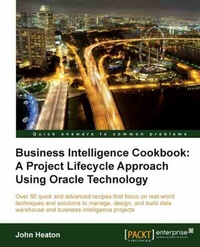
Business Intelligence Cookbook: A Project Lifecycle Approach Using Oracle Technology
Take your data warehousing and business intelligence to the next level with this practical guide to Oracle Database 11g. Packed with illustrations, tips, and examples, it has over 80 advanced recipes to fine-tune your skills and knowledge.
1st Edition
Published on 13. January 2025
368 pages
978-1-84968-549-8 (ISBN)
Description

Take your data warehousing and business intelligence to the next level with this practical guide to Oracle Database 11g. Packed with illustrations, tips, and examples, it has over 80 advanced recipes to fine-tune your skills and knowledge.Key Features - Full of illustrations, diagrams, and tips with clear step-by-step instructions and real time examples to perform key steps and functions on your project
- Practical ways to estimate the effort of a data warehouse solution based on a standard work breakdown structure.
- Learn to effectively turn the project from development to a live solution
- Best practices to create a blueprint for the business intelligence solution
Book DescriptionOracle Database 11g is a comprehensive database platform for data warehousing and business intelligence that combines industry-leading scalability and performance, deeply-integrated analytics, and embedded integration and data-quality all in a single platform running on a reliable, low-cost grid infrastructure. This book steps through the lifecycle of building a data warehouse with key tips and techniques along the way. Business Intelligence Cookbook: A Project Lifecycle Approach Using Oracle Technology outlines the key ways to effectively use Oracle technology to deliver your business intelligence solution. This is a practical guide starting with key recipes for project management then moving onto project delivery. Business Intelligence Cookbook: A Project Lifecycle Approach Using Oracle Technology is a practical guide for performing key steps and functions on your project. This book starts with setting the foundation for a highly repeatable efficient project management approach by assessing your current methodology to see how suitable it is for a business intelligence program. We also learn to set up the project delivery phases to consistently estimate the effort for a project. Along the way we learn to create blueprints for the business intelligence solution that help to connect and map out the destination of the solution. We then move on to analyze requirements, sources, and data. Finally we learn to secure the data as it is an important asset within the organization and needs to be secured efficiently and effectively.What you will learn - Master some of the key techniques and components to enable you to visualise and interrogate information effectively
- Understand additional and advanced techniques to enhance your ETL/ELT solution
- Learn to build the data model using Oracle SQL Data Modeller and the Oracle Database to build your logical and physical data model and OBIEE to build the presentation data model.
- Develop data discovery scripts to uncover data issues and gaps
- Learn to reverse engineer source data models and map data sources to business requirements using Oracle SQL Data Modeller.
- Get to grips with mapping information into semantic definitions
- Understand the ways to define a security model
Who this book is forIf you are Project Managers or IT professionals looking to design and develop a data warehouse and business intelligence solution, then this is the best guide for you. This book assumes that you have a fundamental knowledge of data warehouse and business intelligence projects.
- Practical ways to estimate the effort of a data warehouse solution based on a standard work breakdown structure.
- Learn to effectively turn the project from development to a live solution
- Best practices to create a blueprint for the business intelligence solution
Book DescriptionOracle Database 11g is a comprehensive database platform for data warehousing and business intelligence that combines industry-leading scalability and performance, deeply-integrated analytics, and embedded integration and data-quality all in a single platform running on a reliable, low-cost grid infrastructure. This book steps through the lifecycle of building a data warehouse with key tips and techniques along the way. Business Intelligence Cookbook: A Project Lifecycle Approach Using Oracle Technology outlines the key ways to effectively use Oracle technology to deliver your business intelligence solution. This is a practical guide starting with key recipes for project management then moving onto project delivery. Business Intelligence Cookbook: A Project Lifecycle Approach Using Oracle Technology is a practical guide for performing key steps and functions on your project. This book starts with setting the foundation for a highly repeatable efficient project management approach by assessing your current methodology to see how suitable it is for a business intelligence program. We also learn to set up the project delivery phases to consistently estimate the effort for a project. Along the way we learn to create blueprints for the business intelligence solution that help to connect and map out the destination of the solution. We then move on to analyze requirements, sources, and data. Finally we learn to secure the data as it is an important asset within the organization and needs to be secured efficiently and effectively.What you will learn - Master some of the key techniques and components to enable you to visualise and interrogate information effectively
- Understand additional and advanced techniques to enhance your ETL/ELT solution
- Learn to build the data model using Oracle SQL Data Modeller and the Oracle Database to build your logical and physical data model and OBIEE to build the presentation data model.
- Develop data discovery scripts to uncover data issues and gaps
- Learn to reverse engineer source data models and map data sources to business requirements using Oracle SQL Data Modeller.
- Get to grips with mapping information into semantic definitions
- Understand the ways to define a security model
Who this book is forIf you are Project Managers or IT professionals looking to design and develop a data warehouse and business intelligence solution, then this is the best guide for you. This book assumes that you have a fundamental knowledge of data warehouse and business intelligence projects.
All prices
More details
Other editions
Additional editions
Book
06/2012
Packt Publishing
€74.60
Shipment within 3-4 weeks
Person
Heaton John :
John Heaton graduated top of his class with a Diploma in Information Technology from Technikon Witwatersrand in South Africa (equivalent to Bachelors in computer science). He has 10+ years with Oracle Corporation, including as a Practice Manager. John has been co-managing the North Business Intelligence and Warehouse Consulting practice delivering business intelligence solutions to Fortune 500 clients. During this time he has steadily added business skills and business training to his technical background. This experience gives John a great background and insight into the requirements of differing businesses and how to design and develop technical solutions enabling clients to realize their requirements. John's strengths include the ability to communicate the benefits of introducing a business intelligence solution into a client's architecture. He has consistently become a trusted advisor to our clients. John's philosophy is based on responsibility and mutual respect. He relies on the unique abilities of individuals to ensure success in different areas and strives to foster a team environment of creativity and achievement. Today, John specializes as a Solution Architect assisting customers in designing large complex data warehouses. Through his years John has worked in numerous industries with differing technologies. This broad experience base allows John to bring a unique perspective and understanding when designing and developing a data warehouse. The strong business background, coupled with technical expertise and his professional certification in Project Management makes John a valued asset to any project or organization. John frequently presents at Business Intelligence conferences on a variety of subjects.
John Heaton graduated top of his class with a Diploma in Information Technology from Technikon Witwatersrand in South Africa (equivalent to Bachelors in computer science). He has 10+ years with Oracle Corporation, including as a Practice Manager. John has been co-managing the North Business Intelligence and Warehouse Consulting practice delivering business intelligence solutions to Fortune 500 clients. During this time he has steadily added business skills and business training to his technical background. This experience gives John a great background and insight into the requirements of differing businesses and how to design and develop technical solutions enabling clients to realize their requirements. John's strengths include the ability to communicate the benefits of introducing a business intelligence solution into a client's architecture. He has consistently become a trusted advisor to our clients. John's philosophy is based on responsibility and mutual respect. He relies on the unique abilities of individuals to ensure success in different areas and strives to foster a team environment of creativity and achievement. Today, John specializes as a Solution Architect assisting customers in designing large complex data warehouses. Through his years John has worked in numerous industries with differing technologies. This broad experience base allows John to bring a unique perspective and understanding when designing and developing a data warehouse. The strong business background, coupled with technical expertise and his professional certification in Project Management makes John a valued asset to any project or organization. John frequently presents at Business Intelligence conferences on a variety of subjects.
Content
- Intro
- Business Intelligence Cookbook: A Project Lifecycle Approach Using Oracle Technology
- Table of Contents
- Business Intelligence Cookbook: A Project Lifecycle Approach Using Oracle Technology
- Credits
- About the Author
- Acknowledgement
- About the Reviewers
- www.PacktPub.com
- Support files, eBooks, discount offers and more
- Why Subscribe?
- Free Access for Packt account holders
- Instant Updates on New Packt Books
- Preface
- What this book covers
- What you need for this book
- Who this book is for
- Conventions
- Reader feedback
- Customer support
- Downloading the example code
- Errata
- Piracy
- Questions
- 1. Defining a Program
- Introduction
- Program or a project
- Getting ready
- How to do it...
- How it works...
- There's more...
- Mapping your business culture
- Getting ready
- How to do it...
- How it works...
- There's more...
- Organizations that have grown through acquisition
- Organizations that have grown organically
- Organizations and growth phases
- Metric driven organizations
- Report managed organizations
- See also
- Adapting your project delivery methodology
- Getting ready
- How to do it...
- How it works...
- There's more...
- See also
- Assessing your project team
- How to do it...
- How it works...
- See also
- Organizing your project team
- How to do it...
- There's more...
- See also
- 2. Establishing the Project
- Introduction
- Creating Definition work practice
- Getting ready
- How to do it...
- How it works...
- There's more...
- Creating Data Discovery work practice
- Getting ready
- How to do it...
- How it works...
- There's more...
- Creating Development work practice
- Getting ready
- How to do it...
- How it works...
- There's more...
- Creating Testing work practice
- Getting ready
- How to do it...
- How it works...
- There's more...
- Creating Promote work practice
- Getting ready
- How to do it...
- How it works...
- There's more...
- Creating Production work practice
- Getting ready
- How to do it...
- How it works...
- There's more...
- Building a standard work breakdown structure
- Getting ready
- How to do it...
- How it works...
- There's more...
- Identifying and quantifying the effort drivers
- Getting ready
- How to do it...
- How it works...
- There's more...
- Creating your estimation tool
- Getting ready
- How to do it...
- How it works...
- There's more...
- 3. Controlling the Project
- Introduction
- Requirements Traceability Matrix
- Getting ready
- How to do it...
- How it works...
- There's more...
- Oracle Application Express and a Requirements Traceability Matrix
- Creating an effective risk register
- Getting ready
- How to do it...
- How it works...
- There's more...
- Creating an effective issue management register
- Getting ready
- How to do it...
- How it works...
- There's more...
- Creating a defect and enhancement register
- Getting ready
- How to do it...
- How it works...
- There's more...
- Oracle Application Express and bug tracking
- Creating a cyclical build and test process
- Getting ready
- How to do it...
- How it works...
- There's more...
- Setting up a collaborative environment
- Getting ready
- How to do it...
- How it works...
- Installing client tools for a collaborative environment
- Getting ready
- How to do it...
- How it works...
- 4. Wrapping Up the Project
- Introduction
- Creating OWB code artifacts
- Getting ready
- How to do it...
- How it works...
- There's more...
- Creating OBIEE code artifacts
- Getting ready
- How to do it...
- How it works...
- Creating APEX code artifacts
- Getting ready
- How to do it...
- How it works...
- There's more...
- Creating ODI code artifacts
- Getting ready
- How to do it...
- How it works...
- There's more...
- Creating script artifacts
- Getting ready
- How to do it...
- How it works...
- Building a continuous development capability for enhancements
- Getting ready
- How to do it...
- How it works...
- Creating a constant feedback and communications loop
- Getting ready
- How to do it...
- How it works...
- 5. The Blueprint
- Introduction
- Outlining your business processes
- Getting ready
- How to do it...
- How it works...
- There's more...
- Categorizing your metrics, analysis, and reports within the business process
- Getting ready
- How to do it...
- How it works...
- There's more...
- Decomposing your analysis and reports to define business entities
- Getting ready
- How to do it...
- How it works...
- There's more...
- Developing your semantic data model
- Getting ready
- How to do it...
- How it works...
- There's more...
- Identifying your source of record for your business entities
- Getting ready
- How to do it...
- How it works...
- There's more...
- Building the blueprint
- Getting ready
- How to do it...
- How it works...
- There's more...
- 6. Analyzing the Requirements
- Introduction
- Decomposing the reports and requirements
- Getting ready
- How to do it...
- How it works...
- There's more...
- Defining the business rules
- Getting ready
- How to do it...
- How it works...
- Categorizing the business requirements by business drivers
- Getting ready
- How to do it...
- How it works...
- There's more...
- Prioritizing the business requirements
- Getting ready
- How to do it...
- How it works...
- Adding hierarchies to your semantic data model
- Getting ready
- How to do it...
- How it works...
- There's more...
- Adding metrics to your semantic data model
- Getting ready
- How to do it...
- How it works...
- Defining your data dictionary
- Getting ready
- How to do it...
- How it works...
- There's more...
- Defining your security requirements
- Getting ready
- How to do it...
- How it works...
- There's more...
- Defining your data retention requirements
- Getting ready
- How to do it...
- How it works...
- 7. Architecture and Design
- Introduction
- Choosing your database type
- Getting ready
- How to do it...
- How it works...
- There's more...
- Defining your database layout
- Getting ready
- How to do it...
- How it works...
- Advantages
- Disadvantages
- There's more...
- Selecting the Third Normal Form or a Dimensional model
- Getting ready
- How to do it...
- How it works...
- There's more...
- 8. Analyzing the Sources
- Introduction
- Validating and enhancing a conceptual data model
- Getting ready
- How to do it...
- How it works...
- Creating a business process matrix
- Getting ready
- How to do it...
- How it works...
- Creating a report requirements matrix
- Getting ready
- How to do it...
- How it works...
- Creating a source matrix
- Getting ready
- How to do it...
- How it works...
- Developing the data lineage
- Getting ready
- How to do it...
- How it works...
- There's more...
- Enforcing standards
- Defining the detailed transformations
- Getting ready
- How to do it...
- How it works...
- 9. Analyzing the Data
- Introduction
- Building high and low data profiling scripts
- Getting ready
- How to do it...
- How it works...
- There's more...
- Building domain/distinct values profiling
- Getting ready
- How to do it...
- How it works...
- Building record count profiling scripts
- Getting ready
- How to do it...
- How it works...
- Building density data profiling scripts
- Getting ready
- How to do it...
- How it works...
- Building hierarchy data profiling scripts
- Getting ready
- How to do it...
- How it works...
- Building data lengths data profiling scripts
- Getting ready
- How to do it...
- How it works...
- Building significant columns data profiling scripts
- Getting ready
- How to do it...
- How it works...
- Building changing information data profiling scripts
- Getting ready
- How to do it...
- How it works...
- There's more...
- Building automated data profiling with Oracle Warehouse Builder
- Getting ready
- How to do it...
- How it works...
- 10. Constructing the Data Model
- Introduction
- Connecting Oracle SQL Data Modeler to Subversion
- Getting ready
- How to do it...
- How it works...
- Importing data models into Subversion
- Getting ready
- How to do it...
- How it works...
- Checkout data models from Subversion
- Getting ready
- How to do it...
- How it works...
- Synchronizing data model changes with Subversion
- Getting ready
- How to do it...
- How it works...
- There's more...
- How to import data models
- Getting ready
- How to do it...
- How it works...
- How to reverse engineer your relational data model to a logical data model
- Getting ready
- How to do it...
- How it works...
- Creating your domains
- Getting ready
- How to do it...
- How it works...
- Creating your glossary
- Getting ready
- How to do it...
- How it works...
- There's more...
- Adding Standard columns to your data model
- Getting ready
- How to do it...
- How it works...
- How to forward engineer your logical data model to a relational data model
- Getting ready
- How to do it...
- How it works...
- Creating your enterprise data models
- Getting ready
- How to do it...
- How it works...
- 11. Defining the ETL/ELT
- Introduction
- Abstracting your source system
- Getting ready
- How to do it...
- How it works...
- Separating your extraction from your loading and transforming routines
- Getting ready
- How to do it...
- How it works...
- There's more...
- Adding additional columns to facilitate error trapping and correction
- Getting ready
- How to do it...
- How it works...
- Designing ETL error trapping and detection routines
- Getting ready
- How to do it...
- How it works...
- Designing ETL data reconciliation routines
- Getting ready
- How to do it...
- How it works...
- Designing a notification routine
- Getting ready
- How to do it...
- How it works...
- 12. Enhancing the Data
- Introduction
- Creating your application schema
- Getting ready
- How to do it...
- How it works..
- Creating your application tables
- Getting ready
- How to do it...
- How it works...
- Developing the journal tables to track changes
- Getting ready
- How to do it...
- How it works..
- Defining the audit triggers
- Getting ready
- How to do it..
- How it works...
- Defining the APEX Upload application
- Getting ready
- How to do it...
- How it works...
- Creating the Upload interface
- Getting ready
- How to do it...
- How it works..
- 13. Optimizing the Access
- Introduction
- Developing your standards and guidelines
- Getting ready
- How to do it...
- How it works...
- Abstracting your tables using aliases
- Getting ready
- How to do it...
- How it works...
- Developing level-based hierarchies
- Getting ready
- How to do it...
- How it works...
- Creating multi-table hierarchies
- Getting ready
- How to do it...
- How it works...
- Consolidating reports using the column selector
- Getting ready
- How to do it...
- How it works...
- Enabling dynamic column headings
- Getting ready
- How to do it...
- How it works...
- Enabling dynamic descriptions
- Getting ready
- How to do it..
- How it works...
- Enabling multi-language for the shared captions
- Getting ready
- How to do it...
- How it works...
- 14. Security
- Introduction
- Creating an APEX custom authentication procedure
- Getting ready
- How to do it...
- How it works...
- Creating a row-level Virtual Private Database (VPD)
- Getting ready
- How to do it...
- How it works...
- There's more...
- Creating a column-level Virtual Private Database
- Getting ready
- How to do it...
- How it works...
- Creating Virtual Private application context
- Getting ready
- How to do it...
- How it works...
- Configuring OBIEE for multiple security providers
- Getting ready
- How to do it...
- How it works...
- Integrating Microsoft Active Directory into OBIEE
- Getting ready
- How to do it...
- How it works...
- Creating and configuring OBIEE roles
- Getting ready
- How to do it...
- How it works...
- There's more...
- Configuring OBIEE privileges
- Getting ready
- How to do it...
- How it works...
- Configuring OBIEE catalog security
- Getting ready
- How to do it...
- How it works...
- Enabling Virtual Private Database in OBIEE
- Getting ready
- How to do it...
- How it works...
- Index

