


Research and Evidence-Based Practice
For Nursing, Health and Social Care Students
Published on 25. January 2019
178 pages
978-1-908625-60-1 (ISBN)
Description

If you're studying nursing, health, or social care, this book is your essential guide to understanding how research shapes real-world care-and how you can use it to improve your own practice.
Clear. Practical. Student-friendly.
Designed to cut through complexity, this book helps you finally make sense of research and apply it with confidence in both academic work and clinical settings.
Why this book is a must-have - Master the essentials of research
Understand why research is done, how it's designed, and what makes evidence trustworthy.
- Build real evidence-based practice skills
Learn how to find, evaluate, and apply research to improve patient care and professional decision-making.
- Gain confidence in academic work
From literature reviews to dissertations, this guide supports you through every stage of your studies.
- Make sense of complex concepts-easily
Clear explanations, real examples, and structured learning help you grasp even challenging topics.
- Learn what matters in practice
Ethics, funding, data collection, analysis, and communication-everything you need to understand how research becomes action.
Whether you're starting your first research module or preparing for your dissertation, this book helps you move from confusion to clarity-and from theory to practice.
A practical foundation for better learning, better assignments, and better care.
Clear. Practical. Student-friendly.
Designed to cut through complexity, this book helps you finally make sense of research and apply it with confidence in both academic work and clinical settings.
Why this book is a must-have - Master the essentials of research
Understand why research is done, how it's designed, and what makes evidence trustworthy.
- Build real evidence-based practice skills
Learn how to find, evaluate, and apply research to improve patient care and professional decision-making.
- Gain confidence in academic work
From literature reviews to dissertations, this guide supports you through every stage of your studies.
- Make sense of complex concepts-easily
Clear explanations, real examples, and structured learning help you grasp even challenging topics.
- Learn what matters in practice
Ethics, funding, data collection, analysis, and communication-everything you need to understand how research becomes action.
Whether you're starting your first research module or preparing for your dissertation, this book helps you move from confusion to clarity-and from theory to practice.
A practical foundation for better learning, better assignments, and better care.
More details
Other editions
Additional editions
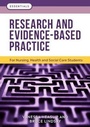
Vanessa Heaslip | Bruce Lindsay
Research and Evidence-Based Practice
For Nursing, Health and Social Care Students
Book
01/2019
Lantern Publishing Ltd
€21.50
Shipment within 3-4 weeks
Previous edition
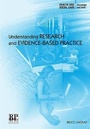
Bruce Lindsay
Understanding Research and Evidence-based Practice
Book
10/2007
Reflect Press Ltd
€25.50
Article exhausted; check for reprint
Persons
Author
Principal Academic and Deputy Head of Research, Department of Nursing and Social ScienceBournemouth University
Vanessa Heaslip is a Professor of Nursing and Healthcare Equity at the University of Salford, and a visiting Associate Professor in the Department of Social Work at Stavanger University, Norway. She has extensive experience in nursing and nurse education and is an experienced qualitative researcher. Her research interests focus on socially excluded groups whose voices are not traditionally heard in the academic or professional discourse, as well as experiences of marginalised communities who experience inequality of opportunity in accessing statutory services. Professor Heaslip has contributed to many books and has written journal articles, editorials and discussion papers. She is also on the editorial board of the Journal of Clinical Nursing and writes regular reviews for a variety of nursing and academic journals, based on her expertise in qualitative research, socially excluded groups, marginalised communities, equality and diversity.
Vanessa Heaslip is a Professor of Nursing and Healthcare Equity at the University of Salford, and a visiting Associate Professor in the Department of Social Work at Stavanger University, Norway. She has extensive experience in nursing and nurse education and is an experienced qualitative researcher. Her research interests focus on socially excluded groups whose voices are not traditionally heard in the academic or professional discourse, as well as experiences of marginalised communities who experience inequality of opportunity in accessing statutory services. Professor Heaslip has contributed to many books and has written journal articles, editorials and discussion papers. She is also on the editorial board of the Journal of Clinical Nursing and writes regular reviews for a variety of nursing and academic journals, based on her expertise in qualitative research, socially excluded groups, marginalised communities, equality and diversity.
Formerly Deputy Director of the Nursing and Midwifery Research Unit, Institute of HealthUniversity of East Anglia
Bruce Lindsay worked in health care for over thirty years after qualifying in children's nursing and adult nursing in Sheffield. He was awarded a PhD for his research into the development of the care of children in acute hospitals. He was a Senior Lecturer and Deputy Director of the Nursing and Midwifery Research Unit at the School of Health Sciences, University of East Anglia, until 2012, and was a systematic reviewer for Cochrane for fifteen years. He is now a freelance music journalist and biographer.
Bruce Lindsay worked in health care for over thirty years after qualifying in children's nursing and adult nursing in Sheffield. He was awarded a PhD for his research into the development of the care of children in acute hospitals. He was a Senior Lecturer and Deputy Director of the Nursing and Midwifery Research Unit at the School of Health Sciences, University of East Anglia, until 2012, and was a systematic reviewer for Cochrane for fifteen years. He is now a freelance music journalist and biographer.
Content
About the authors; Introduction
Part One: Understanding research
1. Identifying the research aim
1.1 Introduction
1.2 Why does society want health and social care research?
1.3 Why do researchers do research?
1.4 What will be studied?
1.5 Who makes the decisions?
1.6 What do we want to find out?
1.7 Achieving success
2. Reviewing the literature
2.1 Introduction
2.2 Why does a researcher need to know what's already available?
2.3 Understanding the context
2.4 Understanding the existing evidence
2.5 Can I justify my project?
2.6 Carrying out the literature review
2.7 Developing a search strategy
2.8 Searching databases
2.9 What else should be searched?
2.10 Evaluating quality
2.11 Conclusion
3. Designing a study
3.1 Introduction
3.2 The three levels
3.3 Making sense of the levels
3.4 Paradigms
3.5 Methodologies
3.6 Method
3.7 Tools
3.8 The research hierarchies
3.9 External influences
3.10 Making the final choice
4. Can it be done? Funding and ethics
4.1 Introduction
4.2 Who funds research?
4.3 How much does research cost?
4.4 Ethical issues in health and social care research
4.5 Gaining ethical approval
4.6 Public engagement in research
4.7 Reading research - identifying ethical issues
5. Recruitment and data collection
5.1 Introduction
5.2 Recruitment issues
5.3 Participants or subjects?
5.4 Developing inclusion and exclusion criteria
5.5 Selection and sampling
5.6 Sampling
5.7 How big should the sample be?
5.8 Attrition
5.9 Obtaining consent
5.10 Giving rewards
5.11 Data collection
5.12 Data collection tools
5.13 Issues in data collection
5.14 Confidentiality and anonymity
5.15 Conclusion
6. Data analysis
6.1 Introduction
6.2 Quantitative and qualitative analysis: the same but different?
6.3 Quantitative analysis
6.4 Measurement scales
6.5 Types of statistical analysis
6.6 Major methods of quantitative analysis
6.7 Conclusion
7. What do we know now? Communicating research findings
7.1 Introduction
7.2 What can research tell us?
7.3 Limits to research accuracy
7.4 Building a body of research
7.5 Disseminating research
7.6 Conclusion
Part Two: Evidence-based practice
8. Reviewing the evidence
8.1 Introduction
8.2 Reliable, valid, relevant and applicable?
8.3 Relevance and applicability
8.4 Research synthesis
8.5 Evidence from other sources
8.6 Role of the service user
8.7 Conclusion
9. Putting the evidence into practice
9.1 Introduction
9.2 The relationship between evidence and practice
9.3 Top-down or bottom-up?
9.4 Changing personal practice
9.5 Practitioner inquiry
9.6 Action research
9.7 Conclusion
10. Audit and evaluation
10.1 Introduction
10.2 Audit and evaluation: what are they?
10.3 Differentiating between audit, evaluation and research
10.4 When to audit or evaluate
10.5 What standards matter?
10.6 Involving services users in audit and evaluation
10.7 Conclusion
11. 'Closing the circle': issues for the future
11.1 Introduction
11.2 The speed of change
11.3 New and forthcoming developments
11.4 Predicting, creating and dealing with change: the place of research
11.5 The international nature of health and social care
11.6 Who will be the health and social care researchers of the future?
11.7 Conclusion
Glossary; References; Index
Part One: Understanding research
1. Identifying the research aim
1.1 Introduction
1.2 Why does society want health and social care research?
1.3 Why do researchers do research?
1.4 What will be studied?
1.5 Who makes the decisions?
1.6 What do we want to find out?
1.7 Achieving success
2. Reviewing the literature
2.1 Introduction
2.2 Why does a researcher need to know what's already available?
2.3 Understanding the context
2.4 Understanding the existing evidence
2.5 Can I justify my project?
2.6 Carrying out the literature review
2.7 Developing a search strategy
2.8 Searching databases
2.9 What else should be searched?
2.10 Evaluating quality
2.11 Conclusion
3. Designing a study
3.1 Introduction
3.2 The three levels
3.3 Making sense of the levels
3.4 Paradigms
3.5 Methodologies
3.6 Method
3.7 Tools
3.8 The research hierarchies
3.9 External influences
3.10 Making the final choice
4. Can it be done? Funding and ethics
4.1 Introduction
4.2 Who funds research?
4.3 How much does research cost?
4.4 Ethical issues in health and social care research
4.5 Gaining ethical approval
4.6 Public engagement in research
4.7 Reading research - identifying ethical issues
5. Recruitment and data collection
5.1 Introduction
5.2 Recruitment issues
5.3 Participants or subjects?
5.4 Developing inclusion and exclusion criteria
5.5 Selection and sampling
5.6 Sampling
5.7 How big should the sample be?
5.8 Attrition
5.9 Obtaining consent
5.10 Giving rewards
5.11 Data collection
5.12 Data collection tools
5.13 Issues in data collection
5.14 Confidentiality and anonymity
5.15 Conclusion
6. Data analysis
6.1 Introduction
6.2 Quantitative and qualitative analysis: the same but different?
6.3 Quantitative analysis
6.4 Measurement scales
6.5 Types of statistical analysis
6.6 Major methods of quantitative analysis
6.7 Conclusion
7. What do we know now? Communicating research findings
7.1 Introduction
7.2 What can research tell us?
7.3 Limits to research accuracy
7.4 Building a body of research
7.5 Disseminating research
7.6 Conclusion
Part Two: Evidence-based practice
8. Reviewing the evidence
8.1 Introduction
8.2 Reliable, valid, relevant and applicable?
8.3 Relevance and applicability
8.4 Research synthesis
8.5 Evidence from other sources
8.6 Role of the service user
8.7 Conclusion
9. Putting the evidence into practice
9.1 Introduction
9.2 The relationship between evidence and practice
9.3 Top-down or bottom-up?
9.4 Changing personal practice
9.5 Practitioner inquiry
9.6 Action research
9.7 Conclusion
10. Audit and evaluation
10.1 Introduction
10.2 Audit and evaluation: what are they?
10.3 Differentiating between audit, evaluation and research
10.4 When to audit or evaluate
10.5 What standards matter?
10.6 Involving services users in audit and evaluation
10.7 Conclusion
11. 'Closing the circle': issues for the future
11.1 Introduction
11.2 The speed of change
11.3 New and forthcoming developments
11.4 Predicting, creating and dealing with change: the place of research
11.5 The international nature of health and social care
11.6 Who will be the health and social care researchers of the future?
11.7 Conclusion
Glossary; References; Index
