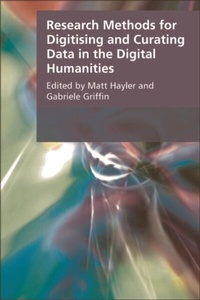
Research Methods for Creating and Curating Data in the Digital Humanities
Description

The first volume to focus on digitising and curating data online as research methods for Digital Humanities
As all scholars increasingly use digital tools to support their research, and every internet user becomes used to data being available, elucidating, and engaging, the creative aspects of Digital Humanities work are coming under increasing scrutiny. This volume explores the practice of making new tools, new images, new collections, and new artworks in an academic environment, detailing who needs to be involved and what their roles might be, and how they come together to produce knowledge as a collective. The chapters presented here demonstrate that creation is never neutral with political and theoretical concerns intentionally or unavoidably always being written into the fabric of what is being made, even if that's the seeming neatness of computer code. In presenting their own creative research, the writers in this volume offer examples of practice that will be of use to anyone interested in learning more about contemporary Digital Humanities scholarship and its implications.
Key features:
- First volume to explore digitisation practices as research methods for Humanities scholars
- Provides a practical and critical approach to issues of digitisation
- Discusses actual digitisation projects on a 'how-to' basis
- Addresses issues such as digital photography, multi-spectral imaging, rekeying, metadata, online simulation, artistic practice online
More details
Other editions
Additional editions