

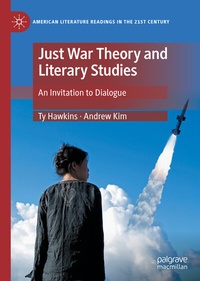
Just War Theory and Literary Studies
Description

This book questions when, why, and how it is just for a people to go to war, or to refrain from warring, in a post-9/11 world. To do so, it explores Just War Theory (JWT) in relationship to recent American accounts of the experience of war. The book analyses the jus ad bellum criteria of just war-right intention, legitimate authority, just cause, probability of success, and last resort-before exploring jus in bello , or the law that governs the way in which warfare is conducted. By combining just-war ethics and sustained explorations of major works of twentieth and twenty-first century American war writing, this study offers the first book-length reflection on how JWT and literary studies can inform one another fruitfully.
Reviews / Votes
"This book's careful and attentive reading of American literature, spanning seventy-five years and four major wars, revives the discussion of JWT, and elucidates . . Clearly written, with concrete examples with contemporary relevance, Just War Theory and Literary Studies will generously reward anyone interested in contemplating war, peace, and human flourishing in our time." (Kimberly K. Dougherty, Christianity & Literature, Vol. 72 (4), December, 2023)More details
Other editions
Additional editions
Persons
Ty Hawkins is Associate Professor and Chair of the Department of English at the University of Central Arkansas, USA. His previous works include Reading Vietnam Amid the War on Terror (2012).
Andrew Kim is Director of the Center for the Advancement of the Humanities and Associate Professor of Theology at Marquette University, USA. He is the author of An Introduction to Catholic Ethics since Vatican II (2015).Content
1 Introduction.- 2 Right Intention.- 3 Legitimate Authority.- 4 Just Cause.- 5 Probability of Success.- 6 Last Resort.- 7 In Bello.- 8 Epilogue.
