

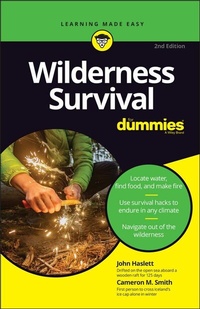
Wilderness Survival For Dummies
Description

Be prepared for anything, so you can explore where others fear to tread
Wilderness Survival For Dummies takes a practical approach to teaching you the skills you need to stay alive outside. Learn survival skills the Dummies way, with helpful diagrams and illustrations, step-by-step instructions, and tips from the pros. With expert tips and easy-to-follow instructions in this book, you'll know what to do to survive in the wild. Stay calm, deal with the elements, make fire, find drinking water, and navigate your way to safety, thanks to your newfound survival skills.
- Enjoy the great outdoors with the confidence to take the path less traveled
- Gain knowledge that will help you stay safe if the unexpected happens
- Deal with extreme weather events, make shelter, learn to signal for help
- Learn navigation skills so you can find your way home if you get lost
You're ready to take your love of nature to the next level and explore the wilderness. From forests and jungles to deserts, cold weather climates, and everything in between, you need this Dummies guide to stay safe while backpacking, sailing, camping, and adventuring ...wherever.
John Haslett is an adventure writer with decades of experience in the remote regions of Central and South America, including voyaging on primitive wooden vessels. His exploits have been featured in National Geographic Adventure magazine. Cameron M. Smith has traveled from Africa to Alaska and back using his expedition, mountaineering, and polar travel skills. His expeditions have been televised on the National Geographic Channel International and the Discovery Channel.
More details
Other editions
Additional editions
Content
- Intro
- Title Page
- Copyright Page
- Table of Contents
- Introduction
- About This Book
- Foolish Assumptions
- Icons Used in This Book
- Beyond the Book
- Where to Go From Here
- Part 1 Stayin' Alive: Basic Wilderness Survival Principles
- Chapter 1 Staying Safe in the Great Outdoors
- Being Prepared and Proactive
- Keeping the Right Attitude
- Applying Survival Basics
- Regulating body temperature
- Your first line of defense: Clothing
- Warming up to the fire
- Taking shelter
- Regulating your temperature in the water
- Signaling for rescue
- Avoiding dehydration
- Staying nourished
- Navigating in the Wild
- Relying on tools to navigate
- Looking to the heavens
- Surviving Injury
- Avoiding Common Causes of Survival Situations
- Making errors in judgment
- Losing it: Behaviors that help you get lost
- Chapter 2 Preparing Yourself for a Survival Situation
- Being Weather Aware
- Using weather forecasts
- Watching for weather signs from wind and clouds
- Considering the winds
- Consulting the clouds
- Carrying Survival Equipment
- Keeping five essential items on hand
- A reliable light source
- Fire maker and tinder
- Penknife, pocketknife, or multitool
- Water container
- Instruments, electronics, and power sources
- Building the basic survival kit
- A waterproof container
- A complete fire-making kit
- Items for clean water, shelter, and sun protection
- Tools for making other things
- Navigation tools
- Signaling tools
- Constructing the complete kit
- Chapter 3 The Psychology of Survival: Gaining the Upper Hand
- Developing a Survivor's Mindset
- Mastering disbelief
- Using SeCR or "Secure" to gain control of your situation
- Security
- Comfort
- Reassurance
- Planning and taking action
- Understanding discipline
- Being Aware of Your Emotions
- Fear
- Stress and fear, a powerful combo
- Panic
- Irrationality
- Anger and blame
- Frustration
- Misery and fatigue
- Improving Morale
- Chapter 4 Survival Style: Keeping Warm or Cool
- Regulating Body Temperature
- The cold continuum: What happens as your body cools
- The heat continuum: What happens as your body heats
- Relying on Layering for Warmth
- Avoiding a cold sweat
- Choosing your layers
- Improvising Cold-Weather Clothing
- Extreme sewing: Using needle and thread to save your life
- Fighting hypothermia with improvised layers
- Putting together animal skins
- Having the right headwear, handwear, and footwear
- Using Other Ways to Keep Warm
- Staying active
- Staying warm when you're staying still
- Cool Threads: Clothing for Staying Cool
- Wearing a hat and eye protection
- Considering other clothing concepts to keep cool
- Chapter 5 Making Fire in the Wilderness
- Fire Building 101
- Get ready, get set: Upping your odds for a sustainable flame
- Gathering fuels for your fire
- Arranging your campfire structure
- Getting lit: Building a general-purpose teepee fire
- Using other fire structures
- The first spark: Igniting and oxygenating your fire
- Got a Light? Exploring Methods for Starting a Fire
- Best-case scenario: Using matches or a lighter
- Matches
- Lighters
- When the going gets tough: Fire starting alternatives
- Starting a fire with common, everyday items
- When all else fails: Using the bow fire method
- Battling the Elements: Making Fire in Wet Conditions
- Safely Extinguishing a Fire
- Chapter 6 Home, Sweet Hut: Simple Survival Shelters
- Grasping the Importance of Shelter
- Before Making Camp: What to Do
- Understanding priorities
- Selecting a good campsite
- Using Natural Shelters
- Trees
- Caves and rock overhangs
- Checking for current residents
- Putting a Roof over Your Head: Building Simple Shelters
- Making a tarp shelter
- Building a downed-tree or other A-frame shelter
- Constructing an insulated shelter
- Chapter 7 Liquid Capital: Finding Drinking Water
- Taking Steps to Conserve Water
- Determining your water needs
- Stretching your water supply
- Rationing water in more severe situations
- Avoiding Certain Liquids
- Finding Bodies of Water
- Locating water in drainages
- Looking for other signs of water
- Catching Rain
- Collecting Condensation
- Gathering dew
- Making a transpiration bag
- Setting up a solar still
- Extracting Water from Plants
- Filtering and Purifying Water
- Boiling water
- Purifying water with chemicals
- Distilling salt water and urine
- Using commercial water filters
- Improvising filters
- Digging a seepage basin
- Chapter 8 Gathering and Hunting to Stay Alive in the Wilderness
- Managing Food and Energy in the Wild
- Calories = energy
- Plan ahead: Estimating how many calories you need
- Rationing and preserving
- Diversifying your diet
- Prioritizing Plants in Your Wilderness Diet
- Perusing the salad bar: Where to find a variety of plants
- Understanding a plant's edible parts
- Fruits
- Leaves
- Flowers
- Mosses and lichens
- Nuts and seeds
- Roots and tubers
- Identifying some common edible plants
- Is it safe? Deciding whether to eat an unknown plant food
- Knowing which plants to avoid
- Taking the Universal Plant Edibility Test
- Hunting and Trapping Food
- Looking for tracks and critter highways
- Snaring small animals
- Setting up your snares
- Checking snares and collecting your catch
- Using a throwing stick
- Making and using a spear
- Making and using a bola
- Using a throwing net
- Going in for the kill with a club
- Butchering your next meal
- Skinning a larger animal
- Skinning a smaller animal
- Getting Your Hands on Freshwater Fish
- Finding fish
- Fishing with a hook and line
- Making and using fishing spears
- Fishing with a net
- Preparing fish to eat
- The Wilderness Café: Preparing Food Outdoors
- Cooking food you can eat now
- Plant foods
- Mammal foods
- Insects and invertebrates
- Fish
- Drying and smoking food for later
- Part 2 Exploring Advanced Survival Techniques
- Chapter 9 Finding Your Way with Basic Navigation Tools
- Getting Your Bearings with Navigation Basics
- Setting a route with waypoints
- Using deliberate offset
- Maps Made Easy
- Picking an appropriate map
- Deciphering common map colors
- Measuring distance on a map
- Using contour lines to identify the shape of the land
- Establishing your coordinates
- Using latitude and longitude
- Using the UTM grid
- Navigating with a Map
- Orienting your map
- Keeping track of distance traveled
- Getting Acquainted with Your Compass
- Learning the parts of an orienteering compass
- Being aware of potential errors
- Understanding declination (or variation)
- Interference: Understanding local deviation
- Navigating with a Map and Compass
- Understanding common compass usage
- Establishing a field bearing
- Using your compass to orient the map
- Setting your course from a map bearing
- Navigating with Electronics and Cellphones
- What to expect from GPS
- Setting up your GPS system
- Datum
- Position format
- Unit format
- Using GPS in the wild
- Using cellphones in the wild
- Chapter 10 Looking Up to the Sky: Celestial Navigation
- Determining Direction with the Sun
- Locating east and west at sunrise and sunset
- Finding north and south around midday
- Drawing a compass with the stick and shadow method
- Discerning direction with your wristwatch and the sun
- Finding Direction with the Stars
- Finding north with the North Star
- Finding due south with the Southern Cross
- Finding West and East by Moonlight
- Chapter 11 Trekking over Land
- Understanding Trail Travel
- Knowing where you are
- Knowing where you've been
- Getting Back on Course When You're Disoriented
- Reviewing your calculations
- Using your senses to help you find your way
- Stop and observe
- Listen
- Taking action when you're disoriented
- What to Do When You're Lost
- Staying put so people can find you
- Deciding to travel
- Preparing to move
- Detecting signs of civilization
- Following water to civilization
- Blazing Your Own Trail
- Managing meandering
- Traveling in a straight line
- Marking your trail
- Crossing Rivers and Streams
- Wading
- Building a raft
- Chapter 12 Signaling for Rescue
- Signaling Basics
- Picking a good location
- Making your signal stand out
- Bigger
- Brighter
- Different
- Being persistent
- Learning the Language of Signaling
- Using three of anything to signal distress
- SOS and Mayday: Calling for urgent help
- Sending SOS
- Calling Mayday
- Sea stuff: Saying Pan-Pan when you're not in immediate danger
- Using ground-to-air emergency code
- Using your body to signal
- Signaling with Signaling Tools
- Noisemakers and horns
- Mirrors and other reflectors
- Fire
- Smoke
- Shadows
- Dye markers and flagging
- Aerial flares
- Electric lights
- Upside-down flags and other things out of place
- Signaling with Electronics
- Radioing for help
- Tuning your radio into a distress frequency
- Getting a clear signal
- Sending a distress call over the radio
- Using cellphones
- Signaling with a charged cellphone that has reception
- Signaling with a charged cellphone that doesn't have reception
- Signaling with a noncharged (or 'dead') cellphone
- Using satellite phones
- Using radio beacons: EPIRBs, ELTs, and PLBs
- Getting a Lift: What to Do When the Helicopter Comes
- Preparing a landing zone
- Practicing helicopter safety
- Chapter 13 Administering First Aid
- Prioritizing First Aid Basics
- Responding to serious trauma, an overview
- Checking circulation, airway, and breathing
- Circulation
- Airway
- Breathing
- Using the recovery position
- Giving CPR
- Controlling Bleeding
- Treating common capillary and venous bleeding
- Handling dangerous arterial bleeding
- Deciding to use a tourniquet
- Applying a tourniquet
- Treating Shock
- Handling Breaks and Sprains
- Treating fractures
- Closed fractures
- Open fractures
- Treating sprains
- Cleaning and Covering Wounds
- Cleaning wounds to reduce infection
- Dressing the wound
- Bandaging the wound
- Closing open wounds
- Bandaging a sucking chest wound
- Treating infected wounds
- Treating Burns
- Handling minor burns
- Dealing with more-severe burns
- Treating Hypothermia
- Treating Bites, Stings, and Poisonings
- Mammal bites
- Snakebites
- Spider bites and insect stings
- Poisoning
- Chapter 14 Survive or Thrive? Advanced Methods and Tools
- Keeping It Together: Ropes and Knots
- Understanding rope strength
- Tying some essential knots
- Square knot
- Sheet bend
- Sheet bend double (Beckett bend)
- Anchor bend
- Bowline knot
- Clove hitch
- Two half hitches
- Lashing down a load
- That's a wrap: Making a tripod
- Making a square lashing
- Crafting Your Own Tools
- Making cordage in the wild
- Making stone tools
- Splitting a stone to assess its type
- Shaping the stone into a tool
- Carving bone and antler tools
- Making Natural Remedies
- Using salicin, nature's aspirin
- Preparing medicines for wounds, burns, and bowels
- Tannin
- Plantains
- Common cattail
- Part 3 Surviving in Extreme Land Environments
- Chapter 15 Special Considerations for Forests and Jungles
- Identifying Hazardous Wildlife in Dry Forests
- Preventing bear attacks
- Avoiding mountain lions
- Steering clear of woodland snakes
- Evading spiders and ticks
- Laws of the Jungle: Surviving in the Tropics
- Preventing jungle diseases
- Diseases from contaminated water or food
- Diseases from insect and animal bites
- Obtaining safe water
- The jungle cover-up: Dressing for the tropics
- Avoiding mud flats, sand traps, and other dangerous terrain
- Using a machete
- Choosing and using the right blade
- Cutting bamboo
- Making camp and shelters
- Identifying dangerous animals
- Insects and other buggy creatures
- Jungle snakes
- Gators, crocs, and caimans
- Leeches
- Piranhas
- Chapter 16 The Big Chill: Enduring in Snowy Places
- Staying Warm in Extreme Cold
- Cold Comfort: Making Your Shelter in a Snowy Environment
- Snow shelter basics
- Making a simple snow-cave
- Creating shelters from natural snow drifts
- Making your own snow-heap shelter
- Lighting a Fire in Cold, Snowy Environments
- Finding fuel in snowy places
- Protecting a fire from the snow
- Don't Eat the Yellow Snow: Safe-to-Drink Snow and Ice
- Choosing and treating frozen water sources
- Melting snow and ice
- Steering Clear of Cold-Environment Terrain Hazards
- Avoiding avalanche terrain
- Staying off thin ice
- Avoiding cornices
- Glacial cracks: Avoiding crevasses
- Dealing with snow slopes
- Making Wearable Tools for Cold-Weather Survival
- Creating footwear
- Making your own snow boots
- Making a pair of snowshoes
- Boot wraps: Making and wearing gaiters
- Insulating your clothing
- Protecting your face and eyes
- Making a balaclava
- Carving snow-glare goggles
- Chapter 17 Staying Alive under the Desert Sun
- Dangers Posed by Sun and Heat
- Going skin deep with sunburn
- Overheating: Heat exhaustion and heat stroke
- Recognizing the symptoms of hyperthermia
- Cooling off
- Wearing Sun Shields
- Cool clothes for hot times: Dressing for desert survival
- Slathering on the sunblock
- Securing Shelter in the Desert
- Building a sunshade
- Looking for shady places
- Warming shelters overnight
- Finding Water in the Desert
- Discovering standing water
- Locating water underground
- Squeezing water from mud or sand
- Accessing water from cracks and shallow pools
- Making a desert solar still
- Collecting water from a cactus
- Foraging for Food in Dry Places
- Insects
- Cacti and other plants
- Poultry and eggs
- Desert mammals
- Lizards and snakes
- Avoiding Dangerous Desert Animals
- Gila monsters and slithering snakes
- Stinging scorpions, centipedes, and spiders
- Scorpions and centipedes
- Spiders
- Wind and Water: Watching Out for Desert Weather
- Staying high and dry during flash floods
- Taking shelter from sandstorms
- Finding Your Way in the Desert
- Traveling at night
- Seeing in the dark
- Using a staff to probe ahead in darkness
- Confronting drop-offs
- Traveling in daylight
- Crossing Desert Terrain
- Part 4 Surviving on the Seas, Oceans, and Great Lakes
- Chapter 18 Staying Afloat and Warm
- Recognizing When Your Vessel Is in Trouble
- Overloading
- Poor trim or listing
- Bad weather and big waves
- Collisions
- Understanding collision courses with other vessels
- Watching out for underwater obstacles
- Fire
- Hatch failure and ship damage
- Knowing What to Do If Your Vessel Starts to Sink
- Radioing for help
- Putting on a life jacket
- Preparing to abandon ship
- Abandoning ship: The how-to
- Shark!
- Staying Warm as You Float with a Life Jacket
- What to do in the water
- Staying warm in groups
- Floating without a Life Jacket
- Inflating your clothes
- Long-term floating
- Chapter 19 The Great Drift: Aboard Life Rafts and Disabled Vessels
- Getting from Ship to Life Raft
- Locating the life raft
- Knowing when to abandon ship
- Launching a life raft
- Entering a life raft
- Adjusting to Life Afloat
- The first ten minutes in a life raft
- Inside the raft: Giving order to the chaos
- Organizing operations
- Increasing your safety and comfort
- The flip-out: Righting a raft
- Controlling Drifting Vessels
- Taking action with depowered boats
- Traveling with current and sail
- Restarting outboard motors
- Chapter 20 Finding Food and Drink at Sea
- On the (Drinking) Water Front: Surviving On the Salty Sea
- Understanding your body's dehydration limits
- The first line of defense: Conserving your body's water
- Rationing your water
- Avoiding salt water
- Making Fresh Water on the Ocean
- Working with rainwater
- Collecting condensation
- Using water makers
- Setting up a still at sea
- Removing salt with desalination kits
- Drinking sea turtle blood
- Fishing at Sea
- Sea hunting basics
- Tackling hooks and lines
- Using a spear
- Using nets to catch baitfish
- Advanced fishing for the hungry
- Catching small sharks by hand
- Bringing in Your Catch
- Preparing and Eating Fish at Sea
- Setting up the sushi bar
- Knowing which fish aren't on the menu
- Identifying Other Safe Things to Eat while at Sea
- Turtles
- Birds
- Barnacles
- Seaweed
- Chapter 21 Emergency Travel and Navigation at Sea
- Swimming Back to Land
- Measuring distance to shore
- Figuring out where the current is taking you
- Debunking some myths about ocean currents
- Determining the direction and speed of a current
- Moving in the water: Float or swim
- Letting yourself float
- Swimming slowly
- Swimming out of a rip current
- Improvised Open-Sea Navigation for Life Rafts
- Getting your bearings
- Finding direction with compasses and charts
- Determining direction with waves
- Estimating current at sea
- Understanding signs of land
- Signs of civilization
- Taking hints from the birds
- Other land signs from the water, wind, and air
- Coming Ashore: A Dangerous Ordeal
- Basic landing principles
- Procedures for landing
- Chapter 22 First Aid on the Water
- Responding to Water Casualties
- Getting someone out of the water
- Grasping the gradual nature of hypothermia
- Treating cold shock response
- Handling near drowning
- Reviving near-drowning subjects
- Monitoring someone after near drowning
- Treating Common Ailments while Afloat
- Seasickness
- Sunburn and heat maladies
- Saltwater chafe
- Treating Bites and Stings at Sea
- Jellyfish
- Sea snakes
- Stinging fish and stingrays
- Cone shells and terebra shells
- Part 5 The Part of Tens
- Chapter 23 Ten Ways to Practice Wilderness Survival Skills
- Start a Fire with Two Matches
- Light a Fire with a Magnifying Glass or Eyeglasses
- Fire Up the Flames with a Bow
- Turn Your Pants into a Flotation Device
- Find North with Help from the Sky
- Build a Tripod
- Download and Experiment with a Plant Identification App
- Use a Transpiration Bag to Collect Water
- Use a Reflective Surface to Practice Signaling
- Practice CPR
- Chapter 24 Ten Quick Escapes
- Getting Out of a Sinking Car
- Escaping a Small Plane Upside Down in Water
- Surviving a Small Boat or Canoe Capsize
- Escaping a Forest Fire
- Evading a Bee Swarm
- Surviving a Bear Encounter
- Encountering a Mountain Lion
- Surviving an Avalanche
- Waiting Out a Whiteout
- Getting Out of Quicksand
- Index
- EULA
