

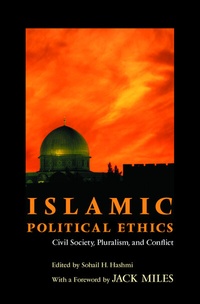
Islamic Political Ethics
Civil Society, Pluralism, and Conflict
1st Edition
Published on 10. January 2009
248 pages
978-1-4008-2537-0 (ISBN)
Description

One of the most dynamic aspects of the Islamic revival during the past two centuries has been the rethinking of Islamic political thought. A broad range of actors, ideas, and ideologies characterize the debate on how Islamic ethics and law should be manifested in modern institutions. Yet this aspect of the "return to Islam" has been neglected by policymakers, the media, and even many scholars, who equate "political Islam" with merely one strand, labeled "Islamic fundamentalism." Bringing together ten essays from six volumes of the Ethikon Series in Comparative Ethics, this book gives a rounded treatment to the subject of Islamic political ethics.
The authors explore the Islamic ethics of civil society, boundaries, pluralism, and war and peace. They consider questions of diversity, discussing, among other subjects, Islamic regimes' policies regarding women and religious minorities. The chapters on war and peace take up such crucial and timely issues as the Islamic ethics of jihad, examining both the legitimate conditions for the declaration of war and the proper conduct of war.
In their discussions, the contributors analyze the works of classical writers as well as the full range of modern reinterpretations. But beyond these analyses of previous and contemporary thinkers, the essays also reach back to the two fundamental sources of Islamic ethics--the Qur'an and traditions of the Prophet--to develop fresh insights into how Islam and Muslims can contribute to human society in the twenty-first century.
The authors are Dale F. Eickelman, Hasan Hanafi, Sohail H. Hashmi, Farhad Kazemi, John Kelsay, Muhammad Khalid Masud, Sulayman Nyang, Bassam Tibi, and M. Raquibuz Zaman.
From the foreword by Jack Miles:
"Western foreign ministers and secretaries of state may have to learn a little theology if the looming clash between embattled elements both in the West and in the Muslim umma is to yield to disengagement and peaceful coexistence, to say nothing of fruitful collaboration. It is, then, no idle academic exercise that the thinkers whose work is collected here have in hand. The long-term practical importance of their work can scarcely be overstated."
The authors explore the Islamic ethics of civil society, boundaries, pluralism, and war and peace. They consider questions of diversity, discussing, among other subjects, Islamic regimes' policies regarding women and religious minorities. The chapters on war and peace take up such crucial and timely issues as the Islamic ethics of jihad, examining both the legitimate conditions for the declaration of war and the proper conduct of war.
In their discussions, the contributors analyze the works of classical writers as well as the full range of modern reinterpretations. But beyond these analyses of previous and contemporary thinkers, the essays also reach back to the two fundamental sources of Islamic ethics--the Qur'an and traditions of the Prophet--to develop fresh insights into how Islam and Muslims can contribute to human society in the twenty-first century.
The authors are Dale F. Eickelman, Hasan Hanafi, Sohail H. Hashmi, Farhad Kazemi, John Kelsay, Muhammad Khalid Masud, Sulayman Nyang, Bassam Tibi, and M. Raquibuz Zaman.
From the foreword by Jack Miles:
"Western foreign ministers and secretaries of state may have to learn a little theology if the looming clash between embattled elements both in the West and in the Muslim umma is to yield to disengagement and peaceful coexistence, to say nothing of fruitful collaboration. It is, then, no idle academic exercise that the thinkers whose work is collected here have in hand. The long-term practical importance of their work can scarcely be overstated."
More details
Other editions
Additional editions
Book
08/2002
Princeton University Press
€68.09
Article exhausted; check different version
Book
08/2002
Princeton University Press
€35.60
Article not available at the moment
Persons
Sohail H. Hashmi is Alumnae Foundation Associate Professor of International Relations at Mount Holyoke College. He is the coeditor, with David Miller, of Boundaries and Justice (Princeton) and is currently coediting, with Steven Lee, a book on ethics and weapons of mass destruction. Jack Miles is the author of the Pulitzer Prize-winning book, God: A Biography.
Content
Foreword: Of Theology and Diplomacy by Jack Miles vii
Preface by Sohail H. Hashmi xi
PART I: STATE AND CIVIL SOCIETY 1
One
Civil Society and Government in Islam by John Kelsay 3
Two
Perspectives on Islam and Civil Society by Farhad Kazemi 38
Three
Alternative Conceptions of Civil Society: A Reflective Islamic Approach by Hasan Hanafi 56
PART II: BOUNDARIES AND DISTRIBUTIVE JUSTICE 77
Four
Islamic Perspectives on Territorial Boundaries and Autonomy by M. Raquibuz Zaman 79
Five
Religion and the Maintenance of Boundaries: An Islamic View by Sulayman Nyang 102
PART III: PLURALISM AND INTERNATIONAL SOCIETY 113
Six
Islam and Ethical Pluralism by Dale F. Eickelman 115
Seven
The Scope of Pluralism in Islamic Moral Traditions by Muhammad Khalid Masud 135
Eight
Islamic Ethics in International Society by Sohail H. Hashmi 148
PART IV: WAR AND PEACE 173
Nine
War and Peace in Islam by Bassam Tibi 175
Ten
Interpreting the Islamic Ethics of War and Peace by Sohail H. Hashmi 194
Glossary 217
Contributors 219
Index 221
Preface by Sohail H. Hashmi xi
PART I: STATE AND CIVIL SOCIETY 1
One
Civil Society and Government in Islam by John Kelsay 3
Two
Perspectives on Islam and Civil Society by Farhad Kazemi 38
Three
Alternative Conceptions of Civil Society: A Reflective Islamic Approach by Hasan Hanafi 56
PART II: BOUNDARIES AND DISTRIBUTIVE JUSTICE 77
Four
Islamic Perspectives on Territorial Boundaries and Autonomy by M. Raquibuz Zaman 79
Five
Religion and the Maintenance of Boundaries: An Islamic View by Sulayman Nyang 102
PART III: PLURALISM AND INTERNATIONAL SOCIETY 113
Six
Islam and Ethical Pluralism by Dale F. Eickelman 115
Seven
The Scope of Pluralism in Islamic Moral Traditions by Muhammad Khalid Masud 135
Eight
Islamic Ethics in International Society by Sohail H. Hashmi 148
PART IV: WAR AND PEACE 173
Nine
War and Peace in Islam by Bassam Tibi 175
Ten
Interpreting the Islamic Ethics of War and Peace by Sohail H. Hashmi 194
Glossary 217
Contributors 219
Index 221
