

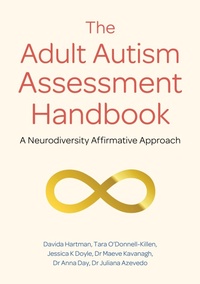
The Adult Autism Assessment Handbook
A Neurodiversity Affirmative Approach
Published on 21. February 2023
368 pages
978-1-83997-167-9 (ISBN)
Description

Adult autism assessment is a new and fast-growing clinical area, for which professionals often feel ill-equipped. Autistic adults are often misdiagnosed which has enormous implications for their mental health.
This accessible and comprehensive adult autism assessment handbook covers the most up to date research and best practice around adult autism assessment. It centers the person's internal experiences and sense-making in clinical assessment, rather than subjective observation, thus providing the clinician with a truly paradigm shifting Neuro-Affirmative approach to autism assessment. Traditional clinical assessment tools are comprehensively explored and unpacked to enable the clinician to have full confidence in aligning traditional criteria to the Autistic person's subjective experiences.
Full of additional resources like language guidelines and an exploration of the common intersections between Autistic experience and the effects of trauma, mental health and more, this book supplies a breadth of knowledge on key areas that affect Autistic adults in everyday life.
The mixed team of neurotypical and neurodivergent authors describe lived experience of Autistic adults, a how-to for conducting Neuro-Affirmative assessments and post-assessment support, alongside reflections from practice. This book also has a directory of further resources including downloadable forms that you can use to prepare for your own assessments and a downloadable deep dive into Autistic perception. This guide will also support professionals through every step of the assessment process.
This accessible and comprehensive adult autism assessment handbook covers the most up to date research and best practice around adult autism assessment. It centers the person's internal experiences and sense-making in clinical assessment, rather than subjective observation, thus providing the clinician with a truly paradigm shifting Neuro-Affirmative approach to autism assessment. Traditional clinical assessment tools are comprehensively explored and unpacked to enable the clinician to have full confidence in aligning traditional criteria to the Autistic person's subjective experiences.
Full of additional resources like language guidelines and an exploration of the common intersections between Autistic experience and the effects of trauma, mental health and more, this book supplies a breadth of knowledge on key areas that affect Autistic adults in everyday life.
The mixed team of neurotypical and neurodivergent authors describe lived experience of Autistic adults, a how-to for conducting Neuro-Affirmative assessments and post-assessment support, alongside reflections from practice. This book also has a directory of further resources including downloadable forms that you can use to prepare for your own assessments and a downloadable deep dive into Autistic perception. This guide will also support professionals through every step of the assessment process.
More details
Edition
Digital original
Language
English
Place of publication
London
United Kingdom
Target group
College/higher education
Professional and scholarly
Edition type
Digital original
ISBN-13
978-1-83997-167-9 (9781839971679)
Copyright in bibliographic data and cover images is held by Nielsen Book Services Limited or by the publishers or by their respective licensors: all rights reserved.
Schweitzer Classification
Other editions
Additional editions
Davida Hartman | Tara O'Donnell-Killen | Jessica K. Doyle
The Adult Autism Assessment Handbook
A Neurodiversity Affirmative Approach
Book
02/2023
Jessica Kingsley Publishers
€41.50
Shipment within 3-4 weeks
Persons
Davida Hartman is an Adjunct Professor, as well as founder, Clinical Director and Senior Psychologist at The Adult Autism Practice and The Children's Clinic, both specialising in best practice Neuro-Affirmative autism assessments. She is also an author, having written many previous books with Jessica Kingsley Publishers.
Tara O'Donnell-Killen is the founder and Principal Psychologist at Thriving Autistic, a non-profit global multidisciplinary team of Autistic and otherwise Neurodivergent practitioners who specialise in supporting late-identified neurodivergent adults. Tara has held the role of Support lead for the Adult Autism Practice since inception and frequently lectures on Neuro-Affirmative Practice for universities across the UK and Ireland.
Jessica K Doyle is an Autistic Assistant Psychologist at the Adult Autism Practice, a director at Thriving Autistic, a project officer at TCDSense, and a consultant and researcher passionate about exploring Autistic perception and repositioning the lens away from thwarting Neurodivergent authenticity to designing for diversity, fostering growth and committing to universal design.
Dr Maeve Kavanagh is a Chartered Clinical Psychologist who has worked with the Autistic community in both public and private services in Ireland since 2008. Maeve has worked as a Principle Clinical Psychologist with The Adult Autism Practice since its foundation in 2020, and is Co-Director of Childversity, specialising in Neuro-Affirmative autism assessments for children and adolescents.
Dr Anna Day is an Autistic clinical psychologist, worked previously in the UK's NHS and is now a Senior Clinical Psychologist at The Adult Autism Practice. Anna's daughter is Autistic. Anna is passionate about advocating for Autistic rights and Neuro-Affirmative approaches within mental health care and education.
Dr Juliana Azevedo is a Chartered Clinical Psychologist who has worked in public and private mental health services. She also works with The Adult Autism Practice since 2020. She has developed and is piloting a service identifying Autistic children, young people and adults referred to a psychology primary care service.
Tara O'Donnell-Killen is the founder and Principal Psychologist at Thriving Autistic, a non-profit global multidisciplinary team of Autistic and otherwise Neurodivergent practitioners who specialise in supporting late-identified neurodivergent adults. Tara has held the role of Support lead for the Adult Autism Practice since inception and frequently lectures on Neuro-Affirmative Practice for universities across the UK and Ireland.
Jessica K Doyle is an Autistic Assistant Psychologist at the Adult Autism Practice, a director at Thriving Autistic, a project officer at TCDSense, and a consultant and researcher passionate about exploring Autistic perception and repositioning the lens away from thwarting Neurodivergent authenticity to designing for diversity, fostering growth and committing to universal design.
Dr Maeve Kavanagh is a Chartered Clinical Psychologist who has worked with the Autistic community in both public and private services in Ireland since 2008. Maeve has worked as a Principle Clinical Psychologist with The Adult Autism Practice since its foundation in 2020, and is Co-Director of Childversity, specialising in Neuro-Affirmative autism assessments for children and adolescents.
Dr Anna Day is an Autistic clinical psychologist, worked previously in the UK's NHS and is now a Senior Clinical Psychologist at The Adult Autism Practice. Anna's daughter is Autistic. Anna is passionate about advocating for Autistic rights and Neuro-Affirmative approaches within mental health care and education.
Dr Juliana Azevedo is a Chartered Clinical Psychologist who has worked in public and private mental health services. She also works with The Adult Autism Practice since 2020. She has developed and is piloting a service identifying Autistic children, young people and adults referred to a psychology primary care service.
Content
- Intro
- The Adult Autism Assessment Handbook
- Cover
- Of related interest
- Title Page
- Copyright
- Acknowledgements
- Contents
- 1. Introduction
- Who We Are and Why We Are Writing This Book
- An Introduction to Autism Assessment
- Declaration of Privilege
- 2. Language Guide
- Key Neuro-Affirmative Terminology (with a Focus on Autistic Neurology)
- Introduction
- Use 'Autistic Person', Not 'Person with Autism'
- Just Call It 'Autism', Not 'Autism Spectrum Disorder', 'ASD', 'Autism Spectrum Condition' or 'ASC'
- Use 'Disabled Person', Not 'Person with a Disability'
- Talk about 'High' or 'Low' Support Needs in Specific Areas, Not 'High' or 'Low Functioning'
- Other Ableist Language to Avoid
- Further Recommended Reading
- 3. A Brief History of Autistic People and the Neurodiversity Movement
- Introduction
- The 1940s, 'Bad Parenting'
- The 1960s and 1970s, Genetics and a Spectrum
- The 1980s, and Applied Behaviour Analysis
- The 1980s and 1990s, Self-Advocating and the Internet
- The 1990s and 2000s, and the Neurodiversity Movement
- Controversy
- The 2000s to Today, Steps Forward and Back
- Common Criticisms of the Neurodiversity Movement
- 4. Understanding Autistic People
- Ableism and Why It Is the Core Issue in Need of Addressing
- Ableism and Autistic People
- The Medical, Social and Biopsychosocial Models of Disability
- Is Being Autistic Disabling?
- Morality, Empathy and Compassion
- Current Diagnostic Criteria for Autism
- What Does It Mean to Be Autistic?
- Why Is It So Important for Autistic People to Recognize That They are Autistic?
- Self-Identification
- 5. Theories of Autistic Neurology
- Introduction
- A Brief Overview of Some of the Theories of Autistic Neurology
- 6. Autistic Perception
- Introduction
- The Eight Senses
- Sensory Processing Systems
- The Process of All-Human Perception
- Practice-Based Recommendations
- 7. What Does It Mean to Be Neuro-Affirmative?
- Introduction
- Ways to Be Neuro-Affirmative
- 8. Current Adult Autism Assessment Guidelines
- Introduction
- American and Canadian Guidelines
- UK NICE Guidelines
- Australian Guidelines
- Scottish SIGN Guidelines
- 9. Medical Model Assessments
- Introduction
- Screeners
- Tests
- Reports
- Power Dynamics
- Involving Caregivers and Early History
- Cognitive Assessments
- 10. Important Considerations
- Intersectionality
- Cultural Competence
- Women
- Masking or Camouflaging
- Later Years of Life
- LGBTQIA+/Gender, Sexual and Relationship Diversities
- Gender Variance
- Trauma or Post-Traumatic Stress Disorder
- 'Borderline Personality Disorder'
- Intellectual Disability
- Anxiety
- Co-Occurring Mood Disorders
- Eating Disorders
- Attention-Deficit Hyperactivity Disorder
- Alexithymia
- Assisting Communication/Non-Speaking Autistic People
- Medical Issues
- Specific Learning Difficulties: Dyslexia
- Specific Learning Difficulties: Dyscalculia
- Specific Learning Difficulties: Developmental Co-Ordination Disorder (Dyspraxia)
- 11. How to Make Your Assessment Accessible
- Barriers to Accessing Assessment
- How to Make Your Assessment Accessible
- 12. How to Conduct a Neuro-Affirmative Assessment
- Introduction
- The Importance of Autistic and Neurodivergent Professionals Being an Integral Part of the Team
- Assessment as a Therapeutic Process
- People are Collaborative Partners within the Assessment Process
- Consent
- Screening Questionnaires
- Session Amount, Length and Content
- Pre-Assessment Consultation
- Session One
- Session Two
- Final Assessment Session
- Post-Assessment Support
- Gathering and Interpreting Information
- Involving Family Members and/or Others in the Assessment Process
- Reports, Letters and Documents
- Applying for Welfare Payments (e.g., Disability Allowance, Personal Independence Payment)
- Considering Previous Diagnoses
- Support When Being Autistic Is Not Identified
- Reflections for Clinicians within the Process
- 13. Post-Assessment Support and Recommendations
- Introduction
- How Best to Signpost and Support People Post Assessment
- Recommendations for Adapting the Journey
- Recommendations for First Contact
- Recommendations for Co-Creating Therapeutic Goals
- Recommendations for Measuring Outcomes
- Appendix 1: The Neuro-Affirmative Language Guide
- Appendix 2: Making Zoom More Comfortable for You
- Appendix 3: Looking After Myself Plan
- Appendix 4: Workplace Accommodations Self-Reflection Exercise
- Appendix 5: Neuro-Affirmative Autistic Criteria Mapping Document
- Appendix 6: Healthcare Passport for Autistic Adults
- Appendix 7: Autism COVID-19 Individual Health Action Plan, Universal Format
- References
- About the Authors
- Subject Index
- Author Index
