


Blitzkrieg
The Invasion of Poland to the Fall of France
1st Edition
Published on 2. September 2021
304 pages
978-1-4728-4789-8 (ISBN)
Description

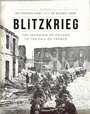
A fascinating study of the devastating new form of warfare that redrew the map of Europe in the opening year of World War II, bringing about the military collapse and capitulation of seven modern industrialized nations.
On 1 September 1939, Nazi Germany launched the invasion of Poland, employing a new type of offensive warfare: Blitzkrieg. So named by Allied observers because of the shock and rapidity of its effects, this new approach was based on speed, manoeuvrability and concentration of firepower. The strategy saw startling success as the panzer divisions, supported by Stuka dive-bombers, spread terror and mayhem, reaching Warsaw in just one week. Aided by the intervention of the Soviet Union in the east, the campaign was over in a mere 36 days.
This astonishing feat was followed by Operation Weserübung, the invasion of Denmark and then Norway in 1940, the first joint air-sea-land campaign in the history of warfare. Even more striking an achievement was the swift and conclusive defeat of France during May-June 1940. Refusing to let its forces dash themselves against the fortifications of the Maginot Line, Germany instead sent its divisions through neutral Belgium and northern France in Fall Gelb ('Case Yellow'), destroying Allied resistance and pursuing the remnant of the British and French forces to Dunkirk in an audacious and devastatingly effective assault. During the course of Fall Rot ('Case Red') over the following 20 days, German forces pressed the attack and by 25 June had forced France's leaders into a humiliating capitulation.
Illustrated throughout with detailed maps, artwork and contemporary photographs, Blitzkrieg: The Invasion of Poland to the Fall of France tells the story of these first breakneck attacks, examining the armed forces, leaders, technology, planning and execution in each campaign as well as the challenges faced by the Germans in the pursuit of this new and deadly form of warfare.
On 1 September 1939, Nazi Germany launched the invasion of Poland, employing a new type of offensive warfare: Blitzkrieg. So named by Allied observers because of the shock and rapidity of its effects, this new approach was based on speed, manoeuvrability and concentration of firepower. The strategy saw startling success as the panzer divisions, supported by Stuka dive-bombers, spread terror and mayhem, reaching Warsaw in just one week. Aided by the intervention of the Soviet Union in the east, the campaign was over in a mere 36 days.
This astonishing feat was followed by Operation Weserübung, the invasion of Denmark and then Norway in 1940, the first joint air-sea-land campaign in the history of warfare. Even more striking an achievement was the swift and conclusive defeat of France during May-June 1940. Refusing to let its forces dash themselves against the fortifications of the Maginot Line, Germany instead sent its divisions through neutral Belgium and northern France in Fall Gelb ('Case Yellow'), destroying Allied resistance and pursuing the remnant of the British and French forces to Dunkirk in an audacious and devastatingly effective assault. During the course of Fall Rot ('Case Red') over the following 20 days, German forces pressed the attack and by 25 June had forced France's leaders into a humiliating capitulation.
Illustrated throughout with detailed maps, artwork and contemporary photographs, Blitzkrieg: The Invasion of Poland to the Fall of France tells the story of these first breakneck attacks, examining the armed forces, leaders, technology, planning and execution in each campaign as well as the challenges faced by the Germans in the pursuit of this new and deadly form of warfare.
More details
Edition
1. Auflage
Language
English
Place of publication
London
United Kingdom
Publishing group
Bloomsbury Publishing PLC
Illustrations
Full colour throughout
ISBN-13
978-1-4728-4789-8 (9781472847898)
Copyright in bibliographic data and cover images is held by Nielsen Book Services Limited or by the publishers or by their respective licensors: all rights reserved.
Schweitzer Classification
Other editions
Additional editions
Book
09/2021
Osprey Publishing
€37.50
Shipment within 3-4 weeks
Persons
Dr Russell Hart is Professor of History and Director of the Diplomacy and Military Studies Program at Hawai'i Pacific University, Honolulu, Hawaii. He is the author of Clash of Arms (2001) and Guderian: Panzer Pioneer or Mythmaker? (2006). He has co-authored nine additional books, including three Osprey titles: The Second World War, Part Six: Northwest Europe, 1944-1945 (2002); The Second World War: A World in Flames (2004) and The Second World War (2018).
Dr Stephen Hart is senior lecturer in the War Studies department, the Royal Military Academy Sandhurst. Prior to this he lectured in the International Studies Department at the University of Surrey, and in the War Studies Department, King's College London. He is the author of Montgomery and the 'Colossal Cracks': The 21st Army Group in Northwest Europe 1944-45 (Praeger, 2000), and has co-authored - with Russell Hart - several popular histories of aspects of the German Army in World War II.
Dr Stephen Hart is senior lecturer in the War Studies department, the Royal Military Academy Sandhurst. Prior to this he lectured in the International Studies Department at the University of Surrey, and in the War Studies Department, King's College London. He is the author of Montgomery and the 'Colossal Cracks': The 21st Army Group in Northwest Europe 1944-45 (Praeger, 2000), and has co-authored - with Russell Hart - several popular histories of aspects of the German Army in World War II.
Content
Introduction
1: The Autumn 1939 Polish Campaign
2: The Spring 1940 Campaigns in Denmark and Norway
3: The Spring 1940 Western Campaign:
- Phase One: The Charge to the Sea (10-20 May 1940)
- Phase Two: End-Game in the West (21 May - 25 June 1940)
Conclusion
Glossary
Further Reading
Index
1: The Autumn 1939 Polish Campaign
2: The Spring 1940 Campaigns in Denmark and Norway
3: The Spring 1940 Western Campaign:
- Phase One: The Charge to the Sea (10-20 May 1940)
- Phase Two: End-Game in the West (21 May - 25 June 1940)
Conclusion
Glossary
Further Reading
Index
