

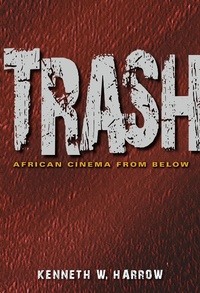
Trash
African Cinema from Below
Published on 9. April 2013
264 pages
978-0-253-00757-5 (ISBN)
Description

Highlighting what is melodramatic, flashy, low, and gritty in the characters, images, and plots of African cinema, Kenneth W. Harrow uses trash as the unlikely metaphor to show how these films have depicted the globalized world. Rather than focusing on topics such as national liberation and postcolonialism, he employs the disruptive notion of trash to propose a destabilizing aesthetics of African cinema. Harrow argues that the spread of commodity capitalism has bred a culture of materiality and waste that now pervades African film. He posits that a view from below permits a way to understand the tropes of trash present in African cinematic imagery.
Reviews / Votes
Kenneth W. Harrow's Trash . . . is a timely intervention in the theorization of African cinema. It is an impassioned and committed interrogation of hybridity, syncretism and cross-fertilizaiton in postcolonial cinema and one that seeks to both celebrate and renegotiate the image of the marginalized and the discarded.5.2 2014 * Transnational Cinemas * Trash brings about a fresh perspective that figures African cinema as a type of mirror of condition, a kind of cinema verite that disrupts the aesthetics of necropolitics-whether from the north or the south-and the aesthetic order of high cinema. * African Arts * Harrow's engaging book offers readers a glimpse into the trash heaps . . . squalor, and poverty that have often been depicted in African cinema since independence, but which have rarely been the object of critical study.April 2014 * African Studies Review * Trash inspires a rigorous questioning of how we think about 'Africa from below' in our scholarly research: it is a speculative, probing, provocative book filled with questions about power, exclusion, representation, and subjectivity, and about how African cinema engages social realities without necessarily serving up palatable dishes of realism or political critique. * Journal of African History * This book is a work of erudition, understanding, engagement, and enthusiastic committment to African cinema studies and literature. . . . Highly recommended. * Choice *More details
Language
English
Place of publication
Bloomington, IN
United States
Target group
Professional and scholarly
US School Grade: College Graduate Student and over
Illustrations
44 b&w illus.
File size
3,16 MB
ISBN-13
978-0-253-00757-5 (9780253007575)
Copyright in bibliographic data and cover images is held by Nielsen Book Services Limited or by the publishers or by their respective licensors: all rights reserved.
Schweitzer Classification
Other editions
Person
Kenneth W. Harrow is Distinguished Professor of English at Michigan State University. He is author of Postcolonial African Cinema: From Political Engagement to Postmodernism (IUP, 2007).
Content
Preface and Acknowledgements
Introduction
1. Bataille, Stam, and Locations of Trash
2. Ranciere: Aesthetics, Its Mesententes and Discontents
3. The Out-of-Place Scene of Trash
4. Globalization's Dumping Groun:, The Case of Trafigura
5. Agency and the Mosquito: Mitchell and Chakrabarty
6. Trashy Women: Karmen Gei, l'Oiseau Rebelle
7. Trashy Women, Fallen Men: Fanta Nacro's "Puk Nini" and La Nuit de la verite
8. Opening the Distribution of the Sensible: Kimberly Rivers and Trouble the Water
9. Abderrahmane Sissako's Bamako and the Image: Trash in Its Materiality
10. The Counter-Archive for a New Postcolonial Order: O Heroi and Daratt
11. Nollywood and Its Masks: Fela, Osuofia in London, and Butler's Assujetissement
12. Trash's Last Leaves: Nollywood, Nollywood, Nollywood
Notes
Bibliography
Filmography
Index
Introduction
1. Bataille, Stam, and Locations of Trash
2. Ranciere: Aesthetics, Its Mesententes and Discontents
3. The Out-of-Place Scene of Trash
4. Globalization's Dumping Groun:, The Case of Trafigura
5. Agency and the Mosquito: Mitchell and Chakrabarty
6. Trashy Women: Karmen Gei, l'Oiseau Rebelle
7. Trashy Women, Fallen Men: Fanta Nacro's "Puk Nini" and La Nuit de la verite
8. Opening the Distribution of the Sensible: Kimberly Rivers and Trouble the Water
9. Abderrahmane Sissako's Bamako and the Image: Trash in Its Materiality
10. The Counter-Archive for a New Postcolonial Order: O Heroi and Daratt
11. Nollywood and Its Masks: Fela, Osuofia in London, and Butler's Assujetissement
12. Trash's Last Leaves: Nollywood, Nollywood, Nollywood
Notes
Bibliography
Filmography
Index
