

Wetland Logistics: Geochemical Engineering of Amazonian Raised Fields
Phosphorus, Drainage, and the Mass Agricultural Scaling in Pre-Columbian Tropical Floodplains
1st Edition
Published on 7. April 2026
140 pages
978-3-565-39235-3 (ISBN)
Description

Tropical floodplains are notoriously hostile to mass agriculture. Heavy monsoons rapidly leach vital nutrients from the topsoil, while seasonal standing water suffocates and rots crop root systems. Yet, pre-Columbian societies in the Llanos de Moxos transformed these inhospitable wetlands into highly productive agricultural engines capable of sustaining hundreds of thousands of people.
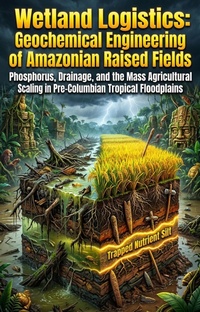
The solution lay in the massive "camellones" or raised field networks. By piling earth into geometric mounds, indigenous farmers elevated crop roots above the floodwaters while simultaneously creating deep, permanent drainage canals. These adjacent trenches functioned as massive aquaculture traps, cultivating fish and capturing organic silt. When the dry season arrived, this nutrient-rich, phosphorus-heavy muck was manually dredged and applied directly to the mounds, creating a self-sustaining, closed-loop fertilizer system that defied the nutrient-poor reputation of the Amazon.
Unearth the biochemical mastery of tropical agronomy. Grasp how ancient populations engineered the topography of an entire basin to manipulate soil drainage and completely subvert the limits of jungle farming.
More details
Edition
1. Auflage
Language
English
File size
1,00 MB
ISBN-13
978-3-565-39235-3 (9783565392353)
Person
Author
