

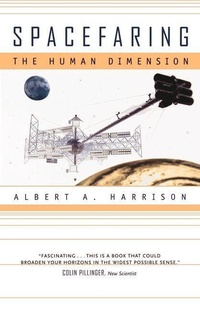
Spacefaring
The Human Dimension
1st Edition
Published on 19. March 2001
342 pages
978-0-520-92965-4 (ISBN)
Description

The stars have always called us, but only for the past forty years or so have we been able to respond by traveling in space. This book explores the human side of spaceflight: why people are willing to brave danger and hardship to go into space; how human culture has shaped past and present missions; and the effects of space travel on health and well-being. A comprehensive and authoritative treatment of its subject, this book combines statistical studies, rich case histories, and gripping anecdotal detail as it investigates the phenomenon of humans in space-from the earliest spaceflights to the missions of tomorrow.
Drawing from a strong research base in the behavioral sciences, Harrison covers such topics as habitability, crew selection and training, coping with stress, group dynamics, accidents, and more. In addition to taking a close look at spacefarers themselves, Spacefaring reviews the broad organizational and political contexts that shape human progress toward the heavens. With the ongoing construction of the International Space Station, the human journey to the stars continues, and this book will surely help guide the way.
Drawing from a strong research base in the behavioral sciences, Harrison covers such topics as habitability, crew selection and training, coping with stress, group dynamics, accidents, and more. In addition to taking a close look at spacefarers themselves, Spacefaring reviews the broad organizational and political contexts that shape human progress toward the heavens. With the ongoing construction of the International Space Station, the human journey to the stars continues, and this book will surely help guide the way.
More details
Other editions
Additional editions
Book
11/2002
1st Edition
University of California Press
€34.66
Article not available at the moment
Book
03/2001
1st Edition
University of California Press
€33.37
Article exhausted; check different version
Person
Albert A. Harrison is Professor of Psychology at the University of California, Davis. He is coauthor of Living Aloft: Human Requirements for Extended Spaceflight (1985) and From Antarctica to Outer Space: Life in Isolation and Confinement (1991), and author of After Contact: The Human Response to Extraterrestrial Life (1997).
Content
- Cover
- Half title
- Title
- Copyright
- Dedication
- Contents
- Preface
- Acknowledgments
- 1. Why Space?
- The Beckoning Heavens
- Knowledge Motives
- Advancing Science and Technology
- Education and Human Resource Development
- Economic Motives
- Spin-Offs
- Managing Life on Planet Earth
- Use of Space Resources
- Space Tourism
- Psychological and Social Motives
- Personal Motivation
- Uniting Humanity
- Conclusion
- 2. Spaceflight Human Factors
- Systems
- Human Factors
- The Changing Conditions of Spaceflight
- Llessons from Space, Lessons from Earth
- Spaceflight
- Simulated Spaceflight Environments
- Maritime Environments
- Polar Environments
- Conclusion
- 3. Hazards and Countermeasures
- Environmental Risks
- Acceleration
- Microgravity
- Radiation
- Maintaining Health in Space
- Preventative Measures
- In-Flight Medical Treatment
- Conclusion
- 4. Life Support
- Spacecraft and Habitats
- Visiting Space and the Race to the Moon
- Shuttles and Space Stations
- Life Support Systems
- Artificial Atmosphere
- Temperature
- Water
- Food
- Clothing
- Waste Management
- In Situ Resource Utilization
- Biospheres
- Planetary Engineering
- Conclusion
- 5. Habitability
- Architectural Considerations
- Forms and Configurations
- Deployable Structures
- Privacy
- Functional Aesthetics
- Lighting
- Sound Control
- Odor Control
- Conclusion
- 6. Selection and Training
- Selection
- Basic Qualifications
- Psychological Criteria
- Ability
- Stability
- Social Compatibility
- Training
- Informal and Formal Training
- Applying Principles of Learning
- Simulators
- Education in Space
- Conclusion
- 7. Stress and Coping
- Sources of Stress
- Physical Environmental Stressors
- Interpersonal Stressors
- Organizational Stressors
- Consequences of Stress
- Cognitive Effects
- Health
- Psychological Reactions over Time
- Managing Stress
- Personal Coping
- Peer Support
- Psychological Support Groups
- Psychiatric Health Maintenance Facilities
- Conclusion
- 8. Group Dynamics
- Crew Composition
- Crew Size
- Age
- Gender and Ethnicity
- International Crews
- Group Structure and Process
- Leadership
- Communication
- Conformity
- Cohesiveness
- Decision Making
- Conflict
- Factionalism
- Conflicts with Mission Control
- Conclusion
- 9. At Work
- Spaceflight Conditions and Human Performance
- Perception
- Circadian Rhythms
- Working in Microgravity
- Space Suits and Extravehicular Activities
- Role Loading
- The Spacefarer's Tool Kit
- Work Spaces
- Basic Tools
- Partnering with Intelligent Machines
- Assigning Tasks to People and Machines
- Trust
- Who's in Charge Here?
- Conclusion
- 10. Mishaps
- Failures and Errors
- Psychological Factors
- Small-Group Factors
- Organizational Factors
- Designs
- Quality and Reliability
- Safety Devices
- User-Friendly Designs
- Keeping the Operator in the Loop
- Conclusion
- 11. Ooff Duty
- Self-Maintenance
- Personal Hygiene
- Eating and Drinking
- Sleeping
- Sex in Space
- Leisure Time Activities
- Self-Improvement
- Recreation
- Maintaining Contact with Family and Friends
- Down to Earth
- Family Relationships
- Working with the Public
- Retirement
- Conclusion
- 12. Space Tourism
- Tourist-Friendly Spaceflight
- Who Can Go?
- Tourist Accommodations
- Tourist Activities
- Suborbital Flights
- Orbital Flights
- Hotels and Resorts
- Fitting In
- Tourists and Professionals
- Environmental Protection
- Conclusion
- 13. Space Settlements
- Visions of the Future
- Moonbase
- Mars
- Orbiting Colonies
- The Millennial Project
- Life on the High Frontier
- Existence Needs
- Relatedness Needs
- Growth Needs
- Conclusion
- 14. Interstellar Migration
- Starflight
- Destinations
- Interstellar Spacecraft
- Multigeneration Missions
- Slowships
- Fastships
- Single-Generation Missions
- Shorten the Flight
- Lengthen Life
- Interstellar Humanity
- Population
- Cultures
- Interstellar Politics
- Conclusion
- 15. Restoring the Dream
- What Went Wrong on the Way to the Future?
- Public Opinion
- Constituencies
- Organizational Dynamics
- Back to the Future
- Cutting Costs
- Partnerships
- Conclusion
- Notes
- Index
