

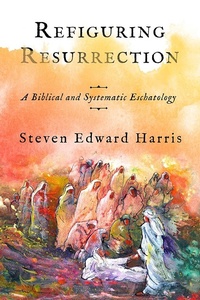
Refiguring Resurrection
Description

In Scripture, a number of individuals are raised from the dead prior to Jesus Christ. Whereas these were once interpreted as prefigurations of that climactic event, a series of challenges in the modern period led to the dismissal of the accounts of the widow's son at Nain, Lazarus, and others as irrelevant to a theology of resurrection. For "they would die again," as scholars as diverse as Karl Barth and N. T. Wright have argued.
With Refiguring Resurrection, Steven Edward Harris contests this position by drawing on recent literary and theological interpretation of the Bible, as well as the deep wells of premodern exegesis and theology, to demonstrate how Scripture itself views these events as dialectical signs, shadows, or figures of Christ's resurrection-and humanity's own future. Furthermore, Harris develops a comprehensive eschatology in which the figural character of these earlier resurrections is taken into account while considering the four last things of Christ's return, final resurrection, last judgment, and new creation. An eschatology thus emerges that sets a new direction for theology in several areas of recent discussion: inaugurated eschatology, the figural reading of Scripture, puzzling cases regarding resurrection in analytic theology, whether believers can properly be said to "go to heaven" when they die, and the debate between narratival and apocalyptic interpretations of the apostle Paul.
Refiguring Resurrection offers a robust, canonically holistic "figural eschatology" that has not been defended in three centuries. By being more faithful to Christian Scripture, this is an approach more theologically promising than any offered in the modern era, including the twentieth century "rediscovery of eschatology."
More details
Other editions
Additional editions
Person
Content
Acknowledgments
Abbreviations
Introduction
1. Death, the Last Enemy
2. Prefigurative Resurrections in 1-2 Kings and the Gospels
3. The Resurrection of the Lord Jesus
4. Post-figurative Resurrections in Acts and Beyond
5. The Holy Spirit and Present Spiritual Resurrection
6. Awaiting the Return of Christ
7. Resurrection as Configuration to Christ
8. Constraining Speculation by the Figure of Christ
9. The Same Body or Another Body?
10. Resurrection as/and Judgment
11. Ascension as Christian Destiny
12. Resurrection as (New) Creation
Conclusion: Resurrection, the End of Scripture, and Theology
