

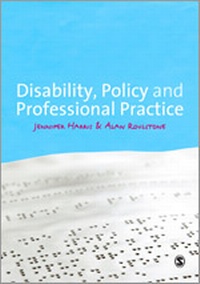
Disability, Policy and Professional Practice
1st Edition
Published on 10. December 2010
160 pages
978-1-4462-1005-5 (ISBN)
Description

This is the first book on working with disabled people to take an aspirational, outcomes-focused approach to professional practice. It forms the first attempt to grapple with the massive legislative and policy shifts in the Disability field in the last 15 years and provides an up-to-date, positive approach to professional practice, based on the social model of disability. Importantly, the book translates both adult and children's' disability legislation and policy guidance into positive, creative, enabling practice methods for professionals in social care, health, employment and independent living.
The book takes a practical approach that challenges professionals to confront key issues in disability studies, policy and practice. The key topics covered are:
o The Historical Legacy, Legislation, Policy and Guidance
o Community Care and Beyond
o Pivotal Moments in the development of disability policy
o Independent Living, Choices and Rights
o Life course Issues
o Valuing Diversity
o Key Challenges for an aspiring social model practitioner
This book is an indispensable resource for all professionals and students working with disabled people.
The book takes a practical approach that challenges professionals to confront key issues in disability studies, policy and practice. The key topics covered are:
o The Historical Legacy, Legislation, Policy and Guidance
o Community Care and Beyond
o Pivotal Moments in the development of disability policy
o Independent Living, Choices and Rights
o Life course Issues
o Valuing Diversity
o Key Challenges for an aspiring social model practitioner
This book is an indispensable resource for all professionals and students working with disabled people.
Reviews / Votes
I warmly welcome this book and am looking forward to recommending it to students. Harris and Roulstone provide a detailed grounding of the policy and practice terrain alongside a focused consideration of key issues relating to disability.Hannah Morgan
Lecturer in Disability Studies, Lancaster University
Disability, Policy and Professional Practice is a valuable addition to the field. It is accessible, readable and practically useful for students.
Toby Brandon, Senior Lecturer
Northumbria University
All prices
More details
Language
English
Place of publication
London
United Kingdom
Target group
College/higher education
ISBN-13
978-1-4462-1005-5 (9781446210055)
Copyright in bibliographic data and cover images is held by Nielsen Book Services Limited or by the publishers or by their respective licensors: all rights reserved.
Schweitzer Classification
Other editions
Additional editions
Jennifer L. Harris | Alan Roulstone
Disability, Policy and Professional Practice
Book
12/2010
1st Edition
SAGE Publications Ltd
€82.70
Shipment within 15-20 days
Jennifer L. Harris | Alan Roulstone
Disability, Policy and Professional Practice
Book
12/2010
1st Edition
SAGE Publications Ltd
€163.90
Shipment within 15-20 days
Persons
Professor Jennifer Harris, Director, Interdisciplinary Disability Research Institute, University of Dundee (retired).
Content
Introduction
The Historical Legacy, Legislation, Policy and Guidance
Introduction
The Roots of Policy, Legislation and Protection
The Poor Law Origins of Health and Social Care
Conclusion
Community Care and Beyond
Introduction
Community Care Legislation
Deinstitutionalization
Conclusion
Pivotal Moments in the development of disability policy
Introduction
The Social Model of Disability
'Mainstreaming' Controversies and Critique
Balancing Greater Individual Choice with Resource Equity
The Lessons of History and new Demands in Practice
Positive Practice
Advocacy, Facilitation and Empowerment
The Implications of Equality 2025 and the Growth of Centres of Inclusive Living
Conclusion
Independent Living, Choices and Rights
Introduction
Enabling Practice in the 21st Century
Working Futures: Work Options and Economic Wellbeing for Disabled people
Direct Payments and In Control: Blazing a Trail for Personalised Social Care
Personalisation and Self Directed Support
Independence, Well-Being and Choice and Beyond
In Control
Individual Budgets
Conclusion
Life course Issues
Introduction
Every Child Matters: Towards Seamless Child Services
Every Disabled Child Matters
Disabled Children's Wheelchair Services: Some Distance Still to Travel
Transition from Children's to Adult Services
Working with Older Disabled People
Adult Social Care and Older People: Practice Issues
Home-Based Living Options for Disabled People
Practice points with Assistive Technologies
The Family Context: Informal Carers' Issues; Balancing the Rights of Disabled People with Those of Carers
Conclusion
Valuing Diversity
Introduction
Mental Health
Learning Disabled Service Users
Gender and Disability
Ethnicity and Disability
Sexuality, Sexual Identity and Parenting
Conclusion
Key Challenges for an Aspiring Social Model Practitioner
Introduction
The Challenge of User Control and Choice; How Should a Social Model Practitioner Act?
Managing the Managers: Budgetary Constraints and Street Level Bureaucracy: Dealing with a Disempowering System
Mental Capacity and Power of Attorney: How Can the Duty of Care be Balanced with Social Model Practice?
Practice Guidance Summarised
Working with Colleagues in User-Led Organizations
Users, Carers and Wider Service Providers: Seeing Disabled People in Context: The Central Place of the Disabled Person
Relating the Legislation and Policy to the Practice Environment: How Can Professionals Develop 'Real Reflexivity' in Working with Disabled People?
Conclusion
Conclusion
The Historical Legacy, Legislation, Policy and Guidance
Introduction
The Roots of Policy, Legislation and Protection
The Poor Law Origins of Health and Social Care
Conclusion
Community Care and Beyond
Introduction
Community Care Legislation
Deinstitutionalization
Conclusion
Pivotal Moments in the development of disability policy
Introduction
The Social Model of Disability
'Mainstreaming' Controversies and Critique
Balancing Greater Individual Choice with Resource Equity
The Lessons of History and new Demands in Practice
Positive Practice
Advocacy, Facilitation and Empowerment
The Implications of Equality 2025 and the Growth of Centres of Inclusive Living
Conclusion
Independent Living, Choices and Rights
Introduction
Enabling Practice in the 21st Century
Working Futures: Work Options and Economic Wellbeing for Disabled people
Direct Payments and In Control: Blazing a Trail for Personalised Social Care
Personalisation and Self Directed Support
Independence, Well-Being and Choice and Beyond
In Control
Individual Budgets
Conclusion
Life course Issues
Introduction
Every Child Matters: Towards Seamless Child Services
Every Disabled Child Matters
Disabled Children's Wheelchair Services: Some Distance Still to Travel
Transition from Children's to Adult Services
Working with Older Disabled People
Adult Social Care and Older People: Practice Issues
Home-Based Living Options for Disabled People
Practice points with Assistive Technologies
The Family Context: Informal Carers' Issues; Balancing the Rights of Disabled People with Those of Carers
Conclusion
Valuing Diversity
Introduction
Mental Health
Learning Disabled Service Users
Gender and Disability
Ethnicity and Disability
Sexuality, Sexual Identity and Parenting
Conclusion
Key Challenges for an Aspiring Social Model Practitioner
Introduction
The Challenge of User Control and Choice; How Should a Social Model Practitioner Act?
Managing the Managers: Budgetary Constraints and Street Level Bureaucracy: Dealing with a Disempowering System
Mental Capacity and Power of Attorney: How Can the Duty of Care be Balanced with Social Model Practice?
Practice Guidance Summarised
Working with Colleagues in User-Led Organizations
Users, Carers and Wider Service Providers: Seeing Disabled People in Context: The Central Place of the Disabled Person
Relating the Legislation and Policy to the Practice Environment: How Can Professionals Develop 'Real Reflexivity' in Working with Disabled People?
Conclusion
Conclusion
