

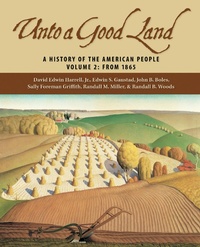
Unto a Good Land
A History of the American People, Volume 2: From 1865
Published on 23. August 2005
1205 pages
978-1-4674-2553-7 (ISBN)
Description

Introducing a New U.S. History Text That Takes Religion SeriouslyUnto a Good Land offers a distinctive narrative history of the American people -- from the first contacts between Europeans and North America's native inhabitants, through the creation of a modern nation, to the 2004 presidential election. Written by a team of highly regarded historians, this textbook shows how grasping the uniqueness of the "American experiment" depends on understanding not only social, cultural, political, and economic factors but also the role that religion has played in shaping U. S. history. While most United States history textbooks in recent decades have expanded their coverage of social and cultural history, they still tend to shortchange the role of religious ideas, practices, and movements in the American past. Unto a Good Land restores the balance by giving religion its appropriate place in the story. This readable and teachable text also features a full complement of maps, historical illustrations, and "In Their Own Words" sidebars with excerpts from primary source documents.
More details
Other editions
Additional editions
David Edwin Harrell | Edwin S. Gaustad | John B. Boles
Unto a Good Land
A History of the American People, Volume 2: From 1865
Book
11/2005
William B. Eerdmans Publishing Company
€48.50
No shipping information available
Content
- Intro
- Title Page
- Copyright
- Contents in Brief
- Contents
- Table of Features
- Preface
- Reviewer Acknowledgments
- About the Authors
- 16 Reconstruction and the New South
- Wartime Reconstruction
- The Thirteenth Amendment
- Andrew Johnson and "Restoration"
- A Defiant South
- The First Congressional Reconstruction Plan
- The Fourteenth Amendment
- The Second Congressional Reconstruction Plan
- The Impeachment of Johnson
- The Fifteenth Amendment
- The Supreme Court and Reconstruction
- Forming Reconstruction Governments in the South
- The New Southern Electorate
- Republican Governments in Action
- White Violence
- The Disputed Election of 1876
- Democratic Governments in a "Redeemed" South
- The Populist Challenge and the End of Black Voting
- The Rise of Jim Crow
- The Supreme Court and Jim Crow
- Black Exertions for Freedom
- The Church
- The School
- Booker T. Washington and Self-Help
- Land and Labor
- The "New South" Promise
- Conclusion: The South at Century's End
- 17 Remaking the Trans-Mississippi Wests
- Native Peoples
- Diverse Ways of Life in the Southwest and Northwest
- Hunting Buffalo on the Great Plains
- Tribal Beliefs, Relations, and Practices
- The Indian Wars
- Challenges of White Settlement
- Local Militia
- Total War
- Negotiations and Reservations
- The Great Sioux War
- Devastation of the Buffalo Herds
- Surrender and Flight
- Attempts at Assimilation
- Partnership of Church and State
- Arousing Public Concern
- A Three-Pronged Approach: Education, Suppression, and Allotment
- New Settlers in the West
- Long Overland Journeys
- The Rise of the Railroads
- Settlers from Overseas and the Eastern States
- Mining the West
- Dreams of Gold
- Booming Towns and States
- Boom and Bust Economies
- Establishing Law and Order
- Cattle and Cowboys on the Plains
- Driving Cattle to Market
- Cowboy Culture
- Fences and Water Rights
- Natural Changes and Challenges
- Sheep versus Cattle
- Farming the West
- Free Land, Harsh Conditions
- New Technologies and Tactics
- The Rise of Agribusiness
- Farm Life and Community on the Plains
- Challenges of Settling Down
- Coming Together as Communities
- Immigrant Settlements and Americanization
- The West(s) of Imagination
- Conclusion: Profits and "Progress"
- 18 The New Industrial Order
- Post-Civil War National Economic Expectations
- The Railroads
- Building an Integrated Railway System
- Government Aid to Railroad Construction
- Travel by Train
- The Managerial Revolution
- Managerial Control
- Information and Management
- Business Education
- Taylorism and Scientific Management
- Thomas Edison and Industrial Technology
- Big Business America
- Andrew Carnegie and Big Steel
- Vertical and Horizontal Integration
- Competition and Combination
- Competition and Government Regulation
- The Bankers Step In
- The Character of Wealth
- Organized Labor
- Working-Class Protests and Strikes
- National Unions
- Conclusion: New Divides
- 19 The Modern Industrial City, 1850-1900
- Peopling the Modern City
- Urban Growth
- The Lure of the City
- The New Immigration
- The Golden Door
- Restrictions on Immigration
- Immigrant Employment and Destinations
- The Immigrant Enclave
- Immigrant Religion
- Community and Identity
- Becoming American in the Immigrant City
- The New Face of the City
- The Development of Mass Transportation
- The Skyscraper
- The Palace of Consumption
- Urban Lifestyles
- Slums
- The Struggle for Control of the City
- City Machine Politics
- Awakening Social Conscience
- Early Efforts at Reform
- The Social Gospel
- The Settlement House
- The City Enters the New Century
- Conclusion: Points of Convergence in the American City
- 20 Post-Civil War Thought and Culture
- National Culture and Faith in Progress
- Publishing: National and Local
- Modern Metropolitan Culture: The Growing Authority of Science and Progress
- Expertise
- Pragmatism and Religion
- Dissenting Views of Progress
- Rural and Small-Town North
- Negotiating Change in the Rural North
- The Distinctive South
- Divergent Subcultures
- Immigrants Encounter the New World
- Workers Respond to Industrial Progress
- Radical Visions of Progress
- Radical Critiques of Progress
- Conclusion: Voicing Alternatives
- 21 The Politics of the Gilded Age
- Political Parties and Political Stalemate
- A Delicate Balance of Power
- Muted Differences
- Political Culture
- Lingering Effects of the Civil War
- Getting Out the Vote
- The Spectacle of Campaigns
- Women's Influence
- Reining in the Spoilsmen
- The Appeal of Civil Service Reform
- Newspapers and Reform
- Impetus for Reform
- The Presidency and Congress Remade
- The Money Question
- The Depression of 1893 and the Gold Standard
- The Populist Challenge
- Farmers Come Together
- Populist Themes
- The Cross of Gold and the Election of 1896
- Conclusion: The End of the Old and the Rise of the New
- 22 Innocents Abroad: Expansion and Empire, 1865-1900
- Limits on Expansionism and Empire
- Forces for Expansion and Interest Overseas
- Securing North America
- Latin American Relations
- Pan-Americanism
- Rattling Sabers at the British
- American Business Interests
- Island Hopping in the Pacific
- An Open Door to China
- The Cuban Crisis
- A "Splendid Little War"
- The Great Debate over Imperialism
- Annexation?
- A Foundation for Nation-Building
- Conclusion: America and the World in 1900
- 23 In Search of Efficiency: The Values and Ideology of Progressivism, 1900-1917
- The Promise of a New Century
- Foundations of the American Dream
- Prosperity and Industrial Concentration
- Advertising the Nation's Success
- The Mass Pursuit of the Good Life
- The Search for Order and a Place in the Republic
- Diluting the WASP Consensus
- Sectional Variations on the American Theme
- African Americans-the Invisible Americans
- Women-Americans Who Would Be Heard
- "A Christian People"
- Protestants
- Catholics
- The Growth of Class Consciousness
- Religion from the Bottom Up
- The Growth of Professionalism
- Labor Gains and Labor Radicalism
- From Providence to Progress
- The Populist Heritage
- Muckrakers
- The Secularization of the American University
- Progressive Education
- A Theoretical Base for Progressivism
- The Heyday of American Socialism
- The Divided Mind of American Protestantism
- Conclusion: Progress and Progressivism
- 24 Progressivism in American Politics, 1901 to World War I
- The Core of the Progressive Agenda
- The Urban Social Justice Movement
- Saving the WASP Empire
- Local and State Political Reform
- Reorganizing American Cities
- Progressivism in the States
- Electoral Reform-Democratic and Undemocratic
- States Provide Models for Progressive Legislation
- Theodore Roosevelt and the Selling of National Progressivism
- Theodore Roosevelt Takes Center Stage
- The Extension of Regulation and Trustbusting
- Political Victory and the Square Deal
- A Beginning for Conservation
- Roosevelt Drifts to the Left
- Competing Progressive Visions
- Roosevelt Picks His Successor
- Taft Alienates the Progressives
- The Rift between Roosevelt and Taft
- The Election of 1912
- Wilsonian Progressivism
- The Scholar President
- Congress Backs the President
- Expanding the New Freedom
- Conclusion: The Legacy of Political Progressivism
- 25 A Sense of Mission: The United States in World Affairs, 1900-1920
- Roosevelt, Taft, and the World
- Missions Lead the Way Abroad
- Roosevelt and the Expansion of American Influence
- Peacemaking in the Pacific
- Tensions in Europe
- Wielding a "Big Stick" in Latin America
- Taft's Dollar Diplomacy
- Wilson Defines America's Moral Mission
- The Flowering of the American Peace Movement
- Wilson as Moralist and Realist
- Wilson and the Mexican Revolution
- Keeping Us out of War
- The Election of 1916
- Making the World Safe for Democracy
- Germany's Fateful Decision and Wilson's Troubled Choice
- The Call to Arms
- The American Expeditionary Force Contributes
- Organizing the Nation for War
- Rallying around the Flag
- Patriotism and Repression
- From Victory to Disillusionment
- From the Fourteen Points to the Peace of Paris
- America Rejects the Treaty of Versailles
- A Troubled Society
- The Red Scare
- Conclusion: The United States Becomes a World Power
- 26 An Exhilarating Decade: American Life in the 1920s
- A Decade of Relative Prosperity
- Welfare Capitalism and the Decline of Unionism
- The Consumer Boom Gathers Steam
- Americans on the Road and in the Air
- A Leisure Society
- Winds of Change
- The New Science
- The Literature of Revolt
- The New Morality and the New Woman
- The "New Negro"
- Conservative Backlash
- Religious Diversity and Confrontation
- Nativist Fears and Immigration Restrictions
- The Case against Foreigners
- The Ku Klux Klan Defines "Pure Americanism"
- The Failure of Prohibition
- The Spread of Organized Crime
- High Republican Politics
- The Election of 1920
- Harding and the Return to "Normalcy"
- Calvin Coolidge Rides the Boom
- The Coolidge Boom
- The Election of 1928
- The Great Engineer at the Wheel
- Boom and Bust in the Stock Market
- Conclusion: A Decade of Prosperity and Self-Analysis
- 27 The Great Depression and the New Deal
- Hoover Struggles with a Deepening Depression
- The Great Depression and Its Causes
- Hoover's Considered Response to a Worsening Collapse
- Too Little Too Late: Democrats and Republicans Attempt Reform
- The Election of 1932
- The Interregnum-the Depression's Darkest Hour
- Franklin D. Roosevelt and the First New Deal, 1933-1934
- The Roosevelt Persona
- The Hundred Days
- Roosevelt and the Moneychangers
- Relief and Public Works
- Conservation and Regional Planning
- The Beginning of Agricultural Subsidies
- The Blue Eagle Soars and Falters
- Labor Supports the New Deal
- Completing the First New Deal
- The Second New Deal and the Emergence of the Welfare State, 1935-1936
- A Democratic Sweep in 1934
- Radical Alternatives
- Launching the Second New Deal
- Extending Relief and Hoping for Recovery
- Agriculture and the Second New Deal
- Social Security and the Wealth-Tax Act
- The Triumph of Labor
- The Limits of Reform
- The Democratic Sweep of 1936
- A Faltering Recovery and Labor Unrest
- The "Court-Packing" Fight
- The Primaries Purge of 1938
- The New Deal Ends
- Conclusion: The Depression and the Political Transformation of America
- 28 Depression Decade
- Depression Moods
- A People Beset
- On the Road
- Family Strains and Future Hopes
- Extremist Echoes in Depression Thought
- The Red Romance
- The Center Holds
- The Great Education Debate
- Religion Retreats from Reform
- The Regrouping of America: Ethnicity, Class, and Religion in the Depression Decade
- Accelerating Ethnic Assimilation
- Decentralizing Tendencies in Unions and Churches
- Gains and Setbacks for Women
- Patterns of Discrimination
- Expanding Regional Sensibilities
- The Arts Serve the Nation
- Depression Literature: Suffering, Endurance, Patriotism
- Art and Architecture Turn Serious
- Radio Unites the Nation
- Movies Come of Age
- Life Goes On
- Conclusion: The Depression Legacy
- 29 The Dilemmas of Power: America and the World, 1921-1945
- The Ambivalent Giant
- Internationalism and Its Limits in the 1920s
- Assertiveness in Latin America
- Tensions with Japan and Russia
- The Long Shadows of War
- The Rise of the Axis Powers
- Appeasement and Isolationism
- The Outbreak of War in Europe, 1938-1939
- American Response to European War: 1939-1941
- Toward Belligerency
- The Open Door Shuts
- Pearl Harbor
- The United States at War
- Forging Allied Strategy
- Turning the Pacific Tide
- Mobilizing "the Arsenal of Democracy"
- Loyalty on the Home Front
- The Return of Prosperity and the Wartime Consumer
- Women at War
- Wartime Roots of the Civil Rights Movement
- Other Outsiders
- The Japanese Internment
- God at War
- "Dr. Win-the-War" and the 1944 Election
- Victory
- Wartime Diplomacy
- Liberating Western Europe
- Ending of the War in the Pacific
- The Manhattan Project and the Beginning of the Nuclear Age
- The GI's War
- Learning of the Holocaust
- Creating a New International Order
- Constructing the United Nations and an International Framework
- Conclusion: A Nation Transformed by War
- 30 In the Shadow of the Bomb: The Cold War in the Truman Years
- Paths Back to Normal Life
- Harry S Truman
- Reconversion and the Baby Boom
- Prices, Wages, and Strikes
- The Eightieth Congress
- Toward the Good Life
- "To Secure These Rights"
- The Cold War Begins
- The Iron Curtain Descends
- Planning for National Security
- The Truman Doctrine and the Marshall Plan
- Strategies for the Cold War
- "Containment" Takes Shape
- Reviving Western Germany and the Berlin Blockade
- Truman's Second Administration: The Fair Deal and a Global Cold War
- Truman's Stunning Victory
- The Fair Deal
- Ever-Colder War
- NATO and the Building of the Western Alliance
- The Soviet Atom Bomb and the Remobilization of the American Military
- Cold War in Asia
- The Korean War
- Espionage, Anti-Communism, and McCarthyism
- Espionage and Security
- The Politics and Religion of Anti-Communism
- McCarthyism
- Conclusion: An Anxious Age
- 31 Containment, Contentment, Discontent: Eisenhower Republicanism and the Fifties
- Dwight D. Eisenhower and the New Republicanism
- The Election of 1952
- An American Hero
- Curtailing Federal Influence
- The Interstate Highway System
- The Election of 1956
- The Second Reconstruction
- Patterns of Inequality
- Judicial Action and Southern Resistance
- New Strategies and New Leaders
- Confronting International Communism: The Eisenhower Strategy of Containment
- John Foster Dulles: Moralist and Pragmatist
- Leashing Chiang
- Nationalism and Marxism in the Third World
- The New Look for Defense
- America and the Third World
- The "Missile Gap"
- The Cold War Warms and Thaws
- Society and Culture at Mid-Century
- Affluent America
- Dwindling Diversity
- The Flowering of American Education
- Fifties Families
- Cars and Subdivisions Alter the Landscape
- Consumer Goods and Entertainment
- Art and Literature, Popular and Critical
- Music: Serious, Popular, and "Rock 'n' Roll"
- The Religious Boom
- Religious Superstars and Media Religion
- Consensus, Conformity, and Criticism
- Conclusion: Conservatism, Consensus, and Conscience
- 32 The Climax of Liberalism in the Sixties and Seventies
- The Ideological and Cultural Sources of Sixties Liberalism
- The Flowering of Postwar Liberalism
- The Accelerating Civil Rights Revolution
- The Black Pride Movement and the Rise of Black Militancy
- The New Women's Movement
- Gay and Lesbian Rights
- The Rising Hispanic Consciousness
- Native Americans Assert Their Rights
- The New Left and the Counterculture
- The Rise of the New Left
- Revolt on Campus
- Hippies and the Counterculture
- From Folk to Rock
- Drug Use and New Sexual Mores
- Environmentalism
- Conservatism and Mainstream American Culture in the Sixties and Seventies
- The Postwar Conservative Intelligentsia
- Popular Conservatism
- Backlash against Social Change and Disruption
- Mainstream Issues: Crime and Education
- Trouble in the Religious Mainstream
- The Changing Face of American Catholicism
- New Religious Movements
- The Evangelical Revival and the Rise of the Religious Right
- The Pentecostal Revival and the Rise of Televangelism
- Television, Movies, and Popular Music
- The Burgeoning Sports Craze
- The Arts and Literature
- Conclusion: Coming Apart and Holding Together
- 33 The Liberal Hour: Politics in the Sixties
- John F. Kennedy and the New Frontier
- The Election of 1960
- The Kennedy Mystique
- The Best and the Brightest
- The New Frontier at Home
- Kennedy and Civil Rights
- The Perils of Containment: The Kennedy Foreign Policy
- Cold War Legacy
- The Bay of Pigs
- Kennedy and Khrushchev
- The Cuban Missile Crisis
- Growing Crisis in Vietnam
- Assassination and Legacy
- Lyndon Johnson and the Reshaping of America
- A Rage for Reform: The Political Character of Lyndon Johnson
- Johnson Takes Charge
- The Election of 1964
- Constructing the Great Society
- The Warren Court under Siege
- Johnson Presses Civil Rights
- The Johnson Domestic Legacy
- Lyndon Johnson, the Cold War, and the Dilemma of Vietnam
- The Vietnam Quagmire
- Gulf of Tonkin and the Expansion of the War
- New Tactics-Search and Destroy
- The United States at War
- Growing Dissent at Home
- The Wages of Globalism-Latin America, the Middle East, and Detente
- Tet and the Devolution of the Johnson Administration
- Winding Down the Liberal Experiment
- More Assassinations
- The Raucous Democratic Convention in Chicago
- The Political Reincarnation of Richard Nixon
- The Election of 1968
- Conclusion: The Legacy of Sixties Liberalism
- 34 A Nation Beset: Politics from Nixon to Reagan
- The Nixon Years on the Home Front
- The Political Persona of Richard Nixon
- The Southern Strategy and the Building of Modern Republicanism
- The Supreme Court Moves to the Right
- The War on Crime and Radicalism
- Opening the Debate on Welfare and the Family Assistance Program
- The New Federalism
- Seeking a Balance on the Environment
- Stagflation and the Decline of the American Economy
- Equal Rights?
- Nixon, Kissinger, and Realpolitik
- Nixon and Kissinger
- "Peace with Honor" in Vietnam
- Arms Control Stalemate
- Mounting Opposition to the War in Vietnam
- Cambodia and Kent State
- Congressional Revolt and the Deterioration of Public Support
- To the Brink of Peace
- Openings to Beijing and Moscow
- Nixon's Disastrous Second Term
- The Election of 1972
- Exiting the Quagmire
- The Yom Kippur War
- Watergate
- The Unraveling of the Presidency
- America on Hold
- Interregnum: The Presidency of Gerald R. Ford
- The Election of 1976
- Discovering Jimmy Carter
- The Economic Crisis and Carter's Domestic Agenda
- Losing the Battle for Energy Independence
- The Carter Foreign Policy-Human Rights and Open Diplomacy
- A Freeze on Detente
- The United States and the Developing Nations
- The Middle East: Breakthrough and Hostages
- The Election of 1980
- Conclusion: A Nation Beset
- 35 A Turn to the Right: The Reagan and First Bush Presidencies
- American Politics Turns to the Right
- Ronald Reagan and the Politics of Conservatism
- Constructing a Republican Coalition
- The Reagan Administration
- Supply Side Economics
- Economic Resurgence
- Expanding the Military
- Cutting Government
- Reheating the Cold War
- Terrorism
- An Easy Victory: Grenada
- A Protracted Mess: Iran, Nicaragua, and Iran-Contra
- Reagan, Gorbachev, and Perestroika
- Four More Years
- The Deficit Spiral
- Deregulation and the Downsizing of American Business
- Employment Patterns and Labor Organization
- The New World Order, Economic Drift, and Gridlock: The Bush Years
- The Election of 1988
- George Herbert Walker Bush
- Holding the Line on the Home Front
- Politics and the Conservative Social Agenda
- The Clarence Thomas Confirmation Fight
- The End of the Cold War
- The China Puzzle
- Policing the Caribbean
- The Gulf War
- Desert Storm
- The Culture Wars and the Election of 1992
- The Challenge of Pluralism, Diversity, and Multiculturalism: The American Salad Bowl
- The Election of 1992
- Conclusion: American Confidence and the New World Order
- 36 The Politics of Equilibrium: The Clinton and Bush Presidencies
- The Clinton Presidency: Toward a Centrist Policy
- The Residual Influence of the Religious Left
- The Clinton Presidency Begins
- A Step to the Left
- Healthcare Reform
- A Continuing National Trauma Over Abortion
- Environmentalism
- Militant Militias and Radical Discontent
- The Economic Boom of the Clinton Years
- The Republican Insurgency and the Contract With America
- Clinton Occupies the Center
- Crime, Drugs, Guns, and Violence
- Welfare Reform
- The Election of 1996
- Farmers Get a New Deal
- The Clinton Scandals
- The Election of 1998
- Soaring Economy, Budget Surpluses, and Post-Scandal Politics
- Searching for a Foreign Policy
- Peacekeeping and "Nation Building"
- War and Peace in the Middle East
- The Clinton Legacy
- Peaks and Valleys in the Presidency of George W. Bush
- The Election of 2000
- George W. Bush Takes the Helm
- 9/11
- The War on Terrorism
- The War on Terror Goes Abroad: Afghanistan
- Operation Iraqi Freedom
- Assessing the Bush Foreign Policy
- The Economy
- Simmering Domestic Agendas
- Republicans Gain Momentum: The Elections of 2002 and 2004
- The Bush Record and Persona
- A Second Term: Spending His Capital
- Conclusion: A Delicate Balance
- 37 American Culture in the New Millennium: A "Culture War," a Stable Center
- The Nation's Changing Makeup
- Patterns of Growth and Mobility
- Immigration Patterns and Concerns
- Persisting Patterns of Poverty
- Hope and Alienation for African Americans
- Gender Gains and the Gender Gap
- Grading Public Education
- Focus on Family Values
- Sexual Patterns and Sexual Politics
- The AIDS Epidemic
- Economic Surge and Retreat
- The Economic Surge of the 1990s
- The International Impact of Multinational Corporations
- The Economic Slowdown and Recovery
- The Search for Values
- Science, Computers, the Internet, and the Future
- Literature, the Arts, and Popular Culture
- Fitness, Sports, and New Heroes
- Values, Habits, and the American Way of Life
- Mainstream Protestantism Moves Left
- Roman Catholicism Moves Right
- The Continuing Acculturation of Old Outsiders
- New Religious Outsiders
- Resurgent Evangelicalism
- Conclusion: Unto a Good Land-the Enduring American Vision
- Appendix
- Credits
