

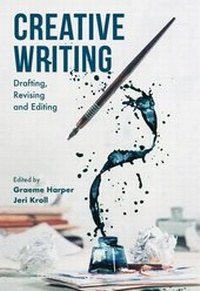
Creative Writing
Description

This stimulating edited collection focuses on the practice of revision across all creative writing genres, providing a guide to the modes and methods of drafting, revising and editing. Offering an overview of how creative writing is generated and improved, the chapters address questions of how creative writers revise, why editing is such a crucial part of the creative process and how understanding the theories underpinning revision can enhance writers' projects.
Innovative and thought-provoking, this book is ideal for undergraduate and postgraduate students of Creative Writing, along with all creative writers looking to hone and polish their craft.
More details
Other editions
Additional editions
Persons
Graeme Harper is a Dean and Professor of Creative Writing at Oakland University, Michigan, USA. He is editor of New Writing: the International Journal for the Practice and Theory of Creative Writing, and Director of the Great Writing International Creative Writing Conference at Imperial College London, and now in its 19th year. Graeme was the inaugural chair of the Higher Education Committee at the UK's National Association of Writers in Education (NAWE). A former Commonwealth Scholar in Creative Writing, he is an award-winning fiction writer, having won such awards as the Premier's Award for New Fiction, the NBC Award for New Fiction and, most recently, the Mutter Fellowship (2013).
Jeri Kroll is Emeritus Professor of English and Creative Writing at Flinders University, South Australia, and was the inaugural Dean of Graduate Research. She also holds an Adjunct Professorship at Central Queensland University. Past President of the Australasian Association of Writing Programs, she holds a PhD in Literature from Columbia University. An award-winning writer for adults and young people, she has published over twenty-five titles (including two Children's Book Council of Australia Notable Awards). Her verse novel Vanishing Point was shortlisted for the Queensland Literary Awards and a stage adaptation was a winner in the 47th Kennedy Center American College Theatre Festival.
Content
- Intro
- CONTENTS
- LIST OF FIGURES AND TABLES
- INTRODUCTION: CREATIVE WRITING: DRAFTING, REVISING AND EDITING
- DRAFTING
- 1: WHAT IS CREATIVE WRITING DRAFTING? Graeme Harper
- Introduction: Understanding drafting
- Creative writing drafting and dynamism
- Teaching, learning and researching dynamic drafting
- References
- 2: DRAFTING AUTOBIOGRAPHICAL MEMOIR Donna Lee Brien
- Introduction
- Drafting
- The work of drafting
- Representing others
- Truth-telling
- Keeping track of sources
- Conclusion
- References
- 3: DRAFTING IN THE COMMUNICATION INDUSTRIES: UNDRESSING THE COVER UP Gail Pittaway
- Introduction and overview
- The changing face of the communication industries
- Drafting in the public relations area of the communication industries
- Drafting, in interactive journalism: Sources and interviews for stories
- Writing for broadcast, internet, magazine and newspaper features
- Personal experience - Arts reviews in the media
- Conclusion: The cover up redressed
- References
- 4: FASHIONING A FRAMEWORK: THE ROLE OF NEW TECHNOLOGIES IN DRAFTING CREATIVE WRITING PROJECTS Russell Carpenter, Karen J. Head
- Introduction
- New forms and considerations
- New forms
- New considerations
- Drafting: Definitions and contexts
- What is a draft?
- Drafting process
- Technology as environment
- Connecting to creativity through technological environments
- New technologies
- Social media as new technology for drafting
- Collaborative apps and tools for drafting
- Connecting technology, drafting and change
- Words, images, text, sound
- Strategies
- Technology in the invention stage
- Technology in the drafting process
- Conclusion
- References
- 5: DRAFTS AS ARCHIVAL SOURCES: THE BRITISH ARCHIVE FOR CONTEMPORARY WRITING (BACW) AT THE UNIVERSITY OF EAST ANGLIA (UEA) Justine Mann
- REVISING
- 6: MAKING CREATIVE USE OF COGNITIVE STYLISTIC FRAMEWORKS IN THE REVISING PROCESS Nigel McLoughlin
- Introduction
- Cognitive processes
- References
- 7: REVISING, DRAMATURGY AND THE THEATRE WORKSHOP Kim Wiltshire
- Introduction
- The first draft
- Dramaturgical feedback
- Script readings and workshopping
- Scratch performances
- Actor feedback
- Director feedback
- Audience feedback
- Improvising around the script
- Devising from an idea
- Conclusion
- References
- 8: REVISING FICTION Michael Kardos
- Introduction
- We are neither toy-makers nor house builders
- The truth about drafts
- Eliciting good advice for revision
- Other key revision strategies
- Discrete tasks
- More specificity (relevant detail)
- More generosity
- Use 'Save As'
- Understanding your own (evolving) process
- References
- 9: THE ROLE OF THE SCRIPT EDITOR, REVISED Craig Batty, Stayci Taylor
- Introduction
- Defining the role of the script editor
- Mapping the practice of the script editor
- Script editing in action
- Couples Confess
- Conclusion
- References
- 10: REVISING PICTUREBOOKS Kathleen Ahrens
- Introduction
- Scope
- Connection
- Developmental appropriateness
- Perspective
- Emotional resonance
- Length
- Visualizing your picturebook
- Plot arc
- Listening to your picturebook
- Final thoughts
- References
- EDITING
- 11: EDITING AS DIALOGUE IN THE ACADEMY Jeri Kroll
- Introduction
- The conventional essay and the essay revised
- Editing as dialogue
- Conclusion
- References
- 12: EDITING LETTERS: RESOURCES, CHALLENGES AND MYSTERIES Laurence Davies
- Introduction
- Practical editing: A diversity of challenges
- The case of Joseph Conrad's correspondence
- Letters as literature
- References
- 13: TO EDIT OR NOT TO EDIT: THE FOREIGN LANGUAGE CLASSROOM QUESTION
- Introduction
- Studying languages
- Case study
- Method of data collection
- Results
- Writing processes: Creative writing
- Writing processes: Before writing
- Writing processes: During writing
- Writing processes: Revision before submission
- Writing processes: Translation into L2 during task writing
- Assessments and feedback
- Conclusions
- Appendix: Questionnaire
- References
- 14: DIVERSITY IN EDITING: MANIFEST MANNERS, FALSE REPRESENTATIONS AND RHETORICAL SOVEREIGNTY Resa Crane Bizzaro
- Introduction
- The problem with editing
- Complications
- The methods justified
- The practice
- Some guidelines
- References
- 15: EDITED COLLECTIONS: FROM BOOK IDEA TO BOOK PRODUCTION Graeme Harper, Jeri Kroll
- Introduction
- Writing about editing
- Practically speaking, from idea to artefact
- Conclusion
- References
- BIOGRAPHICAL NOTES
- Index

