

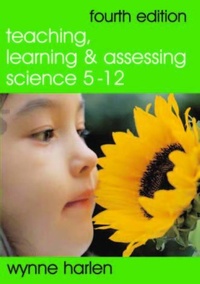
Teaching, Learning and Assessing Science 5 - 12
4th Edition
Published on 9. November 2005
264 pages
978-1-4462-4545-3 (ISBN)
Description

`Professor Harlen has, once again, provided the leading text on primary science. This eminently readable book sets out a clear account of our understanding of learning, teaching and assessment and, through the skilful use of examples, explores the implications of this for science teachers of pupils aged five to 12. By emphasizing the importance of research evidence and the way in which it should underpin practice, this new edition challenges everyone involved in science education to reflect again on whether we are providing the most appropriate learning opportunities for our pupils. It is certainly a book which will be highly recommended, referred to on many occasions and used extensively' - Dr Derek Bell, Chief Executive, The Association for Science Education
This thoroughly revised and completely up-to-date new edition provides an excellent theoretical framework for teaching science that is firmly grounded in classroom practice and covers all stages of education for students aged five to 12 years.
The author details a constructivist view of learning, which recognizes that children already have ideas about the world in which they live, and gives advice on how teachers can help children to develop their understanding and change their perception to a more scientific view. A particular feature is the focus on formative assessment as a framework for discussion on how to help students develop their understanding, enquiry skills and positive attitudes to scientific investigation.
The wide range of topics covered include:
The nature of students' learning in science
The goals of science education
Gathering and interpreting information about students' 's ideas
Helping development of scientific ideas
Gathering and interpreting evidence of students' enquiry skills and attitudes
Strategies for helping development of students' qnquiry skills and attitudes
The learner's role in learning
Summarising and reporting learning
Motivating learning
Teachers and children's questions
Resources for learning science
Managing science in the school
Each chapter features useful summaries, points for reflection and further reading, making this acclaimed book indispensable reading for all primary and practitioners and students who want a book that will authoritatively inform, inspire and instruct their science teaching.
This thoroughly revised and completely up-to-date new edition provides an excellent theoretical framework for teaching science that is firmly grounded in classroom practice and covers all stages of education for students aged five to 12 years.
The author details a constructivist view of learning, which recognizes that children already have ideas about the world in which they live, and gives advice on how teachers can help children to develop their understanding and change their perception to a more scientific view. A particular feature is the focus on formative assessment as a framework for discussion on how to help students develop their understanding, enquiry skills and positive attitudes to scientific investigation.
The wide range of topics covered include:
The nature of students' learning in science
The goals of science education
Gathering and interpreting information about students' 's ideas
Helping development of scientific ideas
Gathering and interpreting evidence of students' enquiry skills and attitudes
Strategies for helping development of students' qnquiry skills and attitudes
The learner's role in learning
Summarising and reporting learning
Motivating learning
Teachers and children's questions
Resources for learning science
Managing science in the school
Each chapter features useful summaries, points for reflection and further reading, making this acclaimed book indispensable reading for all primary and practitioners and students who want a book that will authoritatively inform, inspire and instruct their science teaching.
Reviews / Votes
`The power of this book is that it provides a theoretical framework about how children learn science and practical suggestions for how to apply this knowledge to the classroom. Harlen brings her exceptional insights about teaching and learning to weave a rich tapestry that illuminates the use of the process skills of inquiry to develop conceptual understanding and the critical role formative assessment plays to support this endeavor.This book is a "must-read" for participants in our inquiry and assessment workshops' - Lynn Rankin, Director, Exploratorium Institute for Inquiry
`Professor Harlen has, once again, provided the leading text on primary science. This eminently readable book sets out a clear account of our understanding of learning, teaching and assessment and, through the skilful use of examples, explores the implications of this for science teachers of pupils aged five to 12. By emphasizing the importance of research evidence and the way in which it should underpin practice, this new edition challenges everyone involved in science education to reflect again on whether we are providing the most appropriate learning opportunities for our pupils. It is certainly a book which will be highly recommended, referred to on many occasions and used extensively' - Dr Derek Bell, Chief Executive, The Association for Science Education
'[S]uccinctly written with a fluid, easy-to-read style that ensures its accessibility and relevance to primary teachers and trainees of any specialism or key stage' - Primary Science Review
More details
Edition
Fourth Edition
Language
English
Place of publication
London
United Kingdom
Target group
College/higher education
Product notice
Reflowable
ISBN-13
978-1-4462-4545-3 (9781446245453)
Copyright in bibliographic data and cover images is held by Nielsen Book Services Limited or by the publishers or by their respective licensors: all rights reserved.
Schweitzer Classification
Other editions
Additional editions
Wynne Harlen
Teaching, Learning and Assessing Science 5 - 12
Book
11/2005
4th Edition
SAGE Publications Inc
€219.86
Shipment within 10-20 days
Wynne Harlen
Teaching, Learning and Assessing Science 5 - 12
Book
11/2005
4th Edition
SAGE Publications Inc
€97.70
Shipment within 10-20 days
Person
Professor Wynne Harlen is one of the key international figures in primary science. She was most recently head of the Scottish Council for Research in Education and is now retired.
Content
Introduction
Part I About learning in science
Learning in science
Children learning
The goals of science education
Part II Opportunities for learning
Providing for development 5-12
Teachers' and children's questions
Motivation for learning
Part III Using assessment for learning
Helping learning
A framework for decisions
Gathering and interpreting evidence of children's science process skills and attitudes
Helping development of process skills and attitudes of science
Gathering and interpreting evidence of children's ideas
Helping the development of scientific ideas
The children's role in using assessment for learning
Part IV Managing learning in science
Summarising and recording learning
Resources for learning science
Managing science at the School Level
Part I About learning in science
Learning in science
Children learning
The goals of science education
Part II Opportunities for learning
Providing for development 5-12
Teachers' and children's questions
Motivation for learning
Part III Using assessment for learning
Helping learning
A framework for decisions
Gathering and interpreting evidence of children's science process skills and attitudes
Helping development of process skills and attitudes of science
Gathering and interpreting evidence of children's ideas
Helping the development of scientific ideas
The children's role in using assessment for learning
Part IV Managing learning in science
Summarising and recording learning
Resources for learning science
Managing science at the School Level
