

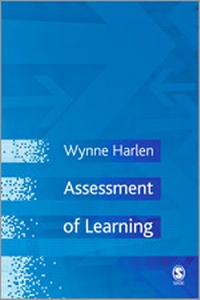
Assessment of Learning
1st Edition
Published on 2. October 2007
176 pages
978-1-84920-348-7 (ISBN)
Description

This book takes a critical look at how students' achievements are assessed for a range of purposes, from reporting progress to selection and qualification. It considers the relationship between what is taught, and how, and what and how learning outcomes are assessed. The impact of using assessment results for setting targets and evaluation of provision for learning is also discussed.
The pros and cons of using tests and examinations and alternatives based on the judgments of teachers are considered in terms of four key criteria: validity, reliability, impact and required resources. Evidence from research and examples of current practice in different countries within and outside the UK support the case for making more and better use of teachers' judgments in assessment of learning. In this way assessment of learning (summative assessment) can be compatible with assessment for learning (formative assessment).
The pros and cons of using tests and examinations and alternatives based on the judgments of teachers are considered in terms of four key criteria: validity, reliability, impact and required resources. Evidence from research and examples of current practice in different countries within and outside the UK support the case for making more and better use of teachers' judgments in assessment of learning. In this way assessment of learning (summative assessment) can be compatible with assessment for learning (formative assessment).
All prices
More details
Language
English
Place of publication
London
United Kingdom
Target group
College/higher education
Professional and scholarly
ISBN-13
978-1-84920-348-7 (9781849203487)
Copyright in bibliographic data and cover images is held by Nielsen Book Services Limited or by the publishers or by their respective licensors: all rights reserved.
Schweitzer Classification
Other editions
Additional editions
Wynne Harlen
Assessment of Learning
Book
10/2007
1st Edition
SAGE Publications Inc
€231.76
Shipment within 10-20 days
Wynne Harlen
Assessment of Learning
Book
10/2007
1st Edition
SAGE Publications Inc
€96.80
Shipment within 10-20 days
Person
Professor Wynne Harlen is one of the key international figures in primary science. She was most recently head of the Scottish Council for Research in Education and is now retired.
Content
PART ONE: ASSESSMENT OF LEARNING IN CONTEXT
1. Meanings, processes and properties of assessment
2. Assessment and the curriculum
3. Views of 'users' of assessment
4. Evaluating assessment methods
PART TWO: USING TEACHERS' JUDGEMENTS FOR ASSESSMENT OF LEARNING IN PRACTICE
5. Using teacher's judgements
6. Summative assessment by teachers in action: examples in England
7. Summative assessment by teachers in action: examples in other countries
PART THREE: CHANGING ASSESSMENT PRACTICE AND POLICY
8. Teachers' assessment for and of learning
9. Summative assessment within the assessment system
1. Meanings, processes and properties of assessment
2. Assessment and the curriculum
3. Views of 'users' of assessment
4. Evaluating assessment methods
PART TWO: USING TEACHERS' JUDGEMENTS FOR ASSESSMENT OF LEARNING IN PRACTICE
5. Using teacher's judgements
6. Summative assessment by teachers in action: examples in England
7. Summative assessment by teachers in action: examples in other countries
PART THREE: CHANGING ASSESSMENT PRACTICE AND POLICY
8. Teachers' assessment for and of learning
9. Summative assessment within the assessment system
