

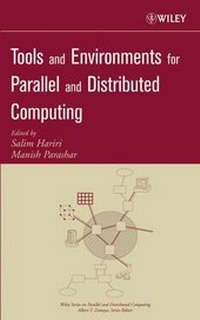
Tools and Environments for Parallel and Distributed Computing
Published on 1. March 2004
232 pages
978-0-471-47484-5 (ISBN)
Description

* An invaluable reference for anyone designing new parallel ordistributed systems.
* Includes detailed case studies of specific systems fromStanford, MIT, and other leading research universities.
* The authors emphasize performance, surveying all availabletechniques.
Reviews / Votes
"...an excellent reference for tools and paradigms for buildinghigh performance parallel and distributed computing systems..."(Computing Reviews.com, February 3, 2005) "This book is recommended for libraries supporting graduatelevel programs in computer science and programs utilizinghigh-performance computing in their research."(E-STREAMS, August 2004)More details
Other editions
Additional editions

Software
03/2004
Wiley
€157.56
Shipment within 10-20 days
Salim Hariri | Manish Parashar
Tools and Environments for Parallel and Distributed Computing
Book
01/2004
1st Edition
Wiley
€119.00
Article exhausted; check different version
Persons
SALIM HARIRI, PhD, is a professor in the Department ofElectrical and Computer Engineering at the University of Arizona,Tucson, where he directs the High Performance Distributed ComputingLaboratory. He is the Editor in Chief for the Cluster ComputingJournal and the founder of IEEE International Symposium on HighPerformance Distributed Computing (HPDC). He is coauthor/editor ofthree books on parallel and distributed computing and has publishedover a hundred journal articles and conference papers.
MANISH PARASHAR, PhD, is an associate professor in theDepartment of Electrical and Computer Engineering at Rutgers, TheState University of New Jersey, where he is Director of The AppliedSoftware Systems Laboratory (TASSL). Professor Parashar is arecipient of the NSF CAREER award and the Enrico Fermi scholarship,and is a senior member of the IEEE. In addition to publishing overa hundred technical papers in international journals andconferences, Professor Parashar has coauthored/edited three books,and has contributed to several others, in the area of parallel anddistributed computing.
Content
Preface.
1. Parallel and Distributed Computing (S. Hariri & M. Parashar).
1.1 Introduction: Basic Concepts.
1.2 Promises and Challenges of Parallel and Distributed Systems.
1.3 Distributed System Design Framework.
References and Further Reading.
2. Message-Passing Tools (S. Hariri & I. Ra).
2.1 Introduction.
2.2 Message-Passing Tools versus Distributed Shared Memory.
2.3 Message-Passing System: Desirable Features.
2.4 Classification of Message-Passing Tools.
2.5 Overview of Message-Passing Tools.
2.6 ACS.
2.7 Experimental Results and Analysis.
2.8 Conclusions.
References.
3. Distributed Shared Memory Tools (M. Parashar & S. Chandra).
3.1 Introduction.
3.2 Cache Coherence.
3.3 Shared Memory Consistency Models.
3.4 Distributed Memory Architectures.
3.5 Classification of Distributed Shared Memory Systems.
References.
4. Distributed-Object Computing Tools (R. Raje, et al.).
4.1 Introduction.
4.2 Basic Model.
4.3 Examples.
4.4 Comparison of the Three Paradigms.
4.5 Conclusions.
References.
5. Gestalt of the Grid (G. von Laszewski & P. Wagstrom).
5.1 Introduction.
5.2 Definitions.
5.3 Multifaceted Grid Architecture.
5.4 Grid Management Aspects.
5.5 Grid Activities.
5.6 Grid Applications.
5.7 Portals.
5.8 Conclusions.
References.
6. Software Development for Parallel and Distributed Computing (M. Parashar & S. Hariri).
6.1 Introduction.
6.2 Issues in HPC Software Development.
6.3 HPC Software Development Process.
6.4 Parallel Modeling of Stock Option Pricing.
6.5 Inputs.
6.6 Application Analysis Stage.
6.7 Application Development Stage.
6.8 Compile-Time and Runtime Stage.
6.9 Evaluation Stage.
6.10 Maintenance/Evolution Stage.
6.11 Existing Software Support.
References.
Index.
1. Parallel and Distributed Computing (S. Hariri & M. Parashar).
1.1 Introduction: Basic Concepts.
1.2 Promises and Challenges of Parallel and Distributed Systems.
1.3 Distributed System Design Framework.
References and Further Reading.
2. Message-Passing Tools (S. Hariri & I. Ra).
2.1 Introduction.
2.2 Message-Passing Tools versus Distributed Shared Memory.
2.3 Message-Passing System: Desirable Features.
2.4 Classification of Message-Passing Tools.
2.5 Overview of Message-Passing Tools.
2.6 ACS.
2.7 Experimental Results and Analysis.
2.8 Conclusions.
References.
3. Distributed Shared Memory Tools (M. Parashar & S. Chandra).
3.1 Introduction.
3.2 Cache Coherence.
3.3 Shared Memory Consistency Models.
3.4 Distributed Memory Architectures.
3.5 Classification of Distributed Shared Memory Systems.
References.
4. Distributed-Object Computing Tools (R. Raje, et al.).
4.1 Introduction.
4.2 Basic Model.
4.3 Examples.
4.4 Comparison of the Three Paradigms.
4.5 Conclusions.
References.
5. Gestalt of the Grid (G. von Laszewski & P. Wagstrom).
5.1 Introduction.
5.2 Definitions.
5.3 Multifaceted Grid Architecture.
5.4 Grid Management Aspects.
5.5 Grid Activities.
5.6 Grid Applications.
5.7 Portals.
5.8 Conclusions.
References.
6. Software Development for Parallel and Distributed Computing (M. Parashar & S. Hariri).
6.1 Introduction.
6.2 Issues in HPC Software Development.
6.3 HPC Software Development Process.
6.4 Parallel Modeling of Stock Option Pricing.
6.5 Inputs.
6.6 Application Analysis Stage.
6.7 Application Development Stage.
6.8 Compile-Time and Runtime Stage.
6.9 Evaluation Stage.
6.10 Maintenance/Evolution Stage.
6.11 Existing Software Support.
References.
Index.
