

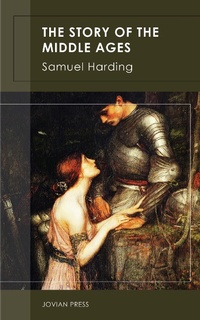
The Story of the Middle Ages
Published on 25. January 2018
203 pages
978-1-5378-1922-8 (ISBN)
Description

Writers of histories are not agreed as to just when the Middle Ages came to an end; but all unite in saying that the change had come by about the year 1500. If we ask what this change was, the question is easy to answer, though perhaps hard to understand. When men had come to think different thoughts, and live under different institutions, in the Church and in the State, from those we have been describing, then the end of the Middle Ages had come. Feudalism ceased to be a sufficient tie to bind men together in society, and national states arose. Chivalry ceased to be the noble institution its founders had hoped to make of it and became a picturesque mimicry of high sentiment, without real hold on the life of the time. Men came to rely less upon their guilds and communes, their orders and classes, and act more for themselves as individuals. Ignorance, too, became less dense; and as men learned more of the world, and of themselves, superstition became less universal and degrading...
More details
Other editions
Additional editions
Samuel Bannister Harding
The Story of the Middle Ages - Scholar's Choice Edition
Book
02/2015
Scholar's Choice
€44.78
No shipping information available
Person
Writers of histories are not agreed as to just when the Middle Ages came to an end; but all unite in saying that the change had come by about the year 1500. If we ask what this change was, the question is easy to answer, though perhaps hard to understand. When men had come to think different thoughts, and live under different institutions, in the Church and in the State, from those we have been describing, then the end of the Middle Ages had come. Feudalism ceased to be a sufficient tie to bind men together in society, and national states arose. Chivalry ceased to be the noble institution its founders had hoped to make of it and became a picturesque mimicry of high sentiment, without real hold on the life of the time. Men came to rely less upon their guilds and communes, their orders and classes, and act more for themselves as individuals. Ignorance, too, became less dense; and as men learned more of the world, and of themselves, superstition became less universal and degrading...
