

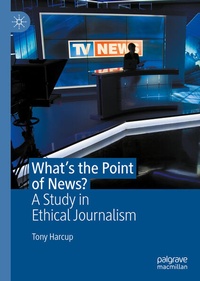
What's the Point of News?
Description

This book questions whether the news we get is as useful for citizens as it could, or should, be. This international study of news is based on re-thinking and re-conceptualising the news values that underpin understandings of journalism. It goes beyond empirical descriptions of what journalism is to explore normative ideas of what it might become if practised alongside commitments to ethical listening, active citizenship and social justice. It draws lessons from both alternative and mainstream media output; from both journalists and scholars; from both practice and theory. It challenges dominant news values by drawing on insights from feminism, peace journalism and other forms of critical thinking that are usually found on the margins of journalism studies. This original and engaging contribution to knowledge proposes an alternative set of contemporary news values that have significant implications for the news industry, for journalism education and for democracy itself.
Reviews / Votes
"Tony Harcup's book What's the Point of News? could be the first time many people will be forced to wholly examine the ethics of how journalism works. It's so valuable to see passing thoughts, discussions I've had on Twitter or things that some journalists are actively trying to change spelt out and backed up with evidence. These conversations have always been vital but with traditional media losing power to social media, we need them more than ever." (Robyn Vinter , Media North, Issue 7, June, 2020)
More details
Other editions
Additional editions
Person
Tony Harcup is Senior Lecturer in Journalism at the University of Sheffield, UK. He worked as a journalist within mainstream and alternative media before becoming a teacher, researcher and author. His books include the Oxford Dictionary of Journalism (2014); Alternative Journalism, Alternative Voices (2012); and Journalism: Principles and Practice (2015), which has been translated into several languages.
