

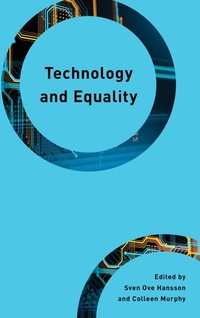
Technology and Equality
1st Edition
Published on 15. December 2024
1 pages
979-8-8818-6369-2 (ISBN)
Description

Analyzing the roles technology plays in growing global inequalities, this collection combines theory with case studies to expose causes and correlations, as well as potential solutions. Contributing scholars provide perspectives from history, sociology, gender studies, anthropology, economics, law, ethics, and philosophy.
We live in a world of rapidly growing gaps between rich and poor. In the rich parts of the world, new resource-consuming devices are launched every year. But at the same time, about a fourth of the world's population does not have access to clean drinking water, and more than half lack safely managed sanitation. What role does technology have in these growing global inequalities? Is technological development the root cause of inequality? Or is the unequal distribution of technology just a mirror of social inequities that have other causes? And can new technologies be instrumental in making the world less unfair?
In this collection, these issues are addressed from a wide range of perspectives by scholars in disciplines such as history, sociology, gender studies, anthropology, economics, law, ethics, and philosophy. Case studies highlight technology-related inequalities for instance in climate mitigation, public transport, access to water, waste management, sanitation, air pollution, healthcare, digital communication, and law enforcement. The more theoretical chapters provide tools and concepts that are helpful for analyzing and understanding the relationships between technology and inequality in other applications and in more general perspectives.
We live in a world of rapidly growing gaps between rich and poor. In the rich parts of the world, new resource-consuming devices are launched every year. But at the same time, about a fourth of the world's population does not have access to clean drinking water, and more than half lack safely managed sanitation. What role does technology have in these growing global inequalities? Is technological development the root cause of inequality? Or is the unequal distribution of technology just a mirror of social inequities that have other causes? And can new technologies be instrumental in making the world less unfair?
In this collection, these issues are addressed from a wide range of perspectives by scholars in disciplines such as history, sociology, gender studies, anthropology, economics, law, ethics, and philosophy. Case studies highlight technology-related inequalities for instance in climate mitigation, public transport, access to water, waste management, sanitation, air pollution, healthcare, digital communication, and law enforcement. The more theoretical chapters provide tools and concepts that are helpful for analyzing and understanding the relationships between technology and inequality in other applications and in more general perspectives.
More details
Series
Edition
1. Auflage
Language
English
Place of publication
United States
Publishing group
Bloomsbury Publishing Plc
Target group
College/higher education
Illustrations
1 BW Illustration
ISBN-13
979-8-8818-6369-2 (9798881863692)
Copyright in bibliographic data and cover images is held by Nielsen Book Services Limited or by the publishers or by their respective licensors: all rights reserved.
Schweitzer Classification
Other editions
Additional editions
Sven Ove Hansson | Colleen Murphy
Technology and Equality
Book
02/2025
Rowman & Littlefield Publishers
€114.30
Shipment within 3-4 weeks
Persons
Sven Ove Hansson is member of the Royal Swedish Academy of Engineering Sciences and past president of the Society for Philosophy and Technology. He is the author of six scholarly books and editor of eleven and he has published around 380 papers in refereed international journals and books.
Colleen Murphy is a professor in the College of Law with courtesy appointments in philosophy and political science at the University of Illinois at Urbana-Champaign, where she also directs the Women and Gender in Global Perspectives Program in the Illinois Global Institute. She is the author of three books, co-editor of three volumes, and has published more than fifty journal articles and book chapters.
Colleen Murphy is a professor in the College of Law with courtesy appointments in philosophy and political science at the University of Illinois at Urbana-Champaign, where she also directs the Women and Gender in Global Perspectives Program in the Illinois Global Institute. She is the author of three books, co-editor of three volumes, and has published more than fifty journal articles and book chapters.
Content
Preface
1. Technology and Equality: An Introduction, Sven Ove Hansson
2. Law, Public Policy, and Equality, Colleen Murphy
3. Who Decides on Technology Development?, Armin Grunwald
4. Technology and Gender Equality, Lena Wånggren
5. Disability and Technology? No, Disability As Technology., Shelley Tremain
6. Work, Technology, and Equality, Sven Ove Hansson
7. Artificial Intelligence, Equality, and the Future of Work, Sven Nyholm and Markus Rüther
8. Information Technologies and Human Rights, Giovanni Sartor
9. Agriculture, Paul B. Thompson
10. Water and Inequality, Neelke Doorn
11. Is Breathing Clean Air a Matter of Equality?, Ebba Malmqvist
12. Human reproduction, Camisha Russell
13. Technology and Inequality in the Covid-19 Pandemic, Nicole Hassoun and Anders Herlitz
About the Authors
Index
1. Technology and Equality: An Introduction, Sven Ove Hansson
2. Law, Public Policy, and Equality, Colleen Murphy
3. Who Decides on Technology Development?, Armin Grunwald
4. Technology and Gender Equality, Lena Wånggren
5. Disability and Technology? No, Disability As Technology., Shelley Tremain
6. Work, Technology, and Equality, Sven Ove Hansson
7. Artificial Intelligence, Equality, and the Future of Work, Sven Nyholm and Markus Rüther
8. Information Technologies and Human Rights, Giovanni Sartor
9. Agriculture, Paul B. Thompson
10. Water and Inequality, Neelke Doorn
11. Is Breathing Clean Air a Matter of Equality?, Ebba Malmqvist
12. Human reproduction, Camisha Russell
13. Technology and Inequality in the Covid-19 Pandemic, Nicole Hassoun and Anders Herlitz
About the Authors
Index
