

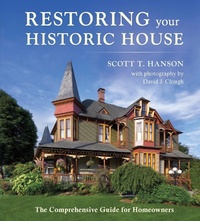
Restoring Your Historic House
The Comprehensive Guide for Homeowners
Published on 1. June 2023
720 pages
978-1-68475-157-0 (ISBN)
Description

Although there are other books about renovating old houses, this is the first that prioritizes the identification and preservation of the historic, character-defining features of a house as a starting point in the process. That is the purpose of this book: to describe and illustrate a best-practices approach for updating historic homes for modern life in ways that do not attempt to turn an old house into a new one. The book also suggests many ways to save money in the process, without settling for cheap or inappropriate solutions. Scott Hanson is a historic-building preservation professional and has 40 years' experience rehabilitating historic houses. He has illustrated this authoritative book with hundreds of step-by-step photos, illustrations, charts, and decision-making guides. Interspersed throughout are photo essays of 13 restored historic houses representing a range of periods and architectural styles: Italianate, Victorian, Queen Anne, Federal, Colonial, Colonial Revival, Greek Revival, Ranch, Adobe, Craftsman, Shingle, and Rustic. With interior and exterior photography by David Clough, these multi-page features show what can be achieved when a historic home is renovated with a desire to preserve or restore as much historic character as possible.
More details
Language
English
Place of publication
New York
United States
Publishing group
Rowman & Littlefield
File size
135,53 MB
ISBN-13
978-1-68475-157-0 (9781684751570)
Copyright in bibliographic data and cover images is held by Nielsen Book Services Limited or by the publishers or by their respective licensors: all rights reserved.
Schweitzer Classification
Other editions
Additional editions
Book
08/2023
Down East Books,U.S.
€47.00
Article not available at the moment
Persons
Content
- RESTORING YOUR HISTORIC HOUSE
- CONTENTS
- Introduction
- PART ONE: PROJECT PLANNING
- 1. Finding the Right House
- When Is an Old House a Historic House?
- Is This One the Right One?
- Does It Match Your Lifestyle?
- Does It Have the Features That Are Essential to You?
- Does It Have Features That Are Desirable to You?
- Does It Have Rental Units to Help with the Mortgage?
- Is the Location Good?
- 2. Character-Defining Features of a Historic House
- Evaluating Your House
- Hiring a Professional
- Doing It Yourself
- Identifying the Age and Style of Your House
- Colonial
- First Period (1600-1740)
- Georgian Colonial (1730-1790)
- Early National
- Federal, Early Classical Revival (1790-1830)
- Greek Revival (1820-1860)
- Early Victorian
- Gothic Revival (1830-1870)
- Italianate (1850-1875)
- Later Victorian
- Second Empire, Queen Anne, Stick, Shingle (1860-1900)
- Richardsonian Romanesque (1880-1900)
- Eclectic and Exotic (1830-1930)
- Late-Nineteenth and Early-Twentieth-Century Revival
- Colonial Revival (1880-present)
- Neo-Classical Revival (1880-1940)
- Spanish Colonial Revival (1880-1930)
- Tudor Revival (1890-1930)
- Early Twentieth Century
- American Foursquare (1900-1930)
- Craftsman (1880-1940)
- Prairie (1910-1940)
- Mid-Twentieth Century
- Modernist (1940-1970)
- Ranch (1945-1980)
- Raised Ranch/Split Level variant (1950-1980)
- Postwar Traditionalist (1940-1960)
- Types that are "Styles"
- Adobe (1600-present)
- Rustic or Log Cabin (1700-1940)
- Vernacular (1750-1960)
- Identifying Changes Over Time
- Whitten House: A Case Study
- Identifying Character-Defining Features
- Identifying Missing and Added Interior Features
- Identifying Missing and Added Exterior Features
- Documentary Evidence
- Final Notes
- Featured Home: S. Nevin Hench House, 1887
- 3. Project Design
- Identifying Areas of Opportunity
- Whitten House Case Study
- Ground Rules for Changes
- Local Historic District Regulations and Design Standards
- Do You Need an Architect?
- Drawing Your Own Plans
- Tips and Tricks
- Documenting Your Work
- Working with What You've Got
- Using Areas of Opportunity
- A Reconfigured Duplex
- New Walls
- How Many Bathrooms Do You Really Need?
- A Modern Kitchen for a Historic House
- Designing with Modular Cabinetry
- Designing with Custom Cabinetry
- Example Project: A Compatible Kitchen
- Designing Bathrooms
- Example Project: A Compatible Bathroom
- Planning Additions
- Example Project: A Bay Window Addition
- Dealing with Incompatible Additions
- Enclosed Porches
- Landscape Design for the Historic House
- Featured Home: Dow Farm, 1769
- 4. Do It Yourself?
- Be Realistic
- Estimating Time and Cost: Double It!
- Phasing a Project
- Live in the Project or Move Out?
- Living in a House That Is Undergoing Rehab
- Hiring a Professional
- Featured Home: Casa Roca, 1891
- 5. Bureaucrats You'll Meet
- Applying for a Certificate of Appropriateness
- Vocabulary Matters
- Organize Your Material
- Cite National Park Service Preservation Briefs or Local Design Guidelines
- Include Drawings, Photos, and Other Supporting Material
- Make Sure Your Application Is Complete
- Understand How the Review Process Works
- Be Friendly! They Are Just People
- Building Permits
- Get to Know Your Local Inspectors
- Read the Code!
- Dealing with Unhelpful Bureaucrats
- On-Site Inspections
- Planning Boards and Other Bureaucracies
- Boards of Appeal
- Private-Sector Bureaucrats
- Featured Home: Dark Harbor House, 1896
- PART TWO: UNDER THE SURFACE
- 6. The Demolition Phase
- Messages from the Past
- Safety
- Structural Considerations
- Other Safety Concerns
- Protecting Historic Features
- Vermin
- Mold
- Removing Modern Materials
- Ceilings
- Carpet
- Vinyl Flooring
- Insulation
- Removing Historic Trim and Flooring
- Removing Historic Plaster
- Removing Other Materials
- Ornamental Plaster
- Pressed Tin
- Other Metals
- Framing
- Masonry
- Multiple Layers from Several Periods
- Final Word: Stow the Sledgehammer
- Featured Home: Weston House, 1957
- 7. Structural Concerns
- Historic Framing Methods
- Common Structural Issues
- Foundations
- Sills
- Other Damage
- Damage from Plumbing, Heating, and Electrical Installations
- Damage from Previous Renovations
- Do It Yourself or Hire a Professional?
- Basic Structural Repairs
- Example Project: Beam Replacement
- Featured Home: Red Farm (Rowell-Cummings House), 1796
- PART THREE: SYSTEMS
- 8. Heating and Cooling
- Heating
- Fuel Sources
- Venting Modern Boilers and Furnaces
- Heating Systems
- Heating Controls
- Fireplaces
- Stoves
- Example Project: A Radiant Heating System in a Historic House
- Designing the System
- Installation under the House
- Insulation
- Installation in the Second-Floor Ceilings
- The Boiler
- Compatible Thermostats
- Cooling
- Whole-House Fans
- Central Air Conditioning
- Heat Pumps
- Green Technologies
- Solar Power and Hydronic Heating Systems
- Geothermal Heating
- Featured Home: Smith House, 1877
- 9. Insulation and Ventilation
- Insulation
- Insulation Types
- Masonry Buildings
- Insulating Ducts and Pipes
- Air Sealing
- A Note on Weather Stripping
- How Much Sealing Is Enough?
- Ventilation
- Example Project: A Deep-Energy Retrofit in a Victorian Cottage
- 10. Plumbing and Electrical
- Plumbing
- Laying Out New DWV Pipes
- Supply Lines
- Gas Lines
- Working with Historic Fixtures
- Compatible New Fixtures
- Electrical
- Knob-and-Tube Wiring
- Updating Wiring
- Low Voltage for Historic Lighting with LED Bulbs
- Light Fixtures
- Switches and Outlets
- Internet, TV, and Phone Cables
- Solar Electric
- Featured Home: Cassidy Hill Contemporary Unit in a Victorian House, 1890
- PART FOUR: THE EXTERIOR ENVELOPE
- 11. Roofs
- Roof Problem Areas
- Hot Roof? Cold Roof?
- Roofing Materials
- Wood Shingles
- Slate Shingles
- Asphalt Shingles
- Metal Roofs
- Clay Tile/Terracotta Roofs
- Concrete Tile
- Membrane Roofing
- Tesla Solar Roofs
- Gutters and Downspouts
- Drains and Grading
- Satellite Dishes
- Featured Home: John H. and Jeanette Davis House, 1883
- 12. Exterior Walls
- Masonry Walls
- Identifying the Materials
- Repointing Masonry
- Matching Brick or Stone
- Cleaning a Masonry Wall
- Brownstone Restoration
- Terracotta and Cast Stone Restoration
- Brick Veneer
- Adobe
- Stucco
- Caulking
- Attachments
- Wood Walls
- Identifying the Materials
- Assessing the Siding Condition
- In-Kind Siding Replacement
- Removing Inappropriate Siding
- New Vinyl?
- Featured Home: Kowalski-Policht House, 1924
- 13. Exterior Trim and Windows
- Trim
- Missing Trim Elements
- Porches and Steps
- Substitute Materials
- Do Not "Fix" Historic Work
- Paint
- Historic Colors
- Paint Analysis
- Painting Prep
- Doors and Windows
- Doors
- Windows
- Window Rehabilitation in Photos
- PART FIVE: INTERIOR FINISHES
- 14. Floors
- Wood Flooring
- Softwood Floor Repairs and Replacement
- Softwood Floor Finishes
- Hardwood Floors
- Floor Cloths
- Carpet
- Stone Flooring
- Linoleum
- Rubber Flooring
- Vinyl and Vinyl Asbestos Flooring
- Cork Tile
- Modern Materials
- Laminate
- Other Modern Materials
- Featured Home: Ridlon Camp, 1908
- 15. Interior Walls
- Plaster
- Wall Plaster Repair and Replacement
- Ornamental Plaster and Composition Ornament
- Wood Walls and Wainscots
- Wainscoting
- Repairing Stile-and-Rail Paneling
- Replacing or Covering Modern Sheet Paneling
- Repairing and Preserving Modern Sheet Paneling
- Beaded and V-Groove Walls and Wainscots
- "Pickwick" Pine Walls
- Barn Board Walls and Wainscots
- Fiberglass and Glass Block Walls
- Exposed Brick Interior Walls
- Ceramic Tiles
- Quarry Tiles
- Marble Tiles
- Plastic Tiles
- Glass Tiles
- Featured Home: Ebenezer Alden House, 1797
- 16. Ceilings
- Plaster Repairs
- Cracked Plaster
- Detached Plaster
- New Plaster
- Calcimine and Other Problem Paints
- Medallions
- Decorative Paint on Ceilings
- Example Project: Plaster Ceiling Restoration
- Pressed Tin Ceilings
- Wood Ceilings
- Acoustical Tile Ceilings
- Suspended Ceilings
- Textured Ceilings
- Featured Home: Record Farm, 1844
- 17. Interior Trim
- Historic Trim Details
- Window and Door Trim
- Staircase Trim
- Baseboards
- Doors
- Repairing or Replacing Wood Trim
- Reproducing Damaged or Missing Moldings
- Architectural Salvage
- Repairing Damaged Woodwork
- Replacing Missing Doors
- Other Trim Materials and Styles
- Metal Trim
- Stonework
- Postwar Trim
- Twenty-First Century Substitute Materials
- Hardware
- Example Project: Restoration of an 1827 Kitchen
- 18. Interior Paint and Paper
- Historic Interior Finishes
- Period Colors
- Paint Analysis
- Historic Decorative Painting
- Stripping Paint
- Stripping Paint with Heat
- Liquid, Gel, and Paste Strippers
- Stripping Paint with Steam
- Working on Lead-Painted Surfaces
- Prepping for Refinishing
- Surface Prep
- Choosing Paint
- Clear-Coat Finishes
- Brushes
- Painting Trim
- Painting Walls and Ceilings
- Paint Sprayers
- Wallpaper
- Preserving and Conserving Historic Wallpapers
- Papered Ceilings
- Lincrusta and Anaglypta Wallcoverings
- Reproduction Wallpapers
- Hand Block Reproductions
- Screen-Printed Reproductions
- Digital Reproductions
- Machine-Printed Reproductions
- PART SIX: TOOLS AND RESOURCES
- 19. Tools
- Power versus Hand Tools
- Care of Tools
- Ladders and Staging
- Safety
- 20. Resources
- Index
- Acknowledgments
