

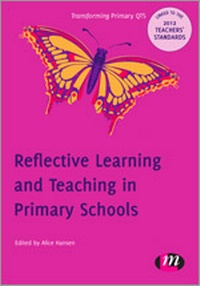
Reflective Learning and Teaching in Primary Schools
9780857257697
1st Edition
Published on 18. May 2012
176 pages
978-0-85725-771-0 (ISBN)
Description

Trainee teachers are expected to demonstrate reflective practice in many ways throughout their course. Unlike other texts, this book takes a focused look at what primary trainees need to know and offers specific and details guidance on how to be meaningfully reflective in learning and teaching.
Examining reflection as a tool for both teachers and children, this text considers how teachers can encourage the children they teach to be reflective in their own learning and how this can improve learning and teaching. Chapters on lesson study and reflective journals offer practical guidance, and a chapter on using children's voice as a tool for reflection explores this popular topical theme. Case studies and activities are included to help the reader relate theory to practice and all chapters are linked to the 2012 Teachers' Standards.
About the Transforming Primary QTS series
This series reflects the new creative way schools are begining to teach, taking a fresh approach to supporting trainees as they work towards primary QTS. Titles provide fully up to date resources focused on teaching a more integrated and inclusive curriculum, and texts draw out meaningful and explicit cross curricular links.
Examining reflection as a tool for both teachers and children, this text considers how teachers can encourage the children they teach to be reflective in their own learning and how this can improve learning and teaching. Chapters on lesson study and reflective journals offer practical guidance, and a chapter on using children's voice as a tool for reflection explores this popular topical theme. Case studies and activities are included to help the reader relate theory to practice and all chapters are linked to the 2012 Teachers' Standards.
About the Transforming Primary QTS series
This series reflects the new creative way schools are begining to teach, taking a fresh approach to supporting trainees as they work towards primary QTS. Titles provide fully up to date resources focused on teaching a more integrated and inclusive curriculum, and texts draw out meaningful and explicit cross curricular links.
All prices
More details
Series
Language
English
Place of publication
London
United Kingdom
Publishing group
Sage Publications Ltd
Target group
College/higher education
ISBN-13
978-0-85725-771-0 (9780857257710)
Copyright in bibliographic data and cover images is held by Nielsen Book Services Limited or by the publishers or by their respective licensors: all rights reserved.
Schweitzer Classification
Other editions
Additional editions
Alice Hansen | Adrian Copping | Nick Clough
Reflective Learning and Teaching in Primary Schools
Book
05/2012
1st Edition
Learning Matters Ltd
€76.10
Shipment within 15-20 days
Alice Hansen | Adrian Copping | Nick Clough
Reflective Learning and Teaching in Primary Schools
Book
05/2012
1st Edition
Learning Matters Ltd
€164.50
Shipment within 15-20 days
Persons
Alice Hansen is the Director of Children Count Ltd where she is educational consultant. Her work includes running professional development courses and events for teachers and teacher trainers, research and publishing. Alice has worked in education in England and abroad. Prior to her current work she was a primary mathematics tutor and the programme leader for a full-time primary PGCE programme at a large university in England. Adrian Copping has been working in teacher education for the last twelve years. At present, he is Primary PGCE Programme Leader and Senior Lecturer in English and Literacy based at the Lancaster campus of the University of Cumbria. Previously, Adrian worked at two contrasting schools in Lancashire, as class teacher and leader. Adrian's particular interests are the use of teacher-in-role and other drama techniques to develop children's writing and understanding of text and also the impact of creative thinking on children's writing. Adrian has presented work on this at various national and international conferences. In his teacher education work, Adrian continues to develop close working relationships with primary schools, which have enabled him to keep abreast of current practice as well as develop his areas of research interest. Lisa Murtagh is BA (Hons) Primary Education with QTS Part Time Programme Leader at Edge Hill University. She has been involved in Initial Teacher Training for nine years and her research interest lies with assessment. Helen Davenport has worked in the Early Years sector for twenty years, as a Foundation Stage Leader, Deputy Head and currently as a Senior Lecturer at Manchester Metropolitan University in Childhood Studies. She has previously been engaged in research that explores the nature of students' reflective writing and young children's talk and 'chatter'. Helen is passionate about the benefits of outdoor learning and Forest School and enjoys taking her Early Years students to Forest School sessions and enabling them to experience this approach first hand. Her current academic interests include the pedagogies and practices that stem from Forest Schools, with a particular curiosity about practitioner experiences of leading sessions and how these outdoor spaces might support children's talk.
Content
Introduction
Introduction - Alice Hansen
Children as Reflective Learners - Emma McVittie
Trainees and Teachers as Reflective Learners - Alice Hansen
Reflective Learning and Teaching Opportunities - Adrian Copping
Using Children's Talk as a Basis for Reflective Practice - Nick Clough
Using Coaching as a Tool for Reflection - Mike Pezet
Using Self and Peer-Assessment for Reflection - Lisa Murtagh
Reflection through Lesson Study - Pete Dudley and Elizabeth Gowing
Reflective Journals and Portfolios - Helen Davenport
Appendix 1 - Model answers to the self-assesment questions
Appendix 2 - Feedback Action Plan
Appendix 3 - School Placement - Target Setting and Action Plan
Index
Introduction - Alice Hansen
Children as Reflective Learners - Emma McVittie
Trainees and Teachers as Reflective Learners - Alice Hansen
Reflective Learning and Teaching Opportunities - Adrian Copping
Using Children's Talk as a Basis for Reflective Practice - Nick Clough
Using Coaching as a Tool for Reflection - Mike Pezet
Using Self and Peer-Assessment for Reflection - Lisa Murtagh
Reflection through Lesson Study - Pete Dudley and Elizabeth Gowing
Reflective Journals and Portfolios - Helen Davenport
Appendix 1 - Model answers to the self-assesment questions
Appendix 2 - Feedback Action Plan
Appendix 3 - School Placement - Target Setting and Action Plan
Index
