

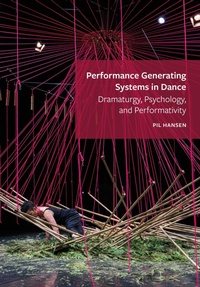
Performance Generating Systems in Dance
Dramaturgy, Psychology, and Performativity
Published on 1. November 2022
170 pages
978-1-78938-642-4 (ISBN)
Description

Performance generating systems are systematic and task-based dramaturgies that generate performance for or with an audience. In dance, such systems differ in ways that matter from more closed choreographed scores and more open forms of structured improvisation. Dancers performing within these systems draw on predefined and limited sources while working on specific tasks within constraining rules. The generating components of the systems provide boundaries that enable the performance to self-organize into iteratively shifting patterns instead of becoming repetitive or chaotic.
This book identifies the generating components and dynamics of these works and the kinds of dramaturgical agency they enable. It explains how the systems of these creations affect the perception, cognition and learning of dancers and why that is a central part of how they work. It also examines how the combined dramaturgical and psychological effects of the systems performatively address individual and social conditions of trauma that otherwise tend to remain unchangeable and negatively impact the human capacity to learn, relate and adapt. The book provides analytical frameworks and practical insights for those who wish to study or apply performance generating systems in dance within the fields of choreography and dance dramaturgy, dance education, community dance or dance psychology.
Featured cases offer unique insight into systems created by Deborah Hay and Christopher House, William Forsythe, Ame Henderson, Karen Kaeja and Lee Su-Feh.
This book identifies the generating components and dynamics of these works and the kinds of dramaturgical agency they enable. It explains how the systems of these creations affect the perception, cognition and learning of dancers and why that is a central part of how they work. It also examines how the combined dramaturgical and psychological effects of the systems performatively address individual and social conditions of trauma that otherwise tend to remain unchangeable and negatively impact the human capacity to learn, relate and adapt. The book provides analytical frameworks and practical insights for those who wish to study or apply performance generating systems in dance within the fields of choreography and dance dramaturgy, dance education, community dance or dance psychology.
Featured cases offer unique insight into systems created by Deborah Hay and Christopher House, William Forsythe, Ame Henderson, Karen Kaeja and Lee Su-Feh.
Reviews / Votes
'Going beyond the typical theoretical constructs of choreography and improvisation, Pil Hansen's book indulges in the inventive components of creating dance productions utilizing performance generating systems. What could be overly abstract is grounded in concrete definitions that guide the reader toward an understanding of the included theories and possible applications.[...] This text is well suited for a graduate-level dance studies seminar involving practical application of creation methods [...] In addition to graduate study, Hansen's book is a wonderful source of thoughtful queries, ideas, and experiential knowledge that would benefit any dance educator guiding students in maintaining and deepening curiosity and explorative actions.' -- Heather Trommer-Beardslee, Journal of Dance Education 'Hansen is defining and creating terminology that is useful for practitioners and researchers to understand more deeply what a [Performance Generating System] is and what it has the potential to do. [...] [In the section on performativity] she articulates the relationship of PGSs within the iterative nature of performance and the way this makes space for the possibility of something new to appear. What her research reveals is that when trauma, or trauma memory, is approached performatively, and specifically within a PGS process, the rule-bound yet agentic frames that this offers allow for the increased possibility for actual change. [...] This ability for change within the art practice, Hansen then extends, can move outward into the world to "gently address interpersonal, intergenerational, and environmental dissociation performatively" (3). It is a profound call to recognize the power and potential of embodied performance practices and the arts.' -- Thea Patterson, TRIC: Theatre Research in CanadaMore details
Language
English
Place of publication
Bristol
United Kingdom
Publishing group
Intellect
Target group
Professional and scholarly
Illustrations
16 black and white illustrations
ISBN-13
978-1-78938-642-4 (9781789386424)
Copyright in bibliographic data and cover images is held by Nielsen Book Services Limited or by the publishers or by their respective licensors: all rights reserved.
Schweitzer Classification
Other editions
Additional editions
Book
11/2022
Intellect Books
€117.40
Shipment within 3-4 weeks
Person
Dr. Pil Hansen is professor of the performing arts at the University of Calgary in Canada, President of Performance Studies international, general editor of the Expanded Dramaturgy book series (Routledge), a founding member of Vertical City Performance, and a dance/inter-arts dramaturg. Her empirical and PaR experiments examine cognitive dynamics of memory and learning, and social dynamics of connection, in creative processes. Hansen has dramaturged more than thirty works in Scandinavia and North America and authored or edited over forty publications. Her latest co-edited books are Dance Dramaturgy: Modes of Agency, Awareness and Engagement (2015) and Performing the Remembered Present: The Cognition of Memory in Dance, Theatre and Music (2017).
Content
Acknowledgements
List of Figures
1. Introduction: Performance Generating Systems in Dance
Conceptualizing and researching performance generating systems
Three analytical and dramaturgical frameworks in application
- Dramaturgy
- Psychology
- Performativity
PART ONE: DRAMATURGY
2. The Dramaturgical Agency of Performance Generating Systems
Developments in dramaturgical agency
Departures from choreography
Differences from improvisation
Concepts of memory at work
Memory and agency in performance generating systems
3. Analyzing and Notating Performance Generating Dramaturgies as Dynamical Systems
Notation challenges
Dynamical Systems Theory
DST-based tools of analysis and notation
4. Recycled Choreographic Memory in relay: Henderson
Futuring memory
The dynamics of futuring memory
Ethics of affecting memory
PART TWO: PSYCHOLOGY
5. The Cognitive Demands and Learning Effects of Performance Generating Systems
The emergence of dance psychology
Notes on methodology
An earned presence
- Kinaesthetic perception and perceptual integration
- Recalling and perceiving through memory
- Constraints and distributed, extended cognition
- Implicit and explicit learning
- Disrupting and manipulating implicit processes
- Unlearning and recalibrating perception
6. Learning in Whole in the Head: Forsythe
Improvisation Technologies: imaging movement modalities
Building an ensemble: collective memory and skill development
Opening the near closed 'soft clock'
- Generating components within narrow boundaries
- Self-organizing dynamics and the attractor of emergent performer agency
Closing the near open 'supernova'
- Expanded generating components and exploded boundaries
- The self-organizing attractor of ensemble memory and agency
Learning WitH an ensemble
7. Unlearning in I'll Crane for You: Hay through House
Testing the boundaries of performance generating systems with Hay through House
Generating components
- Practice
- Adapting performer
- Score
- Agreement
- Transferability
Learning to unlearn
PART THREE: PERFORMATIVITY
8. Affecting the (Im)possibility of Change: Performativity and Trauma
Moving from dramaturgy and psychology through performativity
Performativity: discursive
Performativity: posthuman
Potential of change in performance generating systems: phase transitions
(Un)changeable conditions: trauma
Performative Agency
9. Transition from Dissociation to Intimacy in Crave: Kaeja
Craving touch: sourcing dissociation
Creating 'touch'
Safety through transfer
Phase transition towards relational, performative agency
Process strategies
10. Environmental Entanglement in the Dance Machine: Lee
Querying belonging: sourcing displacement
A simple dance: devising a consensual feedback system
Generating components and phase transition: listening to collective/environmental interaction
- Transitions from hesitant/unconnected performance to engagement
- Immersive rest and robust forms of creative engagement
- Invited forms of collaborative engagement
Performative strategies
11. Conclusion: Affecting Agency, Learning, and Change through Performance Generating Systems
The conceptualization of performance generating systems
Dramaturgical, psychological, and performative case insights
The combined theoretical frameworks and their future application
Appendix: Methodological Negotiations
Bibliography
Index
List of Figures
1. Introduction: Performance Generating Systems in Dance
Conceptualizing and researching performance generating systems
Three analytical and dramaturgical frameworks in application
- Dramaturgy
- Psychology
- Performativity
PART ONE: DRAMATURGY
2. The Dramaturgical Agency of Performance Generating Systems
Developments in dramaturgical agency
Departures from choreography
Differences from improvisation
Concepts of memory at work
Memory and agency in performance generating systems
3. Analyzing and Notating Performance Generating Dramaturgies as Dynamical Systems
Notation challenges
Dynamical Systems Theory
DST-based tools of analysis and notation
4. Recycled Choreographic Memory in relay: Henderson
Futuring memory
The dynamics of futuring memory
Ethics of affecting memory
PART TWO: PSYCHOLOGY
5. The Cognitive Demands and Learning Effects of Performance Generating Systems
The emergence of dance psychology
Notes on methodology
An earned presence
- Kinaesthetic perception and perceptual integration
- Recalling and perceiving through memory
- Constraints and distributed, extended cognition
- Implicit and explicit learning
- Disrupting and manipulating implicit processes
- Unlearning and recalibrating perception
6. Learning in Whole in the Head: Forsythe
Improvisation Technologies: imaging movement modalities
Building an ensemble: collective memory and skill development
Opening the near closed 'soft clock'
- Generating components within narrow boundaries
- Self-organizing dynamics and the attractor of emergent performer agency
Closing the near open 'supernova'
- Expanded generating components and exploded boundaries
- The self-organizing attractor of ensemble memory and agency
Learning WitH an ensemble
7. Unlearning in I'll Crane for You: Hay through House
Testing the boundaries of performance generating systems with Hay through House
Generating components
- Practice
- Adapting performer
- Score
- Agreement
- Transferability
Learning to unlearn
PART THREE: PERFORMATIVITY
8. Affecting the (Im)possibility of Change: Performativity and Trauma
Moving from dramaturgy and psychology through performativity
Performativity: discursive
Performativity: posthuman
Potential of change in performance generating systems: phase transitions
(Un)changeable conditions: trauma
Performative Agency
9. Transition from Dissociation to Intimacy in Crave: Kaeja
Craving touch: sourcing dissociation
Creating 'touch'
Safety through transfer
Phase transition towards relational, performative agency
Process strategies
10. Environmental Entanglement in the Dance Machine: Lee
Querying belonging: sourcing displacement
A simple dance: devising a consensual feedback system
Generating components and phase transition: listening to collective/environmental interaction
- Transitions from hesitant/unconnected performance to engagement
- Immersive rest and robust forms of creative engagement
- Invited forms of collaborative engagement
Performative strategies
11. Conclusion: Affecting Agency, Learning, and Change through Performance Generating Systems
The conceptualization of performance generating systems
Dramaturgical, psychological, and performative case insights
The combined theoretical frameworks and their future application
Appendix: Methodological Negotiations
Bibliography
Index
