

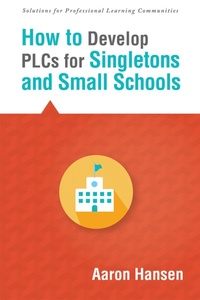
How to Develop PLCs for Singletons and Small Schools
Description

Part of the Solutions for Professional Learning Communities series.
Ensure singleton teachers feel integrally involved in the PLC process with this concise, user-friendly guide. You'll quickly discover how small schools, full of singleton teachers who are the only ones in their schools teaching their subject areas, can build successful PLCs and avoid teacher isolation. Explore five methods for structuring PLC teams for better teacher support and collaboration. Better involve singletons, and read short examples that highlight how real schools have made collaboration among teachers possible.
Quickly learn how to create your own singleton teacher support network using the PLC process:
- Understand what it means to practice collaboration lite and evaluate teacher collaboration in your school or district.
- Examine scenarios, opportunities, challenges, recommendations, and PLC ideas for electives teachers or other singletons.
- Review specific ways that teams can connect teachers and help small teams be active participants in the PLC process.
- Learn the essential steps for creating vertical, virtual, and interdisciplinary teams.
- Read sample dialogues and quick tips for how to state intentions related to building PLC teams and including singletons in the process.
Contents:
Introduction
Chapter 1: Vertical Teams
Chapter 2: Interdisciplinary Teams
Chapter 3: Singletons Who Support
Chapter 4: Virtual Teams
Chapter 5: Changing Structures
Epilogue
Books in the Solutions for Professional Learning Communities Series:
- How to Use Digital Tools to Support Teachers in a PLC
- How to Launch PLCs in Your District
- How to Leverage PLCs for School Improvement
- How to Cultivate Collaboration in a PLC
- How to Coach Leadership in a PLC
- How to Develop PLCs for Singletons and Small Schools
More details
Other editions
Additional editions
Content
- Intro
- Acknowledgments
- Table of Contents
- About the Author
- Introduction
- Chapter 1
- Chapter 2
- Chapter 3
- Chapter 4
- Chapter 5
- Epilogue
- References and Resources
