

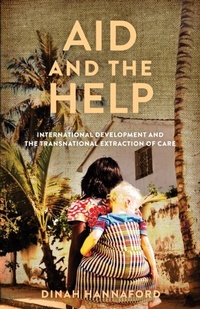
Aid and the Help
International Development and the Transnational Extraction of Care
Published on 25. April 2023
228 pages
978-1-5036-3551-7 (ISBN)
Available for download
Description

Hiring domestic workers is a routine part of the expat development lifestyle. Whether working for the United Nations, governmental aid agencies, or NGOs such as Oxfam, Save the Children, or World Vision, expatriate aid workers in the developing world employ maids, nannies, security guards, gardeners and chauffeurs. Though nearly every expat aid worker in the developing world has local people working within the intimate sphere of their homes, these relationships are seldom, if ever, discussed in analyses of the development paradigm and its praxis. Aid and the Help addresses this major lacuna through an ethnographic analysis of the intersection of development work and domestic work. Examining the reproductive labor cheaply purchased by aid workers posted overseas opens the opportunity to assess the multiple ways that the ostensibly "giving" industry of development can be an extractive industry as well.
Reviews / Votes
"A significant contribution to our understanding of the global politics of care, this book describes the moral dilemmas, social boundaries, and hierarchies that aid workers create to resolve the contradictions in their management of domestic help. This is a must read for those interested in gender, globalization, development and the work of women in the Global South."-Rhacel Parrenas, University of Southern California "This timely and important book is a welcome contribution to the scholarship on the global contours of reproductive and domestic labor. Aid and the Help frames women as both employers and employees, having to sort out the global tensions situating their interactions in the intimate, invisible zone of the home."-Carla Jones, University of Colorado, Boulder "Dinah Hannaford, an associate professor of anthropology at the University of Houston, is not the first academic to provide a pointed critique of the humanitarian aid industry. She is, however, unique in focusing on the hypocrisy of those working in that industry-and it is an industry.... Hannaford is getting to the heart of the matter, namely that the aid industry is as much a jobs program for privileged college graduates as it is an industry having a transformative effect on the lives of those it is supposed to help."-Sam Sweeney, The American Conservative "Fundamentally, Aid and the Help is a discussion of colonialism and its connection to present-day development.... This work asks researchers, scholars, and critical thinkers to consider a future that engages in the project of decolonization without terms and conditions, one that divests from systems of violence and oppression that does not sacrifice the liberation of lower-class marginalized people. The book is a refreshing and interesting perspective to understanding colonialism structures; specifically, it best describes how we are still actively working through the structure and, in some ways, cannot escape it."-Nina Wilson, H-Diplo "[Aid and the Help] provides a valuable critical perspective on post-colonial global inequalities through a rich and nuanced yet grounded ethnographic account of paid domestic work in the homes of development workers. The lucid writing style combined with a lack of excessive jargon makes this book a solid choice to be used in advanced undergraduate and graduate-level courses on migration, labor, development, intimacies, and economy as well as global studies."-Kritika Pandey, Medical Anthropology Quarterly "Aid and the Help insightfully explores the contradictions of international development's ideals with the realities of child care, domestic labor, and affluent expatriates living in poor countries.... Although many scholars have probed the dilemmas of development workers trying to downplay the significance of class differences in their intimate lives, Hannaford powerfully and succinctly analyzes these everyday negotiations.... Highly recommended."-J. M. Rich, CHOICE "Dinah Hannaford's timely ethnography is a reminder that care economies are increasingly important to global-local economies, but continue to be underrepresented in policy and research."-Anindita Majumdar, Journal of the Royal Anthropological InstituteMore details
Series
Edition
New edition
Language
English
Place of publication
Palo Alto
United States
Target group
Professional and scholarly
Edition type
New edition
Illustrations
3 figures, 1 map
ISBN-13
978-1-5036-3551-7 (9781503635517)
Copyright in bibliographic data and cover images is held by Nielsen Book Services Limited or by the publishers or by their respective licensors: all rights reserved.
Schweitzer Classification
Other editions
Additional editions
Book
04/2023
Stanford University Press
€28.50
Shipment within 15-20 days
Person
Dinah Hannaford is Associate Professor of Anthropology at the University of Houston. She is the author of Marriage Without Borders: Transnational Spouses in Neoliberal Senegal (2017).
Content
Introduction: Aid Work and the Extraction of Care
1. Finding Help in the Informal Economy
2. Security and Everyday Bordering
3. Stratigraphies of Mobility
4. Inequalities of the World Personified
Conclusion: Conclusion
1. Finding Help in the Informal Economy
2. Security and Everyday Bordering
3. Stratigraphies of Mobility
4. Inequalities of the World Personified
Conclusion: Conclusion

