

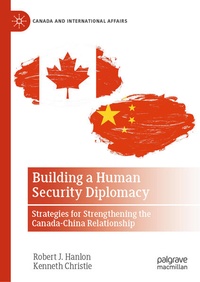
Building a Human Security Diplomacy
Description

This book examines Canada's foreign policy in terms of China, pointing to the flaws and attitudes relating to the impracticality and lack of its pragmatic design. We examine the historical and contemporary problem which these states face in terms of their economic, political, and social differentials to see what they have in common, what separates them, and how and why they can overcome these political and social divisions. Our aim is to provide solution-based strategies to the very substantial, diplomatic, and foreign policy dilemmas which exist between these two countries. We begin with an overview and analysis of the fraught diplomatic and economic relations between Canada and China, particularly exacerbated during the global pandemic. Secondly, we look at these problems and how they might be resolved through developing a human security lens, in particular the idea of what we call a 'human security diplomacy' framework which we believe can advocate and support Canadianvalues while offering a strategic tool for strengthening national interests in the short and long term. Finally, we look to the future of Canada-Chinese relations emphasizing an optimistic outlook while offering recommendations on how the relationship can be reimagined.
More details
Other editions
Additional editions
Persons
Robert J. Hanlon is Associate Professor in Political Science and Chair of the Department of Philosophy, History and Politics at Thompson Rivers University. He is also Director of the Canada-Asia Pacific Policy Project and an Associate Faculty member in the School of Humanitarian Studies at Royal Roads University.
Kenneth Christie is Professor and Director of the School of Humanitarian Studies at Royal Roads University where he serves as Program Head for the Human Security and Peacebuilding graduate program. Dr. Christie is also a Visiting Professor at the University of Reading's School of Law and Director of the Political Studies Unit at the Athens Institute for Education and Research.
