

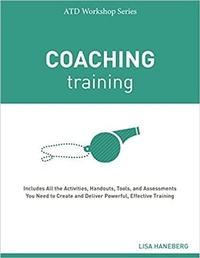
Coaching Training
Published on 31. March 2015
224 pages
978-1-60728-434-5 (ISBN)
Description

Create made-to-order learning experiences that deliver results with Lisa Haneberg by your side. By emphasizing deep listening and empowering learners to pull coaching conversations forward, you'll help coaches build experiences that count.
Coaching Training, the third book in the ATD Workshop Series, takes a service-oriented approach to workplace coaching. It teaches the essential skills trainers must master to give learners what they need when they need it. Each half-day, full-day, and two-day program in this volume comes with its own agenda to drive the workshop and includes online presentation slides, handouts, assessments, and tools.
About the Series
The ATD Workshop Series is written for trainers by trainers, because no one knows workshops as well as the practitioners who have done it all.
Coaching Training, the third book in the ATD Workshop Series, takes a service-oriented approach to workplace coaching. It teaches the essential skills trainers must master to give learners what they need when they need it. Each half-day, full-day, and two-day program in this volume comes with its own agenda to drive the workshop and includes online presentation slides, handouts, assessments, and tools.
About the Series
The ATD Workshop Series is written for trainers by trainers, because no one knows workshops as well as the practitioners who have done it all.
More details
Content
- Intro
- Title Page
- Copyright
- The ATD Workshop Series
- Contents
- FOREWORD
- INTRODUCTION: HOW TO USE THIS BOOK
- Why Does Coaching Matter?
- What Do I Need to Know About Training?
- How Much Time Will Preparation Take?
- What Are the Important Features of the Book?
- How Are the Agendas Laid Out?
- How Do I Use This Book?
- Key Points
- What to Do Next
- Additional Resources
- SECTION I: THE WORKSHOPS
- 1 TWO-DAY COACHING WORKSHOP
- The Backstory for the Coaching Model
- A Note About Pre-Work
- A Note About the Presentation Slides, Facilitator's Notes, and Key Distinctions
- Two-Day Workshop Objectives
- Two-Day Workshop Overview
- Day-One Overview
- Day-Two Overview
- Two-Day Workshop Agenda: Day One
- What to Do Between Workshop Days
- Two-Day Workshop Agenda: Day Two
- Key Points
- What to Do Next
- 2 ONE-DAY COACHING WORKSHOP
- The Backstory for the Coaching Model
- A Note About Pre-Work
- A Note About the Presentation Slides, Facilitator's Notes, and Key Distinctions
- One-Day Workshop Objectives
- One-Day Workshop Overview
- One-Day Workshop Agenda
- Key Points
- What to Do Next
- 3 HALF-DAY COACHING WORKSHOP
- The Backstory for the Coaching Model
- A Note About the Presentation Slides and Facilitator's Notes
- Half-Day Workshop Objectives
- Half-Day Workshop Overview
- Half-Day Workshop Agenda
- Key Points
- What to Do Next
- 4 CUSTOMIZING THE COACHING TRAINING WORKSHOP
- Your Invitation to Deviate!
- Match Context to Your Intentions
- Ideas for Customization
- Shorter Sessions
- Alternative Four-Hour Workshops
- Options for Pre-Work and Homework
- Other Ideas
- The Bare Minimum
- What to Do Next
- SECTION II: ESSENTIALS OF EFFECTIVE COACHING TRAINING
- 5 IDENTIFYING NEEDS FOR COACHING TRAINING
- Why Needs Analysis?
- Strategic Needs Analysis
- Structured Interviews
- Focus Groups
- Surveys
- Individual Learning Needs Analysis
- The Bare Minimum
- Key Points
- What to Do Next
- Additional Resources
- 6 UNDERSTANDING THE FOUNDATIONS OF TRAINING DESIGN
- Basic Adult Learning Theory
- More Theoretical Ideas Important to Learning
- Multiple Intelligences
- Whole Brain Learning
- Theory Into Practice
- Establishing a Framework
- Identifying Behaviors
- Practicing
- Providing Feedback
- Making It Relevant
- The Bare Minimum
- Key Points
- What to Do Next
- Additional Resources
- 7 LEVERAGING TECHNOLOGY TO MAXIMIZE AND SUPPORT DESIGN AND DELIVERY
- Why Consider Learning Technologies?
- Opportunities to Use Learning Technologies
- Designing Training
- Before Training
- During Training
- After Training
- Building a Learning Community
- The Bare Minimum
- Key Points
- What to Do Next
- Additional Resources
- 8 DELIVERING YOUR COACHING WORKSHOP: BE A GREAT FACILITATOR
- The Learning Environment
- Program Preparation Checklist
- Participant Materials
- Handouts
- Presentation Slides
- Workbooks and Journals
- Videos
- Toys, Noisemakers, and Other Props
- Facilitator Equipment and Materials
- A Strong Start: Introduction, Icebreakers, and Openers
- Feedback
- Role Plays
- Participant Presentations
- Ball Toss
- Journaling
- Questioning Skills
- Training Room and Participant Management
- A Word About Dealing With Difficult Participants
- An Unforgettable End
- The Bare Minimum
- Key Points
- What to Do Next
- Additional Resources
- 9 EVALUATING WORKSHOP RESULTS
- Levels of Measurement
- Level 1: Measuring Participant Reactions
- Level 2: Measuring the Extent to Which Participants Have Learned
- Level 3: Measuring the Results of Training Back on the Job
- Level 4: Measuring the Organizational Impact of Training
- Return on Investment
- Reporting Results
- The Bare Minimum
- Key Points
- What to Do Next
- Additional Resources
- SECTION III: POST-WORKSHOP LEARNING
- 10 THE FOLLOW-UP COACH
- Set the Stage for Post-Workshop Support
- Sell Post-Workshop Learning Activities to Leaders and Stakeholders
- Enjoy Post-Workshop Learning
- The Bare Minimum
- What to Do Next
- 11 FOLLOW-UP ACTIVITIES
- Don't Wait to Follow Up
- Practice, Practice, Practice
- Be a Matchmaker
- Use Technology
- Build a Coaching Community
- Measure Post-Workshop Activities
- The Bare Minimum
- What to Do Next
- SECTION IV: WORKSHOP SUPPORTING DOCUMENTS AND ONLINE SUPPORT
- 12 LEARNING ACTIVITIES
- Learning Activities Included in Coaching Training
- 13 ASSESSMENTS
- Assessments Included in Coaching Training
- 14 HANDOUTS
- Handouts Included in Coaching Training
- 15 ONLINE TOOLS AND DOWNLOADS
- Access to Free Supporting Materials
- Customizable Materials
- Working with the Files
- PDF Documents
- PowerPoint Slides
- ABOUT THE AUTHOR
- ABOUT ATD
