


The Handbook of Recovery Capital
Understanding the Science and Practice
Bristol University Press
1st Edition
Published on 17. April 2025
266 pages
978-1-5292-4029-0 (ISBN)
Description

This book brings together all the key evidence on recovery capital measurement and its application. It offers a clear and accessible overview of the development of the strengths-based approach in addressing behavioural health issues and quantifying and measuring recovery capital, along with the evidence base for this approach.
The book sets out the proven benefits of this approach to measuring and bolstering addiction recovery, demonstrating the impact of the approach in improving the quality of services available to people at different stages of their recovery journey, making it the 'go to' book on this topic for researchers, policy makers, practitioners and people in recovery.
The book sets out the proven benefits of this approach to measuring and bolstering addiction recovery, demonstrating the impact of the approach in improving the quality of services available to people at different stages of their recovery journey, making it the 'go to' book on this topic for researchers, policy makers, practitioners and people in recovery.
Reviews / Votes
"This deftly sequenced collection by brilliant authors crosses new frontiers. The promise of recovery capital theory and community practice for recovery is richly developed. This book is an indispensable reference for scholars of addictions and of macro problems that demand development of community recovery capital.'' John Braithwaite, Australian National UniversityMore details
Edition
First Edition
Language
English
Place of publication
Bristol
United Kingdom
Target group
Professional and scholarly
Illustrations
12 s/w Abbildungen, 8 s/w Tabellen
8 Tables, black and white; 12 Illustrations, black and white
ISBN-13
978-1-5292-4029-0 (9781529240290)
Copyright in bibliographic data and cover images is held by Nielsen Book Services Limited or by the publishers or by their respective licensors: all rights reserved.
Schweitzer Classification
Other editions
Additional editions
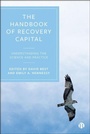
The Handbook of Recovery Capital
Understanding the Science and Practice
Book
04/2025
1st Edition
Bristol University Press
€137.50
Shipment within 3-4 weeks
The Handbook of Recovery Capital
Understanding the Science and Practice
Book
04/2025
1st Edition
Bristol University Press
€36.50
Shipment within 3-4 weeks
Persons
David Best is Director of the Centre for Addiction Recovery Research at Leeds Trinity University.
Emily A. Hennessy is Associate Director of Biostatistics at the Recovery Research Institute, Associate Director of the National Center on Youth Prevention, Treatment and Recovery, and Assistant Professor at Harvard Medical School.
Emily A. Hennessy is Associate Director of Biostatistics at the Recovery Research Institute, Associate Director of the National Center on Youth Prevention, Treatment and Recovery, and Assistant Professor at Harvard Medical School.
Content
Foreword: The History of Recovery Capital - William White
1. Introduction to the Handbook on Recovery Capital - David Best and Emily A. Hennessy
2. Inception to Integration: The Theoretical Roots and Institutional Growth of Recovery Capital - Robert Granfield and William Cloud
3. Reflections on Initial Attempts at the Quantification of Recovery Capital - David Best, William White, and Lauren A. Hoffman
4. The Evolution of Approaches To Measure Recovery Capital - Adela Bunaciu, Matthew J. Belanger, Ana-Maria Bliuc, and Arun Sondhi
5. Recovery Capital as an Explanatory Model for Change and Growth - Emily A. Hennessy, Rebecca L. Smith, and Corrie L. Vilsaint
6. Conceptualizing Recovery Capital: Domains and Critical Perspectives - Elizabeth Bowen and Emily A. Hennessy
7. Community Recovery Capital and How It Contributes to Building Recovery Capital at an Individual Level - David Best, Beth Collinson, and David Patton
8. A Realist Perspective on Recovery Capital: Agents, Structures, Contexts, and Mechanisms - Tim Leighton
9. The Role of Specialist Substance Use and Addiction Treatment in Building Recovery Capital - Wouter Vanderplasschen, Florian De Meyer, Clara De Ruysscher, Aline Pouille, and Deborah Louise Sinclair
10. Recovery Capital Applications in Policy and Practice - Reed Yearwood, Amy Mericle, and Jessica Best
11. Justice Capital: Delivering Equitable Outcomes for Indigenous Children in State Care - Sharynne Hamilton and Lorana Bartels
12. Conclusion: Generating a Robust Science of Applied Recovery Capital - David Best, Maike Klein, and Phil Hodgson
1. Introduction to the Handbook on Recovery Capital - David Best and Emily A. Hennessy
2. Inception to Integration: The Theoretical Roots and Institutional Growth of Recovery Capital - Robert Granfield and William Cloud
3. Reflections on Initial Attempts at the Quantification of Recovery Capital - David Best, William White, and Lauren A. Hoffman
4. The Evolution of Approaches To Measure Recovery Capital - Adela Bunaciu, Matthew J. Belanger, Ana-Maria Bliuc, and Arun Sondhi
5. Recovery Capital as an Explanatory Model for Change and Growth - Emily A. Hennessy, Rebecca L. Smith, and Corrie L. Vilsaint
6. Conceptualizing Recovery Capital: Domains and Critical Perspectives - Elizabeth Bowen and Emily A. Hennessy
7. Community Recovery Capital and How It Contributes to Building Recovery Capital at an Individual Level - David Best, Beth Collinson, and David Patton
8. A Realist Perspective on Recovery Capital: Agents, Structures, Contexts, and Mechanisms - Tim Leighton
9. The Role of Specialist Substance Use and Addiction Treatment in Building Recovery Capital - Wouter Vanderplasschen, Florian De Meyer, Clara De Ruysscher, Aline Pouille, and Deborah Louise Sinclair
10. Recovery Capital Applications in Policy and Practice - Reed Yearwood, Amy Mericle, and Jessica Best
11. Justice Capital: Delivering Equitable Outcomes for Indigenous Children in State Care - Sharynne Hamilton and Lorana Bartels
12. Conclusion: Generating a Robust Science of Applied Recovery Capital - David Best, Maike Klein, and Phil Hodgson
