

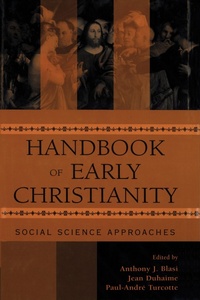
Handbook of Early Christianity
Social Science Approaches
AltaMira Press
1st Edition
Published on 27. August 2002
832 pages
978-0-7591-1653-5 (ISBN)
Description

The Christian movement emerged amidst complex social tensions, power politics, ethnic diversity, economic stress, and cultural changes. Both biblical scholars and social scientists find that a social scientific study of early Christian phenomena yields fascinating results. However, biblical scholars are sometimes unaware of the breadth of the useful social scientific concepts and techniques, and social scientists sometimes lack the most basic background in literary research methods. The Handbook of Early Christianity provides a much needed overview for biblical scholars and social scientists alike. Drawing on perspectives from anthropology, archaeology, economics, history, literary analysis, psychology, political science, and sociology, the Handbook shows the myriad and complementary approaches that shed light on Christianity's formation and early development. Twenty-seven chapters from leading scholars along with a comprehensive bibliography make this an essential reference for anyone wishing to understand the social dynamics of Christianity's birth.
More details
Edition
1. Auflage
Language
English
Place of publication
CA
United States
ISBN-13
978-0-7591-1653-5 (9780759116535)
Copyright in bibliographic data and cover images is held by Nielsen Book Services Limited or by the publishers or by their respective licensors: all rights reserved.
Schweitzer Classification
Other editions
Additional editions
Anthony J. Blasi | Jean Duhaime | Paul-Andre Turcotte
Handbook of Early Christianity
Social Science Approaches
Book
08/2002
AltaMira Press
€229.16
No shipping information available
Persons
Anthony J. Blasi holds a B.A. in history from St. Edward's University in Texas, an M.A. and Ph.D. in sociology from the University of Notre Dame, an M.A. in biblical studies from the University of St. Michael's College in Toronto, an S.T.L. from Regis College in Toronto, and a conjoint Th.D. from Regis College and the University of Toronto. He is a professor of sociology at Tennessee State University in Nashville. His books include A Phenomenological Transformation of the Social Scientific Study of Religion (1985), Moral Conflict and Christian Religion (1988), Early Christianity as a Social Movement (1989), Making Charisma: The Social Construction of Paul's Public Image (1991), A Sociology of Johannine Christianity (1996), and Organized Religion and Seniors' Mental Health (1999). He is past president of the Association for the Sociology of Religion.
Jean Duhaime earned a B.A. from the Séminaire de Chicoutimi; a Bachelor's in Secondary-level Religious Education from the Université du Québec à Chicoutimi; a Licentiate in religious studies, an M.A. in theology-biblical studies, and an M.Sc in sociology from the Université de Montréal; and a Diplôme from the École Biblique et Archéologique Française de Jérusalem. Duhaime is professeur titulaire [full professor] d'interprétation de la Bible at the Faculté de Théologie at the Université de Montréal. His books include Entendre la voix du Dieu vivant (coeditor, 1994), Loi et autonomie dans la Bible et la tradition chrétienne (coeditor, 1994), L'adhésion à la conscience de Krishna aux États-Unis vers 1970 (1996). His works have also appeared in the Encyclopedia of the Dead Sea Scrolls, Revue de Qumrâ, Revue Scriptura, Religiologiques, and Église et Théologie.
Paul-André Turcotte holds a B.A., M.A., and Lic. from the Université de Montréal; a B. Péd. from the Université Laval; a Ph.D. in social sciences from the Ecole des Hautes Études in Sciences Sociales in Par
Jean Duhaime earned a B.A. from the Séminaire de Chicoutimi; a Bachelor's in Secondary-level Religious Education from the Université du Québec à Chicoutimi; a Licentiate in religious studies, an M.A. in theology-biblical studies, and an M.Sc in sociology from the Université de Montréal; and a Diplôme from the École Biblique et Archéologique Française de Jérusalem. Duhaime is professeur titulaire [full professor] d'interprétation de la Bible at the Faculté de Théologie at the Université de Montréal. His books include Entendre la voix du Dieu vivant (coeditor, 1994), Loi et autonomie dans la Bible et la tradition chrétienne (coeditor, 1994), L'adhésion à la conscience de Krishna aux États-Unis vers 1970 (1996). His works have also appeared in the Encyclopedia of the Dead Sea Scrolls, Revue de Qumrâ, Revue Scriptura, Religiologiques, and Église et Théologie.
Paul-André Turcotte holds a B.A., M.A., and Lic. from the Université de Montréal; a B. Péd. from the Université Laval; a Ph.D. in social sciences from the Ecole des Hautes Études in Sciences Sociales in Par
Content
Part 1 I. General Perspective
Chapter 2 1. Social Sciences Studying Formative Christian Phenomena: A Creative Movement
Chapter 3 2. Major Social Scientific Theories: Origins, Development, and Contribution
Chapter 4 3. General Methodological Perspective
Part 5 II. Special Methods
Chapter 6 4. Archaeological and Architectural Issues and the Question of Demographic and Urban Forms
Chapter 7 5. An Illustration of Historical Inquiry: Histories of Jesus and Matthew 1.1-25
Chapter 8 6. Literary Source and Redaction Criticism
Chapter 9 7. Statistical Textual Analysis: A Special Technique
Chapter 10 8. Aspects of Rhetorical Analysis Applied to New Testament Texts
Chapter 11 9. Structuralism and Symbolic Universes: Second Temple Judaism and the Early Christian Movement
Part 12 III. Contexts and Emergence of the Jesus Movement and Early Christianity
Chapter 13 10. Early Christianity as an Unorganized Ecumenical Religious Movement
Chapter 14 11. Jesus and Palestinian Social Protest: Archaeological and Literary Perspectives
Chapter 15 12. Civilizational Encounters in the Development of Early Christianity
Chapter 16 13. Early Christian Culture as Interaction
Chapter 17 14. "Becoming Christian": Solidifying Christian Identity and Content
Chapter 18 15. Sociological Insights into the Development of Christian Leadership Roles and Community Function
Chapter 19 16. Establishing Social Distance between Christians and Both Jews and Pagans
Part 20 IV. Power, Inequality, and Difference
Chapter 21 17. Connections with Elites in the World of Early Christians
Chapter 22 18. Government and Public Law in Galilee, Judea, Hellenistic Cities and the Roman Empire
Chapter 23 19. Persecution
Chapter 24 20. Vulnerable Power: The Roman Empire Challenged by the Early Christians
Chapter 25 21. The Limits of Ethnic Categories
Part 26 V. Economic Questions
Chapter 27 22. Economy of First-Century Palestine: State of the Scholarly Discussion
Chapter 28 23. Modes and Relations of Production
Chapter 29 24. What Would You Do for a Living?
Part 30 VI. Psycho-Social Approaches and Phenomena
Chapter 31 25. Conflicting Bases of Identity in Early Christianity: The Example of Paul
Chapter 32 26. A Psychoanalytical Study of Fratricidal Conflict in the Context of First-Century Palestine
Chapter 33 27. Conversion to Early Christianity
Chapter 2 1. Social Sciences Studying Formative Christian Phenomena: A Creative Movement
Chapter 3 2. Major Social Scientific Theories: Origins, Development, and Contribution
Chapter 4 3. General Methodological Perspective
Part 5 II. Special Methods
Chapter 6 4. Archaeological and Architectural Issues and the Question of Demographic and Urban Forms
Chapter 7 5. An Illustration of Historical Inquiry: Histories of Jesus and Matthew 1.1-25
Chapter 8 6. Literary Source and Redaction Criticism
Chapter 9 7. Statistical Textual Analysis: A Special Technique
Chapter 10 8. Aspects of Rhetorical Analysis Applied to New Testament Texts
Chapter 11 9. Structuralism and Symbolic Universes: Second Temple Judaism and the Early Christian Movement
Part 12 III. Contexts and Emergence of the Jesus Movement and Early Christianity
Chapter 13 10. Early Christianity as an Unorganized Ecumenical Religious Movement
Chapter 14 11. Jesus and Palestinian Social Protest: Archaeological and Literary Perspectives
Chapter 15 12. Civilizational Encounters in the Development of Early Christianity
Chapter 16 13. Early Christian Culture as Interaction
Chapter 17 14. "Becoming Christian": Solidifying Christian Identity and Content
Chapter 18 15. Sociological Insights into the Development of Christian Leadership Roles and Community Function
Chapter 19 16. Establishing Social Distance between Christians and Both Jews and Pagans
Part 20 IV. Power, Inequality, and Difference
Chapter 21 17. Connections with Elites in the World of Early Christians
Chapter 22 18. Government and Public Law in Galilee, Judea, Hellenistic Cities and the Roman Empire
Chapter 23 19. Persecution
Chapter 24 20. Vulnerable Power: The Roman Empire Challenged by the Early Christians
Chapter 25 21. The Limits of Ethnic Categories
Part 26 V. Economic Questions
Chapter 27 22. Economy of First-Century Palestine: State of the Scholarly Discussion
Chapter 28 23. Modes and Relations of Production
Chapter 29 24. What Would You Do for a Living?
Part 30 VI. Psycho-Social Approaches and Phenomena
Chapter 31 25. Conflicting Bases of Identity in Early Christianity: The Example of Paul
Chapter 32 26. A Psychoanalytical Study of Fratricidal Conflict in the Context of First-Century Palestine
Chapter 33 27. Conversion to Early Christianity
