

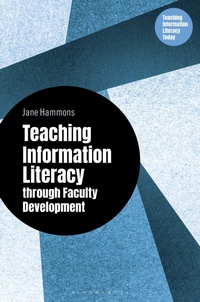
Teaching Information Literacy through Faculty Development
1st Edition
Published on 11. December 2025
272 pages
979-8-216-18642-7 (ISBN)
Description

Provides an approach to information literacy centered around faculty development to support academic librarians in building more scalable, sustainable, and impactful information literacy programs.
Academic librarians devote significant effort to teaching information literacy, often in "one-shot" sessions. However, the one-shot has received criticism for its pedagogical ineffectiveness and its impact on librarians' professional status and personal well-being.
This resource provides an overview of an alternative approach, the faculty-focused model, also known as the "teach the teachers" or "train the trainers" approach. In this model, librarians concentrate their efforts primarily on faculty development, which has the potential to allow them to develop more scalable, sustainable, and impactful information literacy programs. This practical guide explores the benefits and concerns associated with the model, gives examples of library-led faculty development initiatives and librarian involvement in campus-level faculty development, and offers recommendations for building faculty development into an information literacy program. Librarians will appreciate the book's guidance on making the mental shift necessary to adopt a more faculty-focused approach and its willingness to address concerns that librarians may have about the model.
Academic librarians devote significant effort to teaching information literacy, often in "one-shot" sessions. However, the one-shot has received criticism for its pedagogical ineffectiveness and its impact on librarians' professional status and personal well-being.
This resource provides an overview of an alternative approach, the faculty-focused model, also known as the "teach the teachers" or "train the trainers" approach. In this model, librarians concentrate their efforts primarily on faculty development, which has the potential to allow them to develop more scalable, sustainable, and impactful information literacy programs. This practical guide explores the benefits and concerns associated with the model, gives examples of library-led faculty development initiatives and librarian involvement in campus-level faculty development, and offers recommendations for building faculty development into an information literacy program. Librarians will appreciate the book's guidance on making the mental shift necessary to adopt a more faculty-focused approach and its willingness to address concerns that librarians may have about the model.
More details
Series
Edition
1. Auflage
Language
English
Place of publication
New York
United States
Publishing group
Bloomsbury Publishing Plc
ISBN-13
979-8-216-18642-7 (9798216186427)
Copyright in bibliographic data and cover images is held by Nielsen Book Services Limited or by the publishers or by their respective licensors: all rights reserved.
Schweitzer Classification
Other editions
Additional editions
Book
approx. 01/2026
Libraries Unlimited Inc
€62.00
Not yet published
Person
Jane Hammons is Associate Professor and Teaching & Learning Engagement Librarian at The Ohio State University, USA.
Content
1. An Introduction to the Faculty-Focused Approach to Information Literacy
2. Why Teach Faculty? Arguments in Support of the Faculty-Focused Approach
3. But What About...? Concerns about the Faculty-Focused Approach
4. Library-Led Faculty Development: Examples from the Literature
5. Building an Information Literacy-Focused Faculty Development Program: Getting Started
6. Expanding and Sustaining an Information Literacy Faculty Development Program
7. Adopting the Faculty-Focused Approach Across the Profession: A Discussion
8. Still Teaching Information Literacy: Shifting Your Mindset
Index
2. Why Teach Faculty? Arguments in Support of the Faculty-Focused Approach
3. But What About...? Concerns about the Faculty-Focused Approach
4. Library-Led Faculty Development: Examples from the Literature
5. Building an Information Literacy-Focused Faculty Development Program: Getting Started
6. Expanding and Sustaining an Information Literacy Faculty Development Program
7. Adopting the Faculty-Focused Approach Across the Profession: A Discussion
8. Still Teaching Information Literacy: Shifting Your Mindset
Index
